- Company Articles
- Products and Technology
- Product knowledge
- Working Principle: 38 Aluminum Roller Track Yellow with Side Guide Mechanism

Working Principle: 38 Aluminum Roller Track Yellow with Side Guide Mechanism
Related Product
38 Aluminum Roller Track Yellow With Side Guide
Heavy duty roller tracks with flanged plastic rollers for use in processing, logistics and materials handling operations. Ideal for transporting goods quickly and easily as well as for installing on shelving to aid in picking operations.
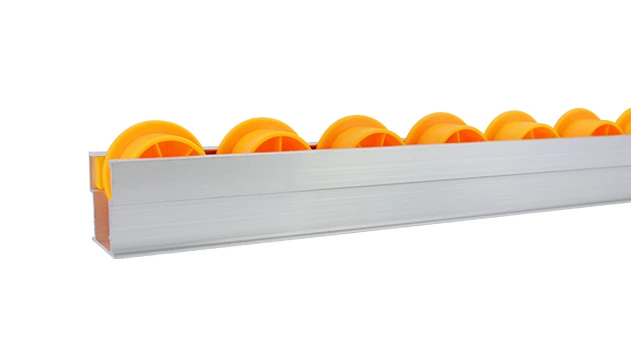
In today's fast-paced manufacturing landscape, efficiency isn't just a goal—it's a necessity. Every component in a production line must contribute to smooth operations, and roller tracks are no exception. The 38 Aluminum Roller Track Yellow with Side Guide stands out as a reliable workhorse in lean systems, blending durability, functionality, and safety to optimize material flow across industries. Its design reflects a deep understanding of modern manufacturing needs, making it a go-to choice for businesses aiming to streamline their workflows.
Key Components of the 38 Aluminum Roller Track Yellow with Side Guide
To grasp how this roller track operates, let's dissect its core components. Each part is engineered to work in harmony, ensuring consistent performance:
| Component | Material | Function |
|---|---|---|
| Aluminum Frame | Aluminum Extrusion Profile | Lightweight yet robust base; corrosion-resistant and easy to assemble/disassemble. |
| Yellow Side Guides | High-Impact Plastic | Align materials during movement; prevent slippage off the track and enhance visibility. |
| 38mm Rollers | Hard Plastic or Stainless Steel | Reduce friction; enable smooth sliding/rolling of items (plastic for quiet operation, steel for heavy loads). |
| Axles | Galvanized Steel | Secure rollers in place; ensure stable rotation under load. |
| End Caps | Plastic | Protect frame ends from damage; eliminate sharp edges for safety. |
| Mounting Brackets | Aluminum Alloy | Connect track to flow racks, conveyors, or lean pipe workbenches; adjustable for alignment. |
Detailed Working Principle
The 38 Aluminum Roller Track Yellow with Side Guide operates on simple yet effective physics, designed to minimize resistance and maximize control:
Friction Reduction Mechanism: Rollers rotate around axles, converting sliding friction into rolling friction—this cuts resistance by up to 80% compared to flat surfaces. For gravity-fed systems (common in flow racks), a slight incline (1-3 degrees) uses gravity to move materials downhill, eliminating the need for power. In powered conveyors, motors drive the rollers to move items at consistent speeds.
Alignment and Safety: Yellow side guides create a defined path for materials. They prevent items from veering off the track, even when moving at speed or around curves. The bright yellow color also acts as a visual cue, alerting workers to the track's presence in busy environments.
Load Distribution: Rollers are spaced 50-100mm apart (adjustable based on load size). Closer spacing supports heavier items (up to 60kg/m), while wider spacing suits lighter components. The aluminum frame's structural integrity ensures it doesn't bend under maximum load.

Maintenance Tips for Longevity
Proper care extends the track's lifespan and maintains performance. Here are essential maintenance steps:
- Regular Cleaning: Wipe the track with a dry cloth weekly to remove dust. For grease or debris, use a mild detergent and water—avoid harsh chemicals that damage aluminum or plastic.
- Lubrication: Lubricate steel roller axles every 6 months with silicone grease. Plastic rollers require no lubrication.
- Inspections: Check for loose brackets/axles monthly. replace worn rollers or cracked side guides immediately to prevent accidents.
- Storage: If unused, store the track in a dry area. Avoid stacking heavy items on it to prevent frame deformation.

Step-by-Step Installation Guide
The track's lean design makes installation quick and tool-friendly:
- Measure & Cut: Cut the aluminum frame to desired length using a hacksaw or miter saw. Smooth ends with sandpaper.
- Install Rollers: insert axles through frame holes, slide rollers onto axles, and secure with end caps.
- Attach Side Guides: Snap yellow guides into frame slots; ensure they're aligned evenly.
- Mount Track: Use brackets to connect the track to flow racks, conveyors, or workbenches. Tighten bolts for stability.
- Test: Slide a sample item along the track to verify smooth movement. Adjust side guides if items veer off.
Industry Applications with Real-World Examples
The track's versatility makes it suitable for diverse manufacturing scenarios:
Automotive Manufacturing: In engine assembly lines, the track is part of conveyors that move cylinder heads from machining to assembly stations. Side guides prevent parts from shifting, reducing damage risk.
3C Assembly: A smartphone manufacturer uses the track in flow racks holding battery modules. Workers pick modules from the front of the rack, cutting picking time by 60%.
Medical Device Production: In cleanrooms, the track transports sterile syringes between packaging stations. Its non-porous surface is easy to sanitize, complying with FDA standards.
Warehouse Logistics: A distribution center integrates the track into gravity flow racks for e-commerce order picking. Boxes slide to the front, enabling workers to fulfill 20% more orders daily.
Customization Options
Tailor the track to your needs with these options:
- Length: Cut to any size (from 10cm to 5m).
- Roller Type: Choose plastic (quiet) or stainless steel (heavy-duty).
- Side Guide Color: Yellow (standard), grey, or red (for safety zones).
- Load Capacity: Upgrade to thicker aluminum frames for loads up to 100kg/m.
Case Study: 3C Company's Efficiency Boost
A leading 3C assembly firm faced bottlenecks in part picking. Workers spent 12 minutes per order searching static racks. They installed flow racks with the 38 Aluminum Roller Track Yellow with Side Guide:
Post-installation, picking time dropped to 4 minutes/order (66% improvement). Yellow side guides reduced dropped components by 80%, cutting rework costs. Daily production output increased by 25%, and labor costs fell by 15%. No track replacements were needed in 2 years, delivering long-term savings.
Benefits of Choosing This Roller Track
The track offers numerous advantages for lean systems:
Durability: Aluminum resists rust; high-impact plastic guides withstand wear.
Flexibility: Easy to reconfigure as production needs change (aligns with lean's "continuous improvement").
Safety: Side guides and smooth rollers reduce accidents; yellow color enhances visibility.
Cost-Effective: Low maintenance, reusable components, and reduced labor costs deliver ROI in 6-12 months.
Sustainability: Aluminum is recyclable; reusable design minimizes waste (aligns with lean's "sustainable" principles).
Integration with Lean Systems
The track is a cornerstone of lean manufacturing:
Waste Elimination: Reduces idle time, rework, and physical strain on workers.
Continuous Improvement: Easy to modify for new products or processes.
FIFO Inventory: In flow racks, ensures older parts are used first, reducing obsolescence.
Conclusion
The 38 Aluminum Roller Track Yellow with Side Guide is more than a component—it's a catalyst for efficiency. Its design addresses key manufacturing challenges, from material flow to safety, making it an essential part of lean systems. Whether used in flow racks, conveyors, or workstations, it delivers consistent performance that helps businesses stay competitive. As manufacturing evolves, this track will remain a reliable tool for optimizing workflows and driving continuous improvement.