- Company Articles
- Products and Technology
- Application Cases
- Workshop Application: Selecting T-Groove Aluminum Pipe Dimensions for Your Space

Workshop Application: Selecting T-Groove Aluminum Pipe Dimensions for Your Space
Related Product
T-Groove Aluminum Pipe
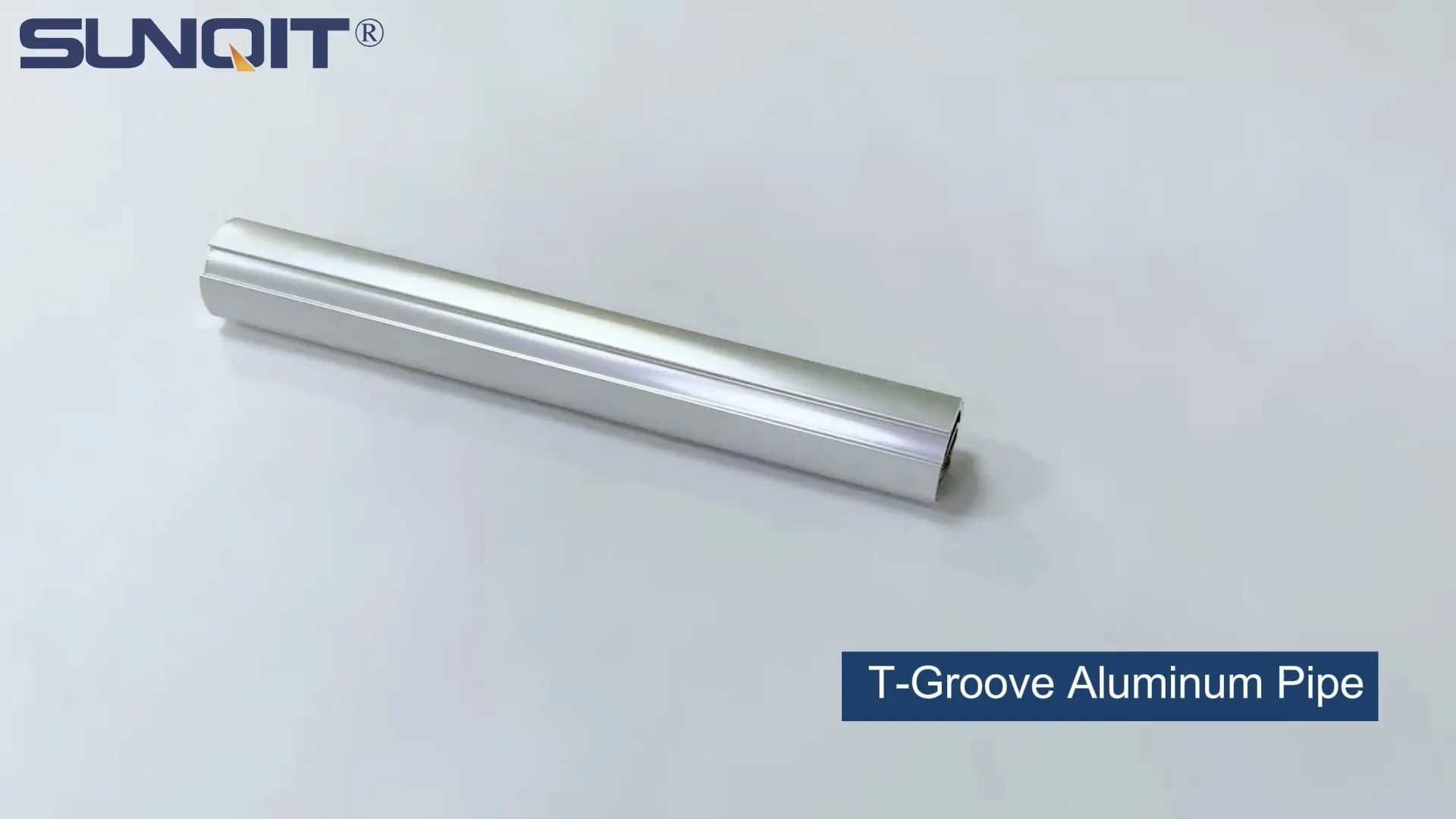
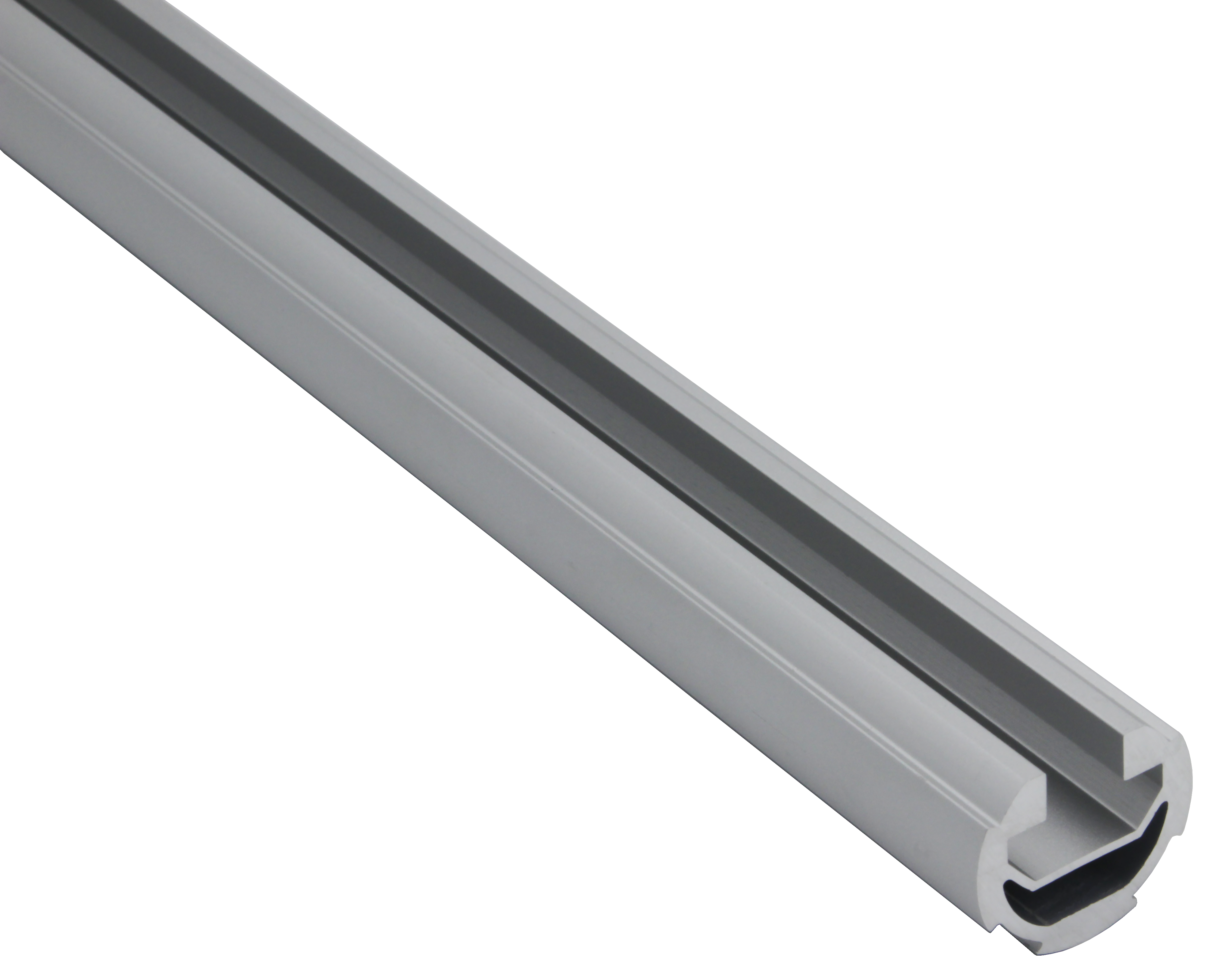
The aluminum pipe opening 10mm is installed into the T-shaped slider, which can be installed with casters or other matching functional parts. The groove can be used for positioning and is used for the track of the roller.
Walk into any well-run workshop, and you'll notice a silent hero behind its efficiency: the infrastructure. From the sturdy workbench where precision assembly happens to the material racks that keep components organized, and the roller tracks that move parts seamlessly across stations—these elements don't just appear by accident. They're built on T-slot aluminum pipe systems, the backbone of modern, adaptable workshop setups. But here's the catch: not all aluminum pipes are created equal. Choosing the right dimensions isn't just about picking a size that "looks right"—it's about aligning your pipe's specs with your workshop's unique needs, from load capacity to space constraints, and even future growth. Let's dive into how to select T-groove aluminum pipe dimensions that turn your workshop from a cluttered space into a productivity powerhouse.
What Makes T-Groove Aluminum Pipes a Workshop Game-Changer?
Before we get to dimensions, let's clarify why T-groove aluminum pipes have become the go-to for workshops. Unlike rigid steel frames or flimsy wooden shelves, T-groove (or T-slot) aluminum pipes are extruded with long, narrow slots (the "T-grooves") running along their length. These slots let you attach accessories—brackets, casters, roller tracks, or even workbench tops—without drilling or welding. It's modularity at its finest: you can assemble, disassemble, and reconfigure your setup in hours, not days.
But their benefits go beyond flexibility. Aluminum is naturally corrosion-resistant, so it holds up in messy environments where oil, coolant, or moisture might damage steel. It's lightweight enough to move (with the right casters) but strong enough to support heavy tools or materials. And because it's extruded, you get consistent, precise dimensions every time—no guesswork about whether a joint will fit.
For workshops, this translates to: fewer bottlenecks (thanks to customizable layouts), lower downtime (no waiting for custom fabrication), and longer-lasting setups (aluminum's durability means less replacement over time). But to unlock these benefits, you need to start with the right dimensions.
Key Factors to Consider Before Picking a Dimension
Selecting T-groove aluminum pipe dimensions isn't a one-size-fits-all process. It starts with asking the right questions about your workshop's daily reality. Here are the critical factors to weigh:
1. Load Capacity: What Will Your Pipes Actually Hold?
The first question to ask: What's the heaviest thing this structure will support? A lightweight shelf for small electronic components has very different needs than a workbench where a 200-lb technician will stand while operating a 50-lb power tool. Load capacity depends on two things: the pipe's cross-sectional area (wider = stronger) and its wall thickness (thicker = more rigid).
For example, a 20mm x 20mm (2020) pipe might handle 50 lbs per linear foot, while a 40mm x 80mm (4080) pipe could support 300 lbs or more. Underestimating load leads to sagging shelves, wobbly workbenches, or worse—safety hazards. Overestimating? You'll end up with bulky, expensive pipes that waste space and money.
2. Space Constraints: Working Within Your Workshop's Limits
Workshops come in all shapes and sizes—from 200 sq ft garages to 10,000 sq ft manufacturing floors. A pipe that works in a spacious factory might feel like overkill in a tight garage. Measure your available space carefully: ceiling height (for overhead racks), aisle width (to avoid blocking traffic), and even doorways (if you need to move assembled structures in/out).
For example, if your workshop has low ceilings (8 ft or less), a tall material rack built with 4040 pipes might hit the ceiling, forcing you to reduce its height and lose storage capacity. Instead, a slimmer 3030 pipe could let you build a taller rack without sacrificing stability, keeping your aisles clear and your storage efficient.
3. Intended Use: Workbench, Rack, or Conveyor?
What are you building? A workbench needs to be sturdy, with enough surface area for tools and assembly. A material rack might need vertical shelves to maximize storage. A roller track system needs to support sliding parts without flexing. Each use case demands different dimensions.
Take workbenches: A small electronics assembly bench might only need a 3030 frame (30mm x 30mm) with a plywood or aluminum top. But a metalworking bench, where you'll clamp heavy parts and use power tools, would require a 4040 or 4080 frame for stability. Similarly, a roller track for lightweight plastic bins could use 2020 or 3030 pipes, but one for steel components would need 4040 or larger to prevent bending under the load.
4. Accessory Compatibility: Will Your Pipes Play Well with Others?
T-groove pipes are only as useful as the accessories they support. Brackets, caster wheels , roller track guides, and end caps all need to fit into those T-slots. If you pick a pipe with a slot that's too narrow, your favorite clamp or caster won't attach. Conversely, a slot that's too wide might mean accessories feel loose or require extra hardware.
Most manufacturers standardize slot sizes by pipe series. For example, 20-series pipes (2020, 2040) typically have 6mm slots, while 40-series (4040, 4080) have 8mm or 10mm slots. Check your accessories first—if you already own a set of 40-series aluminum profile accessories , stick with 40-series pipes to avoid buying new parts.
5. Future Adaptability: Will Your Setup Grow or Change?
Workshops evolve. Maybe you'll add a new production line next year, or expand your storage as inventory grows. T-groove pipes shine here because they're reconfigurable, but only if you choose dimensions that can scale. A 2020 pipe might work for your current small shelves, but if you later need to build a heavier-duty trolley, you'll have to start from scratch with larger pipes. Err on the side of slightly larger dimensions if you anticipate growth—you can always use smaller accessories on bigger pipes, but not the other way around.
Common T-Groove Aluminum Pipe Dimensions and Their Best Uses
Now that you know what to consider, let's map those factors to real-world dimensions. Below is a breakdown of the most popular T-groove aluminum pipe sizes, their specs, and when to use them. (Note: Sizes are typically listed as "width x height" in millimeters, e.g., 2020 = 20mm x 20mm.)
| Profile Size (mm) | Typical Wall Thickness (mm) | Approx. Load Capacity (lbs/linear ft) | Best For | Key Limitations |
|---|---|---|---|---|
| 2020 (20x20) | 1.0–1.5 | 30–50 | Light-duty shelves, small tool holders, electronic component racks, desktop organizers | Not for heavy tools or human weight; limited accessory compatibility (small slots) |
| 3030 (30x30) | 1.5–2.0 | 75–100 | Medium shelves, lightweight workbenches (e.g., for 3D printing), small trolleys, cable management | Not ideal for heavy machinery or constant human weight on workbenches |
| 4040 (40x40) | 1.5–3.0 | 150–200 | All-purpose workbenches, material racks (3–4 shelves), mobile trolleys, roller tracks for medium loads | May be overkill for very small workshops with tight space |
| 4080 (40x80) | 2.0–3.0 | 250–350 | Heavy-duty workbenches (metalworking, automotive), tall material racks (5+ shelves), conveyor systems, machine guards | Bulky; requires more space for assembly and movement |
| 3060 (30x60) | 1.5–2.5 | 100–150 | Long-span shelves (e.g., for lumber or pipes), angled workbenches, vertical storage racks | Less common than 4040; may require specialized accessories |
Let's zoom into a few of these to see how they play out in real workshops:
2020: The "Mini Workhorse" for Light Tasks
At just 20mm square, 2020 profiles are the smallest common size, but they punch above their weight for light-duty tasks. A workshop that builds small drones, for example, might use 2020 pipes to create wall-mounted shelves for tiny motors, propellers, and circuit boards. They're also perfect for desktop setups—think a 2020 frame with a top to hold a soldering iron, flux, and tweezers. Since they're lightweight, you can even mount them under workbenches to keep tools off the main surface.
Pro tip: Pair 2020 pipes with plastic or nylon accessories (like lightweight brackets) to keep the total weight down. Avoid using them for anything that involves standing or heavy clamping—they'll flex under pressure.
4040: The "Swiss Army Knife" of Workshop Pipes
If there's a "most versatile" size, it's 4040. At 40mm square, it balances strength, space, and accessory compatibility. A mid-sized manufacturing workshop might use 4040 for everything from assembly workbenches (with a plywood top and vice mounts) to material racks (holding 50-lb boxes of parts) to mobile trolleys (fitted with caster wheels for moving parts between stations). Its 8mm slots fit most standard accessories, so you won't struggle to find brackets, hinges, or roller track guides.
Example: A furniture workshop building custom cabinets uses 4040 pipes to build a workbench with a 2-inch thick wooden top. The frame supports the weight of the wood, clamps, and a router table, while T-groove slots let them attach tool holders on the sides. When they need to reconfigure for a larger project, they simply unbolt the top and rearrange the pipes—no sawing or welding required.
4080: Heavy-Duty for the Toughest Jobs
When you need to support serious weight, 4080 (40mm wide, 80mm tall) is the way to go. These profiles are common in automotive repair shops, where a workbench might need to hold an engine block or transmission. They're also ideal for roller track systems that move heavy parts—say, 100-lb steel plates in a metal fabrication shop. The extra height (80mm) adds rigidity, so the track doesn't sag in the middle, ensuring smooth, consistent movement.
A caution: 4080 pipes are bulkier, so they take up more space. A workshop with narrow aisles might struggle to maneuver a 4080-based trolley, so measure twice before committing.

Case Study: How One Workshop Got Dimensions Right (and Avoided Disaster)
Let's look at a real example to see how dimension selection impacts workflow. A small electronics assembly workshop (500 sq ft) needed to build two things: a workbench for assembling circuit boards and a material rack for storing components. They initially considered using 3030 pipes for both to save money.
First, the workbench: The team planned to mount a soldering station, a microscope, and a small parts bin on top. Total load? Around 75 lbs. 3030 could handle that, but they realized the workbench would also need to support a technician leaning on it during assembly. Adding human weight pushed the total load closer to 250 lbs—too much for 3030, which tops out around 100 lbs/linear ft. They upgraded to 4040, and the workbench now feels rock-solid, even with someone leaning on it.
For the material rack: They needed to store 20-lb boxes of resistors, capacitors, and diodes, stacked 3 shelves high. 3030 would work here, but they also wanted to add a roller track on the top shelf for moving boxes to the workbench. 3030's slots were too narrow for the roller track's mounting brackets, so they again went with 4040. The result? A rack that holds 60 lbs per shelf, with a smooth-rolling track that cuts down on time spent fetching parts.
The key takeaway: They didn't just pick a size—they mapped each structure's specific needs (load, accessories) to the pipe's capabilities. No guesswork, no regrets.

Mistakes to Avoid When Choosing Dimensions
Even with careful planning, it's easy to slip up. Here are the most common pitfalls and how to steer clear:
Mistake 1: Underestimating "Dynamic" Loads
Static load (something sitting still) is easy to calculate, but dynamic loads (movement) are trickier. A trolley with 100 lbs of parts might feel stable when parked, but when you roll it over a floor crack, the sudden jolt can double the effective load. Always add 20–30% to your static load estimate to account for movement, vibration, or accidental impacts.
Mistake 2: Ignoring Span Length
A pipe's load capacity drops as the span (distance between supports) increases. A 4040 pipe might hold 200 lbs over a 2-foot span, but over 4 feet, that drops to 100 lbs or less. If you need long spans (e.g., a shelf without a middle support), go bigger. For example, a 4080 pipe can span 6 feet and still hold 150 lbs, while a 4040 would sag under that length.
Mistake 3: Overlooking Vertical vs. Horizontal Loads
Most people think about vertical loads (weight pushing down), but horizontal loads matter too. A workbench with a vice will experience horizontal force when clamping parts. A roller track might have parts sliding into stops, creating sideways pressure. Choose pipes with thicker walls (2.5mm+) for setups with significant horizontal forces—they resist bending better than thinner-walled options.
Mistake 4: Forgetting About Aesthetics (Yes, Really)
Okay, "aesthetics" might sound trivial, but a cluttered, mismatched setup can hurt morale and focus. A workshop with 2020 shelves next to a 4080 workbench can feel disjointed. Stick to 1–2 sizes max (e.g., 4040 for main structures, 2020 for accessories) to keep things visually cohesive. Your team will thank you for the cleaner, more professional look.
Final Steps: Testing and Iterating
Even after planning, it's smart to test your dimensions before fully committing. Start small: build a prototype of your workbench or shelf with the chosen pipes and load it up with weights (use sandbags or water jugs to mimic real loads). Let it sit for a day—if it sags or feels unstable, size up. If it feels overbuilt, you might be able to downsize (but only if you're sure future needs won't require the extra strength).
Remember, T-groove aluminum systems are modular, so you can always adjust later. But getting dimensions right the first time saves time, money, and frustration. Whether you're building a single workbench or a full workshop layout, the goal is the same: pipes that work with your space, not against it.
Conclusion: Dimensions That Drive Productivity
Selecting T-groove aluminum pipe dimensions isn't just a technical task—it's about designing a workshop that works for you . It's the difference between a setup that makes you dread Monday mornings (cluttered, wobbly, inefficient) and one that makes you excited to create (organized, stable, adaptable). By focusing on load capacity, space, use case, accessories, and future growth, you'll choose pipes that turn your workshop into a space where productivity flows as smoothly as parts on a roller track .
So grab your tape measure, list out your workshop's needs, and start matching them to the dimensions that fit. Your future self (and your bottom line) will thank you.