- Company Articles
- Products and Technology
- Application Cases
- Workshop Internal Conveying: 38 Aluminum Roller Track Black with Side Guide Implementation

Workshop Internal Conveying: 38 Aluminum Roller Track Black with Side Guide Implementation
Related Product
38 Aluminum Roller Track Black with Side Guide
Heavy duty roller tracks, aluminum frame with plastic wheel, one side with guide keeps goods and materials on the track to prevent bin move to other direction.Aluminum frame makes the rail ani-corrision when the environment are humid.
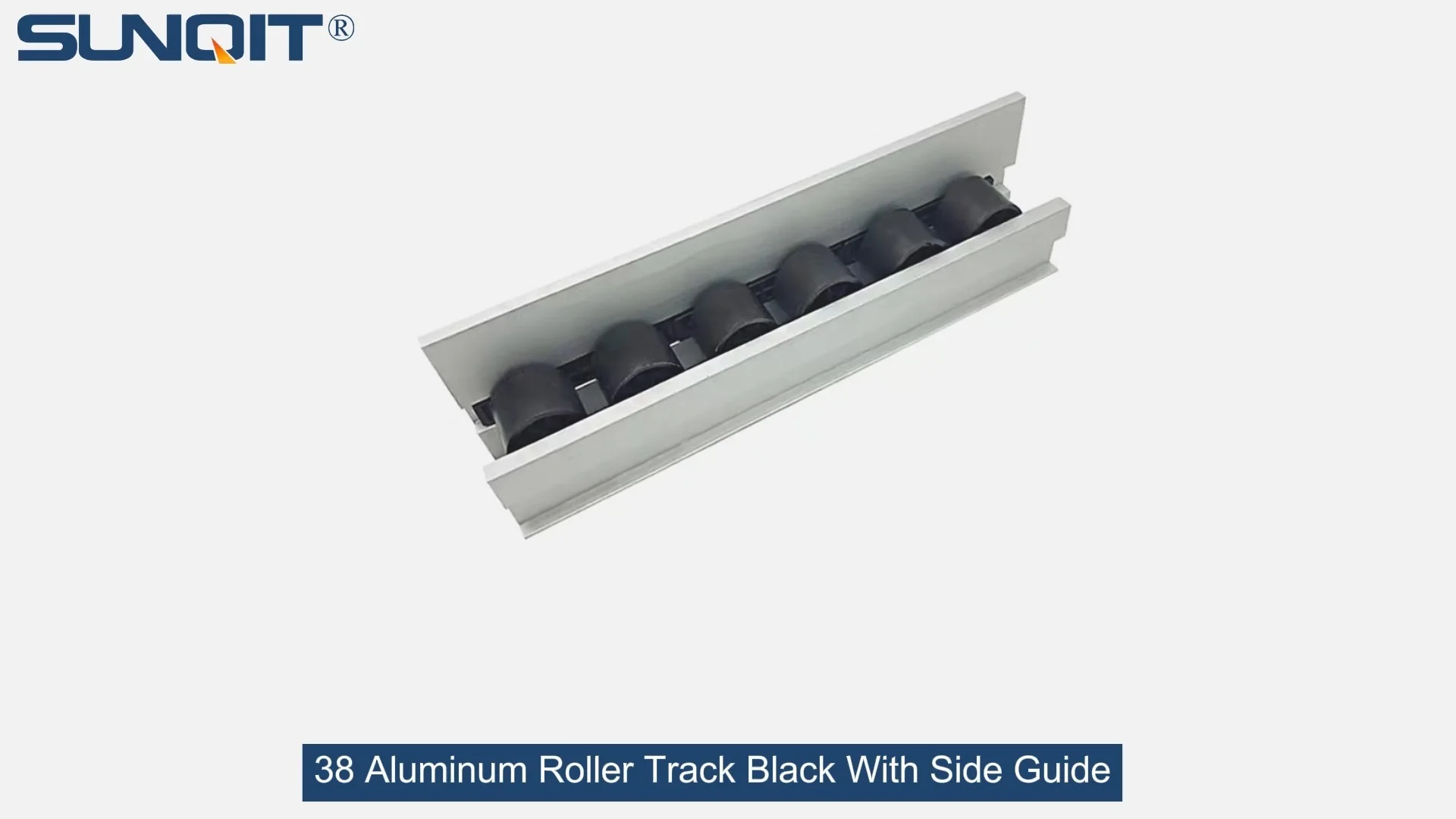
Workshop Internal Conveying: 38 Aluminum Roller Track Black with Side Guide Implementation
Ever walked into a workshop where materials pile up at one station while another waits idly? Or watched workers struggle to push heavy bins across uneven floors, wasting time and energy? If you've been in manufacturing long enough, these scenes are all too familiar. Internal conveying is the backbone of any efficient workshop—but when it's not working right, everything slows down. That's where the 38 Aluminum Roller Track Black with Side Guide comes in. This small but mighty component can turn messy, inefficient material flow into a smooth, seamless process that saves time, reduces waste, and keeps your team happy. Let's dive into how this roller track works, why it's a game-changer for workshops, and how to implement it step by step.
What Is the 38 Aluminum Roller Track Black with Side Guide?
At its core, the 38 Aluminum Roller Track Black with Side Guide is a purpose-built solution for moving materials between workstations, storage areas, and production lines. The "38" denotes its width (38mm)—a versatile size that caters to most small-to-medium material handling needs, like bins of smartphone parts, small medical device components, or lightweight packaging materials. Made from high-grade aluminum, this track boasts durability that stands up to daily wear and tear, while its black finish often includes ESD (electrostatic discharge) protection—a critical feature for industries like 3C assembly where static can ruin sensitive electronics.
The side guides are a standout feature here. Unlike basic roller tracks that leave materials vulnerable to falling off, these integrated guides run along the length of the track, creating a secure channel for bins and boxes. Whether you're moving items down a slight incline or across a flat surface, the side guides ensure nothing slips off the edge, eliminating messy spills and wasted time spent picking up scattered parts.
Why This Roller Track Is a Must-Have for Your Workshop
1. Flexibility to Fit Your Lean System
One of the biggest advantages of this roller track is its compatibility with lean pipe systems and other lean components. Lean manufacturing is all about adaptability, and this track aligns perfectly with that ethos. You can easily connect it to flow racks for raw material storage, or link it to conveyors to extend material flow to other parts of the workshop. Need to reconfigure your production line? The track can be disassembled and reassembled in minutes using roller track connectors, so you don't have to invest in new equipment every time your needs change.
2. Efficiency Boost That Translates to Savings
Manual material handling is a silent productivity killer. Let's do the math: if a worker spends 5 minutes per hour carrying bins from a flow rack to an ESD workstation, that's 40 minutes of wasted time per 8-hour shift. Multiply that by 10 workers, and you're looking at over 6 hours of lost productivity every day. The 38 Aluminum Roller Track eliminates this waste by letting materials glide smoothly from point A to point B. Workers no longer have to lift heavy bins or walk back and forth—they can focus on what they do best: assembling products.
3. Durability & Low Maintenance
Aluminum is naturally resistant to rust and corrosion, making this track ideal for workshops with varying environmental conditions. The black finish adds an extra layer of scratch resistance, so it stays looking new even after months of heavy use. The rollers are made from high-quality plastic or metal, designed to spin freely without jamming. And since it's a simple design, maintenance is minimal—no complex machinery or specialized tools required.
4. Safety First: ESD Protection & Side Guides
For workshops dealing with electronics or medical devices, ESD protection is non-negotiable. The black version of this track often includes ESD treatment to prevent static buildup, keeping sensitive components safe from damage. The side guides turn a common workplace hazard—material spills—into a thing of the past. No more chasing after bins of parts that fell off the track, no more wasted materials, no more potential injuries from tripping over scattered items.
Step-by-Step Implementation Guide
Implementing the 38 Aluminum Roller Track Black with Side Guide doesn't have to be complicated. Follow these steps to get it right the first time:
1. Assess Your Workshop's Needs
Before you buy any roller track, take a detailed inventory of your material handling requirements. Ask: What types of materials are you moving? How heavy are they? What's the distance between stations? Do you need ESD protection? For example, if you're moving small phone components to an ESD workstation, the black ESD track is the way to go. If you're moving heavier bins to a flow rack, ensure the track is rated for the weight (the 38mm track typically handles up to 50kg per meter, which is sufficient for most cases).
2. Design the Track Layout
Grab a pen and paper (or use a digital tool like SketchUp) to map your workshop layout. Mark the starting point (e.g., flow rack) and end point (e.g., ESD workstation). Consider the path: do you need straight sections, or turns? The track can be connected with roller track connectors to make 90-degree or 45-degree turns. Don't forget to leave clear walkways for workers—you don't want the track to block access to emergency exits or other stations.
3. Gather Tools & Materials
You'll need the following to install the track:
- 38 Aluminum Roller Track Black with Side Guide (cut to your desired lengths)
- Roller track connectors (to join track sections)
- Mounting brackets (to attach the track to workstations or racks)
- Screws and a screwdriver/drill
- A level (to ensure proper incline)
- Measuring tape (for accurate cuts)
4. Install the Track
a. Start by mounting brackets to your chosen surface (flow rack, workstation, or floor). Use a level to ensure brackets are aligned—this is crucial for smooth material flow. A slight incline (1-2 degrees) is ideal for gravity-fed systems; if you need to move materials uphill, consider pairing the track with a conveyor.
b. Connect track sections using roller track connectors. Tighten screws firmly to prevent shifting during use.
c. Attach side guides (if not pre-installed). Most guides snap on or screw into place—follow the manufacturer's instructions for a secure fit.
d. Test the track: Place a bin of materials on one end and observe the flow. Adjust the incline if needed—too steep, and materials slide too fast; too flat, and they won't move at all.
5. Integrate with Other Lean Components
The real magic happens when you integrate the track with other lean tools. For example:
- Connect one end to a flow rack to let raw materials slide directly to your ESD workstation.
- Link the track to a conveyor to move finished products to packaging.
- Attach it to a lean pipe workbench to create a seamless assembly line.
This integration turns isolated workstations into a cohesive system, reducing waste and boosting efficiency.
6. Optimize & Adjust
After installation, monitor the track's performance for a few days. Ask your workers for feedback: Is the track in the right place? Are materials flowing smoothly? Do we need to add more sections or adjust the incline? Since this is part of a lean solution, you can easily make changes—no need to commit to a permanent layout.
Real-World Case Study: 3C Assembly Workshop
Let's look at a hypothetical but realistic example of how this track transformed a workshop:
**Workshop**: A mid-sized 3C assembly facility producing wireless earbuds.
**Before**: Workers carried bins of earbud components from a storage room to ESD workstations—5 minutes per trip, 12 dropped bins per month, and high worker fatigue.
**After**: Installed the 38 Aluminum Roller Track Black with Side Guide (ESD version) between the flow rack and ESD workstations, using roller track connectors to create a 15-meter path with a 1.5-degree incline.
| Metric | Before Implementation | After Implementation |
|---|---|---|
| Time per Material Transfer | 5 minutes | 1 minute |
| Monthly Dropped Bins | 12 | 0 |
| Worker Fatigue Score (1-10) | 8 | 3 |
| Productivity Increase | N/A | 18% |
| Material Waste Reduction | N/A | 22% |
The results speak for themselves: the workshop saved over 6 hours of productivity per day, eliminated material spills, and reduced worker fatigue. The track's ESD protection also cut down on damaged components by 15%—a significant cost savings for the facility.
Maintenance Tips to Keep Your Track Running Smoothly
To ensure your track lasts for years, follow these simple maintenance tips:
1. **Clean Regularly**: Wipe the track with a soft cloth every week to remove dust and debris. For stubborn dirt, use a mild detergent (avoid harsh chemicals that can damage the aluminum).
2. **Lubricate Rollers**: Apply a small amount of silicone lubricant to the rollers every month to keep them spinning freely.
3. **Check Connectors**: Tighten roller track connectors every two weeks to prevent shifting.
4. **replace Worn Rollers**: If a roller stops spinning, replace it immediately—worn rollers can slow down material flow or cause jams.
5. **Inspect Side Guides**: Ensure side guides are secure and not cracked. replace them if they show signs of damage.
Why This Track Is Part of a Broader Lean Solution
The 38 Aluminum Roller Track Black with Side Guide isn't just a standalone tool—it's a key component of a lean solution that transforms your entire workshop. Lean manufacturing focuses on eliminating waste (known as "muda" in Japanese), and this track addresses several types of waste:
- **Transport Waste**: Reduces manual carrying of materials.
- **Motion Waste**: Cuts down on worker movement between stations.
- **Defect Waste**: ESD protection prevents damaged components.
- **Inventory Waste**: Smooth flow reduces overstocking at workstations.
When paired with lean pipe systems, flow racks, and ESD workstations, this track creates a flexible, adaptive production line that can quickly respond to changing market demands. For example, if you need to switch to producing a new product, you can reconfigure the track in hours—no need to invest in new equipment or shut down production for days.
Final Thoughts
The 38 Aluminum Roller Track Black with Side Guide is more than just a roller track—it's a simple, effective way to boost efficiency, reduce waste, and improve safety in your workshop. Whether you're in 3C assembly, medical device manufacturing, or any other industry that relies on smooth material flow, this track is a smart investment.
Remember, lean manufacturing isn't about complex systems or expensive tools—it's about finding small, impactful changes that add up to big results. The 38 Aluminum Roller Track is exactly that: a small change that can make a huge difference in your daily operations. So why wait? Start implementing it today and see how it transforms your workshop's internal conveying system.