- Company Articles
- Products and Technology
- Product knowledge
- Zinc-Plated vs. Chrome Lean Pipe Clamp B: Corrosion Resistance Analysis

Zinc-Plated vs. Chrome Lean Pipe Clamp B: Corrosion Resistance Analysis
Related Product
Lean Pipe Clamp
Lean pipe clamp is used for rack system hang monitor or other panel for workbenck, flowrack in production daily use.
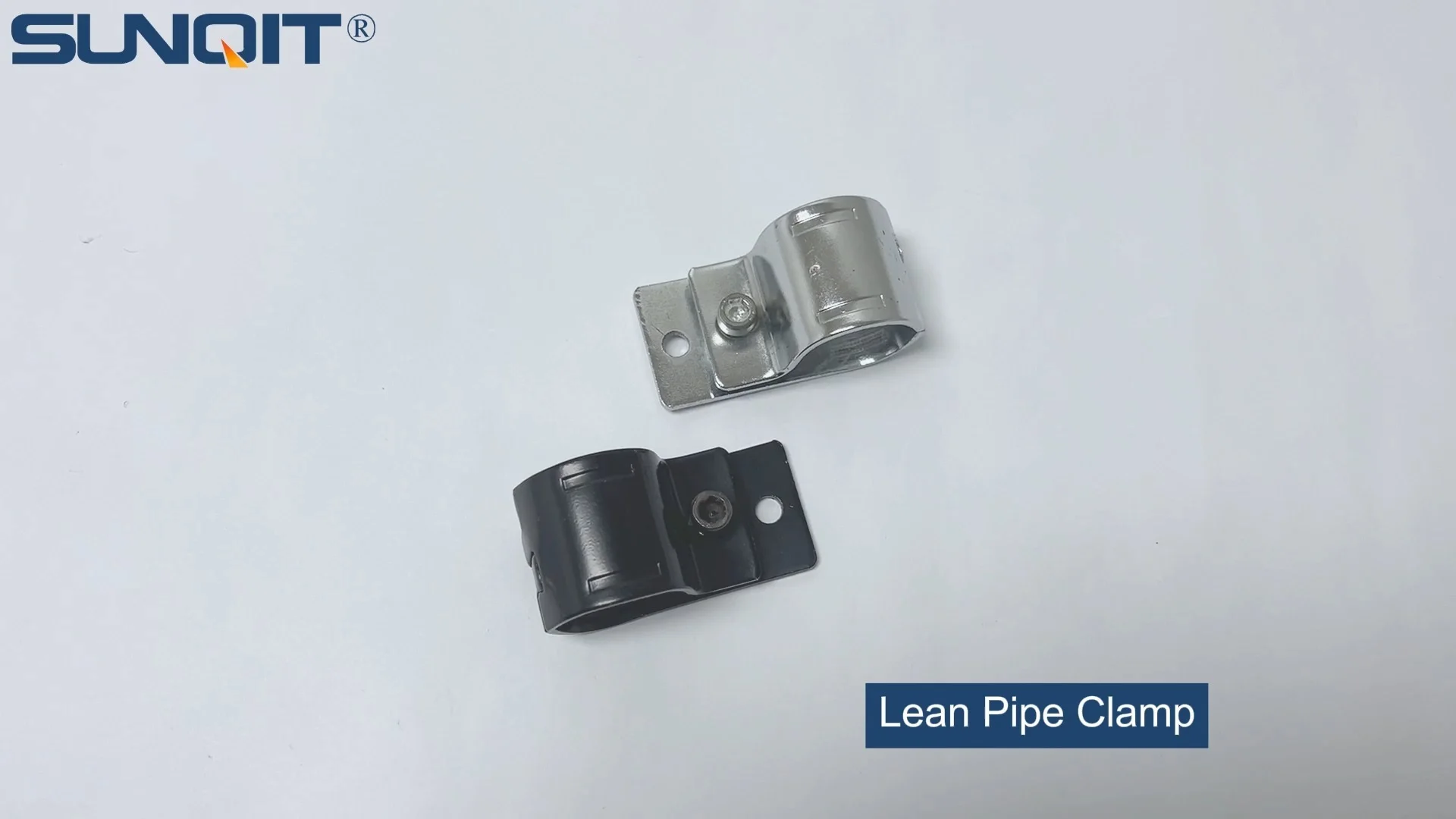
Walk into any modern manufacturing facility, and you'll likely spot a network of lean pipe systems weaving through the workspace—workbenches holding assembly tools, flow racks moving components smoothly, and turnover trolleys shuttling materials between stations. These systems are the backbone of lean manufacturing, designed to boost efficiency, reduce waste, and keep operations running like a well-oiled machine. But at the heart of these systems, often overlooked but critically important, are the small but mighty components that hold everything together: lean pipe clamps. Specifically, Lean Pipe Clamp B, a workhorse part that connects pipes, stabilizes joints, and ensures the entire structure stays rigid under daily wear and tear.
When it comes to Lean Pipe Clamp B, one question consistently arises for facility managers and procurement teams: zinc-plated or chrome-plated? While both options serve the same basic function—securing lean pipe joints—their ability to stand up to corrosion can make or break a system's lifespan, especially in harsh industrial environments. In this article, we'll dive deep into the world of these two coatings, exploring how they're made, how they protect against rust and degradation, and which one might be the better fit for your facility's unique needs. By the end, you'll have a clear understanding of why corrosion resistance matters, and how to choose the right clamp to keep your lean pipe system strong for years to come.
Understanding Lean Pipe Clamp B: The Unsung Hero of Lean Systems
Before we compare zinc and chrome coatings, let's take a moment to appreciate what Lean Pipe Clamp B actually does. In the world of lean pipe systems, pipes and joints get most of the attention—after all, they form the visible framework. But without clamps, those joints would loosen, pipes would shift, and the entire structure could wobble or even collapse under the weight of tools, materials, or products. Lean Pipe Clamp B is designed to fix this problem: it's a sturdy, often U-shaped or C-shaped component that wraps around the intersection of two lean pipes, tightening with a bolt or screw to create a secure, non-slip connection.
What makes Lean Pipe Clamp B so versatile? Its simple design allows it to work with a range of pipe diameters and joint angles, from 30° and 45° bends to straight 180° connections. Whether you're building a workbench, a flow rack, or a turnover trolley, chances are you'll need dozens—if not hundreds—of these clamps to ensure stability. And because they're exposed to the elements (even indoors, manufacturing environments can be hot, humid, or dusty), their ability to resist corrosion directly impacts how often you'll need to replace them, and how safe your system remains over time.
Zinc-Plated Lean Pipe Clamp B: The Cost-Effective Protector
How Zinc Plating Works
Zinc plating is one of the oldest and most widely used methods for protecting metal components from corrosion. The process, known as electroplating, involves submerging the steel clamp in a bath of zinc ions and passing an electric current through the solution. This causes the zinc ions to bond to the surface of the steel, forming a thin, uniform layer—typically 5 to 25 microns thick (for context, a human hair is about 50 microns thick). The result? A shiny, silver-gray finish that acts as a barrier between the steel underneath and the outside world.
Corrosion Resistance: The Sacrificial Shield
Zinc's secret to fighting corrosion lies in a phenomenon called "sacrificial protection." Unlike some coatings that simply block moisture and oxygen from reaching the steel, zinc is more reactive than steel. That means if the coating gets scratched or chipped—exposing the steel underneath—the zinc will corrode first, "sacrificing" itself to protect the base metal. This creates a self-healing effect: even small damages won't immediately lead to rust on the clamp, because the zinc around the scratch will oxidize instead. Over time, this oxidation forms a dull, powdery layer called zinc carbonate, which acts as an additional physical barrier against further corrosion.
In mild environments—think dry indoor facilities with controlled temperatures and low humidity—this protection is more than enough. A zinc-plated Lean Pipe Clamp B might last 5 to 7 years before showing signs of significant rust, even with daily use. And because zinc plating is relatively inexpensive compared to other coatings, it's a popular choice for facilities looking to keep costs low without sacrificing basic durability.
Limitations of Zinc-Plated Clamps
That said, zinc plating isn't invincible. Its thinness (especially compared to chrome) means it can wear away faster in harsh conditions. High humidity, frequent exposure to water or chemicals (like cleaning agents or oils), or outdoor use can (accelerate) the corrosion process. For example, in a food processing plant where floors are regularly hosed down, or a warehouse near the coast with salty air, zinc-plated clamps might start to rust within 1 to 2 years. The sacrificial protection only works as long as there's zinc left to corrode, and once the coating is gone, the steel underneath will begin to rust quickly.
Another consideration is maintenance. While zinc-plated clamps don't require constant upkeep, they do benefit from occasional care: wiping away dust and moisture with a dry cloth, or applying a light coat of anti-rust spray if you notice early signs of oxidation. Skip this, and even in moderate environments, you might find yourself replacing clamps sooner than expected.

Chrome-Plated Lean Pipe Clamp B: The Heavy-Duty Defender
The Chrome Plating Process: Layers of Protection
Chrome plating, on the other hand, is a more complex and durable coating method. Unlike zinc, which is often applied directly to steel, chrome plating typically involves multiple layers: first, a thin layer of copper to smooth out the steel's surface, then a layer of nickel to enhance adhesion and corrosion resistance, and finally a top layer of chromium. This multi-step process results in a much thicker coating than zinc—usually 20 to 50 microns—and a finish that's hard, shiny, and mirror-like.
The key difference? Chrome is an inert metal, meaning it doesn't react easily with oxygen, water, or most chemicals. This makes the coating itself highly resistant to corrosion, rather than relying on sacrificial protection like zinc. The hard, non-porous surface of chrome also repels moisture and dirt, preventing the buildup of grime that can trap water and rust.
Corrosion Resistance: Built to Last in Harsh Environments
In terms of pure corrosion resistance, chrome-plated Lean Pipe Clamp B outperforms zinc in almost every scenario. In high-humidity environments—like a manufacturing plant in a tropical climate, or a facility that uses steam for cleaning—chrome clamps can last 10 to 15 years without showing significant degradation. They're also more resistant to chemical exposure, including oils, solvents, and mild acids, making them ideal for automotive shops, chemical processing plants, or pharmaceutical facilities where spills are common.
Even in outdoor settings, chrome holds up well. A lean pipe system used for outdoor storage or loading docks, exposed to rain, snow, and UV rays, will benefit from chrome-plated clamps that won't rust or fade. And because the coating is so hard, it's also more resistant to physical wear—scratches from tools or impacts from trolleys are less likely to penetrate the chrome layer, keeping the underlying steel protected.
The Tradeoff: Cost and Brittleness
So, if chrome is so much better, why wouldn't everyone use it? The answer is simple: cost. Chrome plating is a more labor-intensive process, requiring multiple layers and precise control over temperature and chemical baths. As a result, chrome-plated Lean Pipe Clamp B can cost 2 to 3 times more than zinc-plated versions. For small facilities with limited budgets, or systems that don't face harsh conditions, this extra expense might not be justified.
Another potential downside is brittleness. While the chrome layer is hard, it can crack or chip if the clamp is bent or struck with excessive force. This is rare in normal use—lean pipe systems are designed to be sturdy, and clamps are rarely subjected to extreme impacts—but it's something to keep in mind if your facility involves heavy machinery or frequent movement of large, bulky items near the lean pipe structure.

Zinc vs. Chrome: A Head-to-Head Comparison
To help you visualize the differences, let's break down the key factors side by side:
| Feature | Zinc-Plated Lean Pipe Clamp B | Chrome-Plated Lean Pipe Clamp B |
|---|---|---|
| Coating Thickness | 5–25 microns | 20–50 microns |
| Corrosion Resistance | Good for dry, indoor environments; moderate humidity | Excellent for high humidity, chemicals, outdoor use |
| Typical Lifespan (Industrial Use) | 5–7 years (mild conditions); 1–2 years (harsh conditions) | 10–15 years (mild conditions); 7–10 years (harsh conditions) |
| Cost | Low to moderate | High |
| Maintenance Needs | Occasional cleaning; anti-rust spray in humid areas | Minimal—wipe clean with a damp cloth |
| Physical Durability | Moderate resistance to scratches/wear | High resistance to scratches/wear; risk of chipping if bent |

Real-World Examples: When to Choose Zinc vs. Chrome
Example 1: A Small Electronics Assembly Workshop
Imagine a 5,000-square-foot facility where workers assemble circuit boards. The environment is air-conditioned, with low humidity, and the lean pipe systems include workbenches and small flow racks for components. Spills are rare, and the facility is cleaned weekly with a dry mop. In this case, zinc-plated Lean Pipe Clamp B is the perfect fit. The clamps will face minimal corrosion risk, and the lower cost will help the business stay within budget. With proper maintenance, the clamps should last 7+ years, requiring only occasional tightening of bolts.
Example 2: A Large Automotive Manufacturing Plant
Now, picture a 100,000-square-foot automotive plant with assembly lines, paint shops, and frequent use of oil and cleaning solvents. The facility is not air-conditioned, and humidity levels rise in the summer months. Lean pipe systems here include heavy-duty workbenches, material racks, and turnover trolleys that move parts between stations, often bumping into the pipe structures. Here, chrome-plated clamps are a must. The extra cost is justified by the need for durability—chrome will resist the oil, humidity, and physical wear, reducing downtime and replacement costs over time. The clamps might last 12+ years, even with heavy use.
Example 3: A Bakery with High Humidity
A mid-sized bakery uses lean pipe systems for cooling racks, ingredient storage, and packaging stations. The air is warm and humid from ovens, and floors are regularly hosed down to keep them clean. While the environment isn't chemically harsh, the constant moisture is tough on metal. Here, a hybrid approach might work: use zinc-plated clamps for indoor storage racks away from water sources, and chrome-plated clamps for cooling racks near ovens or floor-level systems that get wet during cleaning. This balances cost and performance, ensuring critical areas are protected while non-critical ones stay budget-friendly.
Maintenance Tips to Extend Clamp Lifespan
Whichever type of clamp you choose, proper maintenance can extend its lifespan and keep your lean pipe system secure. Here are a few simple tips:
- For Zinc-Plated Clamps: Wipe down with a dry cloth monthly to remove dust and moisture. If you notice early signs of rust (small brown spots), apply a light coat of anti-rust spray or wax to slow degradation. Tighten bolts quarterly to prevent loosening, which can cause extra stress on the clamp.
- For Chrome-Plated Clamps: Clean with a damp cloth and mild soap to remove fingerprints or grease (which can trap moisture). Avoid abrasive cleaners or steel wool, as these can scratch the chrome layer. Inspect for chips or cracks annually, and replace any damaged clamps to prevent rust from spreading.
- General Care: Keep lean pipe systems away from standing water, and ensure work areas are well-ventilated to reduce humidity. If a clamp does loosen or show signs of damage, replace it immediately—one weak clamp can compromise the entire structure.
Conclusion: Choosing the Right Clamp for Your Lean Pipe System
At the end of the day, the choice between zinc-plated and chrome-plated Lean Pipe Clamp B comes down to two factors: your environment and your budget. Zinc is the cost-effective workhorse, perfect for dry, indoor facilities where corrosion risk is low. Chrome is the heavy-duty champion, ideal for harsh environments—high humidity, chemicals, outdoor use—where durability and longevity are non-negotiable.
But remember: no matter which coating you choose, the quality of the clamp itself matters. A poorly made zinc-plated clamp will fail faster than a high-quality one, just as a cheap chrome plating with thin layers won't last. When sourcing clamps, look for reputable suppliers who use high-grade steel and strict plating standards—this ensures you're getting the protection you pay for.
Lean pipe systems are all about efficiency, and the right clamps keep that efficiency intact. By understanding the corrosion resistance of zinc and chrome, and matching the coating to your facility's needs, you'll build a system that's not just productive, but resilient—standing strong through years of daily use, and keeping your operations running smoothly. After all, in lean manufacturing, every component counts—and that includes the unsung heroes holding it all together: the clamps.