- Company Articles
- FAQ
- FAQ
- Castor Fixed Plate FAQs: Answering Factory Managers' Top Questions

Castor Fixed Plate FAQs: Answering Factory Managers' Top Questions
Related Product
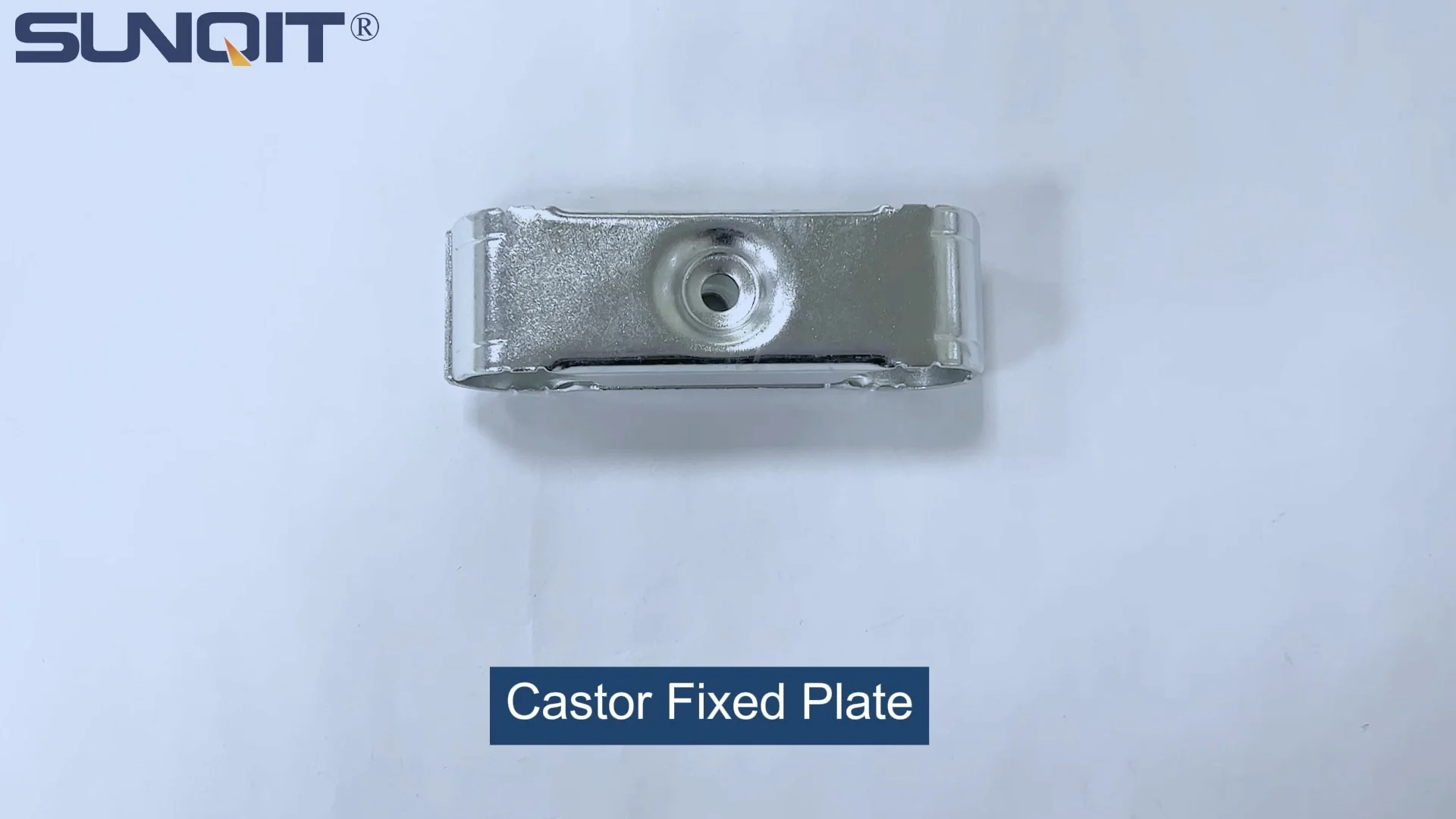
Castor Fixed Plate
Castor fixed plate, used for castor installation, one castor need two pcs castor plate to fix under the workbench, flow rack, and hand trolley.
Picture this: It's Monday morning, and your production line is humming along. Your team is prepping for a big order deadline, and every second counts. Suddenly, a loud clatter echoes from the assembly area—a trolley loaded with critical components has ground to a halt. The caster wheel looks fine, but on closer inspection, you notice the metal plate holding it to the trolley frame is bent, its bolts stripped. Downtime hits, frustration rises, and that deadline feels a little further away. Sound familiar?
For factory managers, it's often the "small parts" that cause the biggest headaches. Enter the castor fixed plate—a component so unassuming, it's easy to overlook until it fails. But here's the truth: A well-chosen, properly installed castor fixed plate isn't just a "plate." It's the unsung hero that keeps your caster wheels secure, your trolleys moving, and your lean manufacturing systems running like clockwork. Whether you're managing a lean pipe workbench setup, aluminum profile assembly lines, or a fleet of material-handling trolleys, understanding castor fixed plates is non-negotiable.
We've compiled the most pressing questions factory managers ask about castor fixed plates—from "What even is it?" to "Why does mine keep breaking?"—and answered them with the real-world insight only years of working with manufacturers can provide. Let's dive in.
1. What Exactly Is a Castor Fixed Plate, and Why Is It More Than Just a "Plate"?
At first glance, a castor fixed plate might look like a simple metal or plastic square with holes drilled in it. But that's like calling a smartphone "just a screen." Its job? To create a rock-solid connection between a caster wheel and the equipment it's attached to—whether that's a lean pipe workbench, a turnover trolley, or a heavy-duty material rack. Think of it as the bridge between mobility (the caster wheel) and stability (the equipment frame).
Here's why it matters: Without a reliable fixed plate, even the sturdiest caster wheel becomes a liability. A weak plate can bend under load, loosen over time, or even snap—turning a mobile workstation into a stationary obstacle (or worse, a safety hazard). For example, in a automotive parts plant we worked with, a faulty fixed plate on a trolley caused a 500-pound load to shift, damaging components and halting production for two hours. The root cause? A generic, low-grade plate that couldn't handle the trolley's daily wear and tear.
Modern castor fixed plates are engineered with precision: They're designed to distribute weight evenly across the caster wheel and frame, resist vibration (common in busy factories), and withstand exposure to oils, chemicals, or moisture. So next time you see one, remember: It's not just a plate—it's the backbone of your factory's mobility.
2. How Do I Choose the Right Castor Fixed Plate for My Factory's Specific Needs?
Choosing a castor fixed plate isn't a one-size-fits-all process. The wrong choice can lead to frequent replacements, downtime, or even workplace injuries. Here's how to narrow it down:
- Start with load capacity. This is non-negotiable. If your trolley carries 800 pounds daily, a plate rated for 500 pounds is a disaster waiting to happen. Always factor in "dynamic load" (weight while moving) and "static load" (weight when stationary)—dynamic loads often stress plates more. A good rule of thumb: Choose a plate rated for 1.5x your maximum expected load to account for unexpected spikes.
- Material matters. Steel plates are go-to for heavy loads and rugged environments (think warehouses with concrete floors). Aluminum plates are lighter and corrosion-resistant, making them ideal for cleanrooms or food processing facilities. Plastic plates work for light-duty tasks (e.g., office equipment trolleys) but won't hold up in industrial settings.
- Compatibility with caster wheels and frames. Not all plates fit all caster wheels. Check the bolt hole pattern on your caster wheel's mounting bracket—if it doesn't align with the plate's holes, you'll end up with a wobbly, unsafe connection. Similarly, if you're using aluminum profile frames, ensure the plate's thickness and bolt size match the profile's T-slot dimensions to avoid stripping.
- Environment. Does your factory use coolants or oils? Opt for rust-resistant steel or aluminum. High-moisture areas (like washing stations) demand stainless steel or coated plates. Even temperature swings matter—plastic plates can become brittle in cold environments, while uncoated steel may warp in extreme heat.
Pro tip: Work with a supplier who asks about your specific use case. A good caster and accessories supplier won't just sell you a plate—they'll ask, "What's the heaviest load? How often do you move it? What's the floor like?" That's how you avoid costly mismatches.

3. Can Castor Fixed Plates Work with Different Types of Caster Wheels and Accessories?
Absolutely—but compatibility isn't automatic. Castor fixed plates are designed to pair with specific caster wheel types, and mixing and matching without checking can lead to disaster. Let's break down the most common pairings:
Swivel vs. rigid caster wheels: Swivel wheels (which rotate 360°) require fixed plates with extra reinforcement around the bolt holes, as the constant movement creates more stress. Rigid wheels (fixed in direction) can use simpler plates, but still need a snug fit to prevent lateral shifting.
Brake-equipped caster wheels: If your caster wheel has a brake (like a foot brake or total-lock brake), the fixed plate must have enough clearance for the brake mechanism to engage without hitting the plate. We once saw a factory where the fixed plate was too thick, blocking the brake lever—rendering the brake useless and causing a trolley to roll away.
Caster accessories: Accessories like shock-absorbing pads or noise-reducing bushings often require plates with recessed areas or extra holes to accommodate them. For example, a vibration-dampening pad between the plate and the trolley frame needs space to compress—so a plate with a raised edge might not work.
The key? Always check the manufacturer's specs for both the caster wheel and the fixed plate. Most reputable suppliers list compatible plate models for their wheels, or provide a compatibility chart. When in doubt, ask: "Will this plate work with my [brand/model] caster wheel and [accessory type]?" A supplier worth their salt will confirm—or point you to a better match.

4. How Do Castor Fixed Plates Integrate with Lean Manufacturing Systems, Like Lean Pipe Workbenches or Aluminum Profiles?
Lean manufacturing is all about efficiency, flexibility, and reducing waste—and castor fixed plates play a quiet but critical role in making that happen. Here's how they fit into two common lean setups:
Lean pipe workbenches: These modular workstations (built with lean pipe and joints) are designed to be reconfigured as production needs change. Adding mobility to a lean pipe workbench? You'll need castor fixed plates that attach securely to the pipe frame. Look for plates with slots instead of fixed holes—they allow you to adjust the caster wheel position as you modify the workbench's height or layout. For example, a electronics manufacturer we worked with used slotted plates to shift caster wheels inward when the workbench was loaded with heavy test equipment, improving stability, then outward when it needed to navigate tight aisles.
Aluminum profile systems: Aluminum extrusion profiles (like 4040 or 3030 series) are popular for their lightweight strength and modularity. Castor fixed plates for aluminum profiles often feature T-slot compatible bolts, which slide into the profile's grooves for tool-free installation. This is a game-changer for lean environments—no drilling or welding required. A medical device plant recently told us they reconfigured their entire assembly line in a day using T-slot plates and aluminum profiles, cutting setup time by 70% compared to traditional steel frames.
The bottom line: In lean systems, fixed plates aren't just about mobility—they're about adaptability. Choose plates that let you tweak, adjust, and repurpose equipment without starting from scratch. That's how you turn "set it and forget it" into "change it and thrive."

5. What Are the Common Mistakes to Avoid When Installing Castor Fixed Plates?
Even the best castor fixed plate will fail if installed incorrectly. We've seen these mistakes cost factories thousands in downtime—here's how to avoid them:
- Using the wrong bolts. It's tempting to grab whatever bolts are in the toolbox, but undersized or low-quality bolts will stretch or snap under load. Always use the bolts recommended by the plate manufacturer—they're engineered to match the plate's material and load capacity. For example, grade 8 bolts are a must for steel plates carrying over 1,000 pounds; grade 5 might work for lighter aluminum plates.
- Over-tightening (or under-tightening) bolts. Over-tightening can strip the plate's threads or warp the plate itself; under-tightening leaves room for the wheel to wobble, loosening the bolts over time. Use a torque wrench set to the manufacturer's specs—most plates list a recommended torque (e.g., 25 ft-lbs for steel, 15 ft-lbs for aluminum).
- Ignoring the frame material. If you're attaching a steel plate to an aluminum profile frame, you need to prevent galvanic corrosion (a chemical reaction between dissimilar metals). Use a dielectric grease or plastic washer between the plate and frame to isolate them. A food factory learned this the hard way when their aluminum frames corroded within months—all because they skipped this step.
- Forgetting to align the plate square with the frame. A misaligned plate forces the caster wheel to "fight" the direction of movement, causing uneven wear on the wheel and premature plate failure. Use a square tool to ensure the plate is perpendicular to the frame before tightening bolts.
Pro installation hack: Mark the bolt hole positions with a center punch before drilling—this prevents the drill bit from wandering, ensuring clean, straight holes that line up perfectly with the caster wheel's mounting bracket.
6. How Do I Maintain Castor Fixed Plates to Prevent Downtime?
Castor fixed plates are tough, but they're not indestructible. A little maintenance goes a long way in keeping them (and your production line) running smoothly:
Weekly inspections: Walk the floor and check for loose bolts, bent plates, or signs of corrosion. Pay extra attention to plates on trolleys or workbenches that move frequently—vibration is their worst enemy. Tighten any loose bolts to the recommended torque (and replace stripped bolts immediately).
Cleaning: Wipe down plates with a dry cloth to remove dust, debris, or oil buildup. In high-moisture areas, use a mild detergent and dry thoroughly to prevent rust. For stainless steel plates, a quick polish with a stainless cleaner keeps them corrosion-free.
Lubrication (where needed): If your plate has moving parts (like adjustable slots or pivot points), apply a light machine oil or silicone spray every month to keep them from seizing. Avoid heavy greases—they attract dirt, which can gum up the works.
replace worn plates proactively: If a plate is bent, cracked, or has stripped threads, replace it immediately. Waiting until it fails means downtime, and possibly damage to the caster wheel or equipment frame. We recommend keeping a few spare plates in stock—especially for critical equipment like assembly line trolleys.
One factory we advised started a "plate maintenance checklist" tied to their weekly 5S audits—and cut caster-related downtime by 60% in three months. Small habits, big results.
Castor Fixed Plate Materials: Which Is Right for You?
| Material | Typical Load Capacity (lbs) | Best For | Pros | Cons | Compatibility Notes |
|---|---|---|---|---|---|
| Steel (Zinc-Plated) | 500–3,000+ | Heavy-duty trolleys, material racks, lean pipe workbenches in dry environments | High strength, affordable, widely available | Prone to rust in moist areas; heavier than aluminum | Works with most steel caster wheels and rigid aluminum profiles |
| Stainless Steel | 800–2,500 | Food processing, pharmaceutical, or marine environments (high moisture/chemicals) | Corrosion-resistant, easy to clean, durable | More expensive than zinc-plated steel; lower load capacity than high-grade steel | Ideal for stainless steel caster wheels and aluminum profile systems |
| Aluminum | 300–1,500 | Cleanrooms, lightweight trolleys, aluminum profile setups | Lightweight, corrosion-resistant, won't scratch floors | Lower load capacity; softer than steel (prone to bending under extreme loads) | Perfect match for aluminum caster wheels and T-slot aluminum profiles |
| Reinforced Plastic | 100–500 | Office equipment, medical carts, low-load applications | Lightweight, non-conductive, inexpensive | Not suitable for industrial use; can warp in high heat | Only works with small, light-duty caster wheels |
7. My Current Castor Fixed Plates Keep Loosening—What Could Be Causing This, and How to Fix It?
A loose castor fixed plate is more than an annoyance—it's a safety risk. If yours keep coming loose, here are the likely culprits and fixes:
Cause 1: Vibration fatigue. Factories are noisy, and all that shaking can loosen bolts over time—especially if the plate is attached to a lightweight frame (like a lean pipe workbench) that vibrates more. Fix: Use lock washers (split or star washers) or thread-locking adhesive (like Loctite) on the bolts. For extreme cases, switch to serrated flange bolts, which bite into the plate and frame to resist loosening.
Cause 2: The plate is undersized for the load. If the plate bends even slightly under load, the bolts will loosen as the plate flexes. Fix: Upgrade to a heavier-duty plate with a higher load rating. Check the plate's deflection rating (how much it bends under load)—look for less than 0.01 inches of deflection at max load.
Cause 3: Worn or stripped threads in the frame. If the frame (not the plate) has stripped threads, tightening the bolts won't help—they'll just spin. Fix: Use a thread repair kit (like a Helicoil) to restore the frame's threads, or drill and tap new, larger holes (and use larger bolts) if the frame material allows.
Cause 4: Misalignment during installation. A plate that's not square to the frame creates uneven stress, causing bolts to loosen on one side first. Fix: Reinstall the plate using a square tool to align it, and torque bolts in a crisscross pattern (like tightening a car tire) to distribute pressure evenly.
One automotive plant solved their "eternal loosening" problem by switching to serrated flange bolts and applying thread locker—they haven't had a loose plate in over a year.
8. Can I Customize Castor Fixed Plates If My Factory Has Unique Requirements?
Absolutely—and in many cases, customization is the key to solving unique factory challenges. Reputable suppliers offer custom castor fixed plates tailored to your specs, including:
- Custom sizes/hole patterns: If your equipment has non-standard frame dimensions or caster wheel mounting brackets, suppliers can drill holes in specific positions or cut plates to unique shapes (e.g., rectangular, circular, or even L-shaped for corner mounting).
- Special materials/coatings: Need a plate that can withstand extreme heat (like near ovens) or chemical exposure (like battery manufacturing)? Suppliers can use high-temperature alloys, specialized coatings (e.g., powder coating, anodizing), or even composite materials.
- Integrated features: Add slots for cable management, recessed areas for accessories (like brakes or sensors), or reinforced edges for extra strength. One aerospace factory had us add a built-in level indicator to their plates, ensuring their sensitive measurement trolleys stayed perfectly horizontal.
- Branding or labeling: For traceability, some factories opt for plates with laser-etched part numbers or company logos—helpful for tracking maintenance or identifying equipment in large facilities.
Customization does add lead time (usually 2–4 weeks vs. off-the-shelf) and cost, but the payoff can be huge. A electronics manufacturer we worked with saved $10,000 annually in downtime after customizing plates to fit their unique aluminum profile workbenches—no more jury-rigging with washers or spacers.
Pro tip: When requesting a custom plate, provide as much detail as possible—load capacity, environment, frame material, caster wheel model, and even photos of the equipment. The more info your supplier has, the better they can tailor the plate to your needs.
Final Thoughts: Don't Overlook the "Small" Parts
Castor fixed plates might not get the glory of flashy new machinery, but they're the quiet workhorses that keep your factory moving. Choosing the right plate, installing it properly, and maintaining it regularly isn't just about avoiding downtime—it's about building a lean, efficient operation where every component works in harmony.
Whether you're outfitting a new lean pipe workbench, upgrading your caster and accessories, or troubleshooting a persistent loosening issue, remember: The best factory managers don't just manage machines—they master the details. And when it comes to castor fixed plates, those details make all the difference.
Need help finding the perfect castor fixed plate for your factory? Start by asking your supplier these questions: "What's the maximum load this plate can handle in my environment?" and "How does it integrate with my existing lean pipe or aluminum profile systems?" A supplier who can answer those with confidence is a partner worth keeping.