- Company Articles
- FAQ
- FAQ
- Common FAQs About 3060 Aluminum Angle Yards Answered

Common FAQs About 3060 Aluminum Angle Yards Answered
Related Product
3060 Aluminum Angle Yards
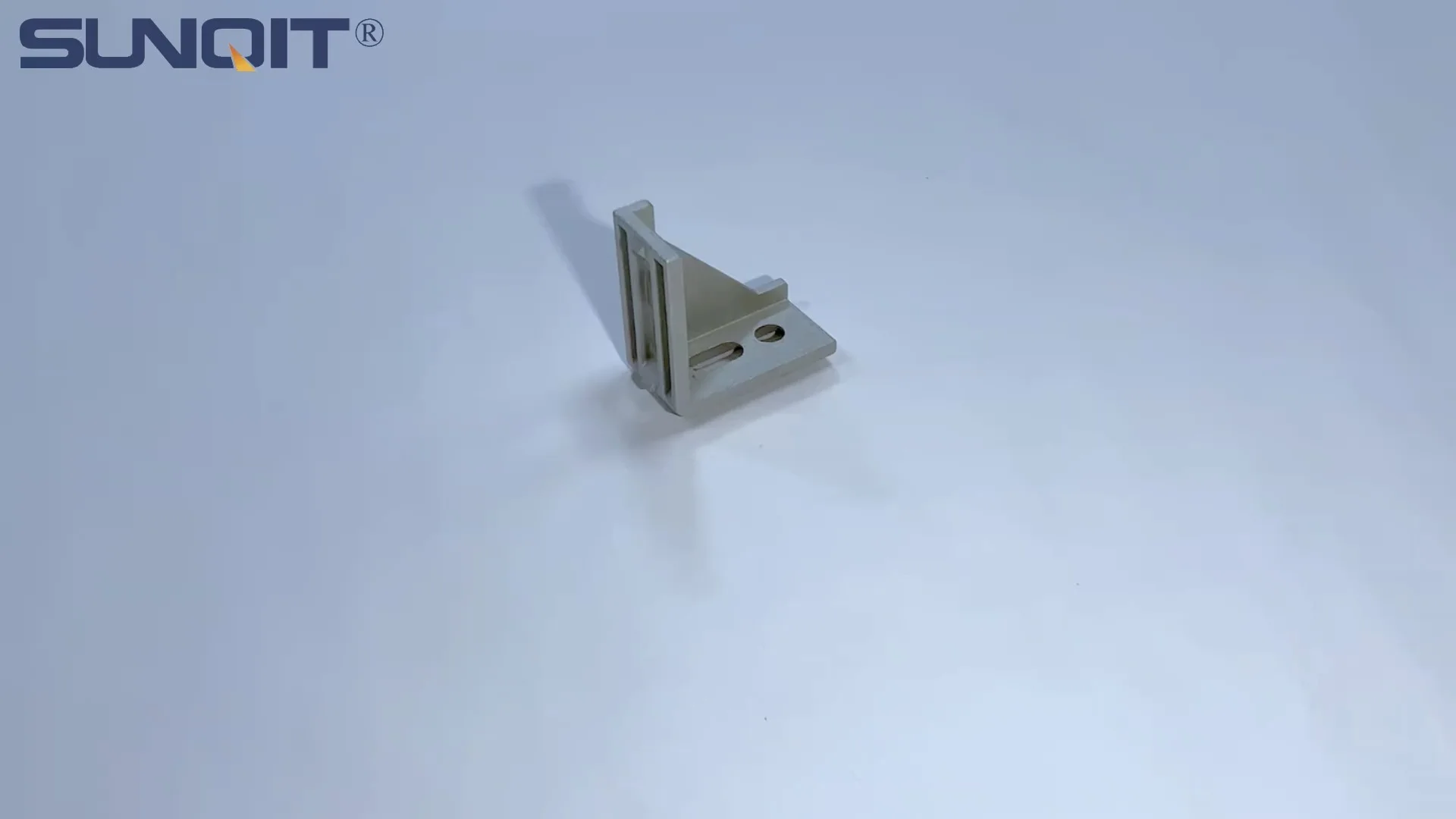
It used for 90° flat connection for 20 series aluminum profile.
If you've ever stepped into a bustling workshop, visited a manufacturing plant, or even dabbled in DIY projects that require sturdy, customizable structures, you've likely encountered aluminum profiles. These versatile building blocks are the unsung heroes of countless industrial, commercial, and hobbyist endeavors, thanks to their unique blend of strength, lightweight design, and adaptability. Among the wide range of aluminum profiles available, the 3060 aluminum angle yard stands out as a workhorse for medium-to-heavy-duty applications. But what exactly is it? How does it differ from other profiles? And when should you choose it over alternatives? In this guide, we'll dive into the most common questions about 3060 aluminum angle yards, breaking down technical details into simple, relatable terms—no engineering degree required.
1. What Exactly Are 3060 Aluminum Angle Yards, and What Makes Them Unique?
Let's start with the basics: A 3060 aluminum angle yard is a type of extruded aluminum profile defined by its cross-sectional dimensions—30 millimeters in one leg and 60 millimeters in the other, forming an "L" shape (hence "angle yard"). But its appeal goes far beyond just size. These profiles are typically made from 6063-T5 aluminum alloy, a material prized for its excellent strength-to-weight ratio, corrosion resistance, and machinability. The "T5" designation refers to the heat treatment process, which enhances the alloy's hardness and durability without sacrificing flexibility.
What truly sets 3060 aluminum angle yards apart, though, is their T-slot design. Running along the length of each leg are precision-machined grooves (T-slots) that allow for easy attachment of accessories like brackets, panels, and fasteners. Unlike traditional steel angles, which often require welding or drilling to modify, the T-slot system lets you assemble, disassemble, and reconfigure structures with nothing more than a hex key. This modularity is a game-changer for anyone who needs flexibility—whether you're building a temporary workbench or a permanent assembly line that might need updates down the road.
Another standout feature is the anodized finish. Most 3060 angle yards undergo an anodization process, where the surface is electrochemically treated to form a protective oxide layer. This not only gives the profile a sleek, uniform appearance (usually silver or black) but also boosts its resistance to scratches, rust, and wear—critical for environments where the profile might face daily use or exposure to moisture, like factories or outdoor kiosks.
2. What Are the Primary Applications of 3060 Aluminum Angle Yards?
3060 aluminum angle yards are like the Swiss Army knives of the aluminum profile world—versatile enough to tackle a wide range of tasks, yet specialized enough to excel in medium-to-heavy-duty roles. Let's break down their most common uses:
Industrial Workbenches and Assembly Stations
In manufacturing settings, durability and adaptability are non-negotiable. 3060 angle yards shine here, forming the frames of sturdy workbenches that can withstand the weight of tools, machinery, and ongoing assembly work. The T-slot design makes it easy to attach accessories like tool hooks, LED task lights, or even small conveyors, turning a basic bench into a customized workstation tailored to specific tasks—whether it's electronics assembly or heavy part fabrication.
Material Racks and Storage Solutions
Warehouses and workshops thrive on organization, and 3060 aluminum angle yards are ideal for building material racks, shelving units, and storage systems. Their load-bearing capacity (we'll dive into that later) means they can safely hold boxes, raw materials, or finished products, while the T-slots allow for adjustable shelving heights. For example, a material rack B (3 row and 3 floor) —a common industrial storage setup—often uses 3060 profiles as uprights and cross-braces, ensuring stability even when fully loaded.
Machine Guards and Safety Enclosures
Safety is paramount in industrial environments, and 3060 angle yards are frequently used to build machine guards, enclosures for CNC machines, or barriers around moving equipment. Their strength ensures they can withstand accidental impacts, while their lightweight nature makes them easy to install and reposition if workflows change. Adding panels (like aluminum honeycomb panels or polycarbonate sheets) to the T-slots creates a secure, see-through barrier that protects workers without blocking visibility.
DIY and Hobbyist Projects
It's not just industrial settings that benefit from 3060 angle yards—hobbyists and makers love them too. From building custom 3D printer enclosures and CNC router frames to designing outdoor furniture or home workshops, these profiles offer the perfect balance of rigidity and ease of use. Unlike steel, they're lightweight enough to maneuver without heavy machinery, and the T-slot system means you can tweak your design on the fly—no welding or complicated tools required.
Retail Displays and Exhibition Stands
In commercial spaces, aesthetics matter as much as functionality. 3060 aluminum angle yards, with their clean, modern look, are a favorite for retail displays, pop-up shops, and exhibition booths. They can be assembled into sleek shelving for products, backdrops for signage, or even interactive kiosks. The anodized finish adds a professional touch, and the modular design means displays can be disassembled, transported, and reassembled in minutes—ideal for businesses that attend trade shows or rearrange their spaces frequently.

3. How Do 3060 Aluminum Angle Yards Compare to Other Common Profiles Like 2020 or 3030?
With so many aluminum profiles on the market, choosing the right one can feel overwhelming. To simplify, let's compare 3060 aluminum angle yards to two of the most popular alternatives: 2020 and 3030 profiles. This breakdown will help you decide which profile fits your project's needs.
| Feature | 3060 Aluminum Angle Yard | 3030 Aluminum Profile | 2020 Aluminum Profile |
|---|---|---|---|
| Dimensions (mm) | 30 (leg 1) x 60 (leg 2) | 30 x 30 (square) | 20 x 20 (square) |
| Typical Wall Thickness | 1.5–2.0mm | 1.2–1.5mm | 1.0–1.2mm |
| Weight per Meter | 1.8–2.2 kg | 1.2–1.5 kg | 0.6–0.8 kg |
| Horizontal Load Capacity* | 80–120 kg/m (with supports every 50cm) | 40–60 kg/m (with supports every 50cm) | 15–25 kg/m (with supports every 50cm) |
| Best For | Medium-heavy duty: workbenches, material racks, machine enclosures | Light-medium duty: small shelving, 3D printer frames, display stands | Light duty: hobby projects, small electronics, lightweight displays |
| Common Accessories | 3060 aluminum profile end cap, heavy-duty brackets, casters | 3030 aluminum profile end cap, T-joints, light panels | 2020 aluminum profile end cap, corner brackets, small fasteners |
*Load capacity estimates based on 6063-T5 alloy and even weight distribution. Always consult manufacturer specs for exact limits.
The key takeaway? 3060 aluminum angle yards are the "middle child" in terms of size and strength—more robust than the 2020 (great for lightweight projects) and more versatile than the square 3030 (excellent for balanced loads). If your project involves medium-to-heavy weights, requires a mix of vertical and horizontal support, or needs to accommodate larger accessories, 3060 is likely the way to go. For example, a workbench that holds a heavy drill press would benefit from 3060 legs, while a small shelf for craft supplies might only need 2020 profiles.

4. What Accessories Are Essential for Working with 3060 Aluminum Angle Yards?
Aluminum profiles are only as good as the accessories that bring them to life. The T-slot design of 3060 aluminum angle yards opens up a world of possibilities, but having the right accessories on hand ensures your project is sturdy, functional, and easy to assemble. Here are the must-haves:
End Caps: The Finishing Touch
No one wants sharp, unfinished edges on their aluminum structure—especially in high-traffic areas. 3060 aluminum profile end caps are small, simple accessories that snap or screw into the ends of the profile, covering raw edges and adding a polished look. They also prevent dust, debris, or small objects from getting stuck in the T-slots. For consistency, if your project uses a mix of profiles (like 3060 and 3030), you'll also want 3030 aluminum profile end cap s to match—they're designed to fit the smaller 30x30mm profiles perfectly.
Connectors: Holding It All Together
Connectors are the glue of aluminum profile assemblies, and there are dozens of types to suit different angles and load requirements. For 3060 angle yards, common options include:
- 90° aluminum profile connectors : Used to join two profiles at a right angle (e.g., building a square frame).
- 45° aluminum profile connectors : Ideal for diagonal bracing or creating angled structures like ramps.
- Three-way connectors : Let you attach a third profile to a corner, useful for adding shelves or cross-braces.
- Parallel aluminum joint a : Designed to connect two parallel profiles (e.g., the sides of a shelf), ensuring they stay aligned and stable.
Fasteners: T-Slot Nuts and Bolts
To attach accessories (like panels, brackets, or shelves) to the T-slots, you'll need T-slot nuts and bolts. These specialized nuts slide into the T-slot and rotate to lock in place, allowing you to secure components without drilling holes. For 3060 profiles, M5 or M6 bolts are standard, depending on the accessory's size and load requirements.
Panels and Covers: Adding Functionality
To turn a frame into a functional structure, you'll often need panels. Options include aluminum honeycomb panels (lightweight and rigid), plywood (for workbench tops), or polycarbonate sheets (transparent, great for machine guards). Aluminum profile rubber strips or T-slot rubber seal covers can be added to the T-slots to reduce noise, prevent scratches, or seal out dust and moisture.
Mobility: Casters and Feet
If your project needs to move (like a portable workbench or rolling storage rack), casters are a must. Look for caster wheel s rated for the total weight of your structure—swivel casters with brakes offer the most flexibility. For stationary setups, adjustable leveling feet (like anti-slip adjustable leveling feet) ensure stability on uneven floors and protect surfaces from scratches.

5. What Load Capacity Can 3060 Aluminum Angle Yards Handle, and How Does That Impact Their Use?
One of the most critical questions when choosing any building material is, "How much weight can it hold?" For 3060 aluminum angle yards, the answer depends on several factors: wall thickness, alloy type, the orientation of the profile (horizontal vs. vertical), and how often it's supported (i.e., the distance between brackets or uprights).
Breaking Down Load Capacity
Most 3060 aluminum angle yards are made from 6063-T5 aluminum alloy, with wall thicknesses ranging from 1.5mm to 2.0mm. As a general rule, thicker walls mean higher load capacity. For example:
- A 3060 profile with a 1.5mm wall can typically support 80–100 kg per meter when used horizontally (e.g., as a shelf) with supports every 50cm.
- A 2.0mm wall profile can handle 100–120 kg per meter under the same conditions.
Vertically (e.g., as an upright in a rack), the load capacity increases significantly—often 300 kg or more per profile—since the weight is distributed along the length of the profile rather than bending it.
Real-World Implications
Understanding load capacity helps you design structures that are both safe and efficient. For example, if you're building a workbench top using 3060 profiles as the frame, spacing supports every 50cm (instead of 100cm) will double the weight it can hold. Overloading a profile—say, placing a 150kg machine on a 1.5mm wall 3060 shelf with supports 1m apart—can lead to bending, warping, or even structural failure, which is dangerous and costly to fix.
It's also important to consider dynamic loads (weight that moves, like tools being placed or removed) versus static loads (weight that stays in place). Dynamic loads exert more stress, so if your structure will see frequent movement (like a rolling cart), err on the side of thicker walls or closer supports.
6. How Do I Properly Install and Assemble 3060 Aluminum Angle Yards?
Assembling with 3060 aluminum angle yards is surprisingly straightforward—no welding, no specialized training, just a few basic tools and a little patience. Here's a step-by-step guide to get you started:
Step 1: Plan Your Design
Before diving in, sketch your design or use 3D modeling software (like SketchUp) to map out dimensions, connector placements, and accessory positions. Measure twice, cut once—literally! Knowing the exact lengths of profiles you need will save time and reduce waste.
Step 2: Gather Tools and Materials
You'll need: a hacksaw or miter saw (for cutting profiles to length), a deburring tool (to smooth cut edges), hex keys (for tightening bolts), a rubber mallet (for gently tapping connectors into place), and a level (to ensure everything is straight). Don't forget your profiles, connectors, end caps, and fasteners!
Step 3: Cut Profiles to Length
Measure and mark your 3060 profiles, then cut them using a saw with a fine-tooth blade (to avoid rough edges). After cutting, use the deburring tool to remove any sharp burrs—this prevents injury and ensures end caps fit properly.
Step 4: Assemble the Frame
Start with the main frame (e.g., the base of a workbench or the uprights of a shelf). Slide T-slot nuts into the profiles where connectors will go, then align the profiles and insert the bolts through the connectors into the nuts. Tighten with a hex key—snug but not over-tight (over-tightening can strip threads or warp the profile). Use the rubber mallet to gently tap connectors into alignment if needed.
Step 5: Add Accessories and Panels
Once the frame is stable, attach accessories like shelves, casters, or panels. For example, to add a shelf to a rack, slide T-slot nuts into the uprights at your desired height, bolt on angle brackets, and place the shelf (plywood, aluminum, etc.) on top. Secure the shelf with additional bolts if needed.
Step 6: Level and Adjust
Use a level to check that your structure is straight and even. If it's wobbly, adjust the connectors or add diagonal braces (using 45° connectors) for extra stability. Finally, snap on the end caps to finish the look and protect against sharp edges.
Pro tip: If you're new to aluminum profiles, start with a small project (like a simple shelf) to get the hang of assembly before tackling larger builds. You'll be surprised how quickly the process becomes second nature!
7. How Do I Maintain and Care for 3060 Aluminum Angle Yards to Ensure Longevity?
Aluminum profiles are low-maintenance by nature, but a little care goes a long way in keeping your 3060 aluminum angle yards looking and performing their best for years to come. Here's what you need to know:
Cleaning: Simple and Effective
Aluminum's anodized finish is resistant to corrosion and staining, but dust, grease, and grime can still build up over time—especially in industrial settings. To clean your profiles, wipe them down with a soft cloth dampened with mild soap and water. Avoid abrasive cleaners (like steel wool or scouring pads) or harsh chemicals (like bleach), as these can scratch or damage the anodized surface. For stubborn grease, a weak solution of vinegar and water works wonders—just rinse thoroughly afterward to prevent residue.
Preventing Corrosion
While aluminum is naturally corrosion-resistant, it's not immune—especially in humid or coastal environments where saltwater or moisture is present. To protect your profiles: avoid leaving them in standing water, wipe up spills promptly, and consider applying a thin coat of automotive wax (yes, wax!) to the anodized surface once or twice a year. The wax adds an extra layer of protection against moisture and makes future cleaning easier.
Tightening Fasteners
Over time, vibrations from daily use can loosen bolts and connectors. Every few months, give your structure a quick once-over with a hex key to tighten any loose fasteners. This simple step prevents wobbling, reduces stress on the profiles, and extends the life of your assembly.
Replacing Worn Accessories
Accessories like casters, end caps, or rubber strips may wear out faster than the profiles themselves. Keep an eye out for cracked end caps, sticky caster wheels, or worn rubber strips—replacing these small parts as needed keeps your structure safe and functional. Most aluminum profile suppliers carry replacement accessories, so sourcing them is easy.
8. Where Can I Source Quality 3060 Aluminum Angle Yards and Accessories?
Finding a reliable supplier is key to ensuring you get high-quality 3060 aluminum angle yards that meet your project's needs. Look for suppliers who specialize in aluminum profiles and offer a wide range of accessories—this ensures compatibility and makes one-stop shopping possible. Many aluminum profile supplier s also provide custom cutting services, which can save you time and ensure precise lengths.
When evaluating suppliers, check for certifications (like ISO 9001) to ensure quality control, read customer reviews to gauge reliability, and ask about material specifications (alloy type, wall thickness, finish). Reputable suppliers will be happy to provide test reports or samples so you can inspect the profiles before placing a large order. Whether you're buying in bulk for an industrial project or a few pieces for a DIY build, a good supplier will guide you through the selection process and help you find the right profiles and accessories for your needs.
Final Thoughts
3060 aluminum angle yards are more than just metal bars—they're the foundation of countless functional, customizable structures that power industries, streamline workflows, and bring DIY dreams to life. From their unique T-slot design and impressive load capacity to their versatility and low maintenance, these profiles offer a winning combination of strength, flexibility, and affordability.
Whether you're building a workbench for your garage, a storage rack for your warehouse, or a custom enclosure for your latest project, understanding the ins and outs of 3060 aluminum angle yards—from their applications and accessories to load capacity and assembly—will help you create a structure that's not only sturdy and functional but also built to last. So go ahead, grab some profiles, gather your tools, and start building—your next big project awaits!