- Company Articles
- FAQ
- FAQ
- Common FAQs About 4040E EU Standard Aluminum Profile: Answered for Buyers

Common FAQs About 4040E EU Standard Aluminum Profile: Answered for Buyers
Related Product
4040E EU Standard Aluminum Profile
4040E is a 4.00x4.00 CM fractional 40 series square extrusion T-slot profile with two side open T-slots, two side with closed face, each side with 4.00cm face. The profile has align-a-grooves to assist in aligning connecting profiles.
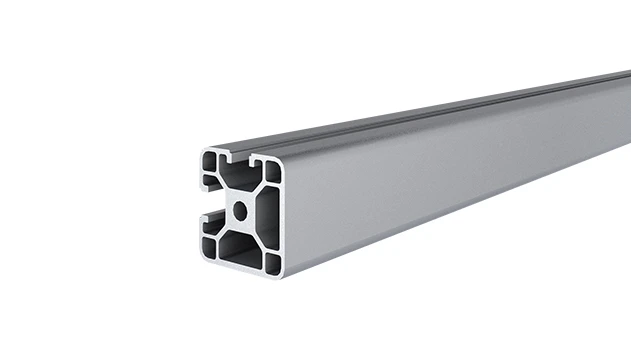
If you've ever walked through a manufacturing plant, visited a workshop, or even peeked behind the scenes of a logistics hub, you've probably seen those sleek, silver structures holding up workbenches, material racks, or conveyor systems. Chances are, many of those structures were built with aluminum profiles—and if they're up to EU standards, there's a good chance they might be the 4040E EU Standard Aluminum Profile . But what exactly is this profile? Why is it so popular? And if you're in the market for it, what do you need to know before hitting "buy"? Let's dive into the most common questions buyers ask about 4040E, breaking down everything from specs to applications to accessories.
1. What Is 4040E EU Standard Aluminum Profile, Anyway?
Let's start with the basics. The term "4040E" might sound like a random code, but it's actually a straightforward descriptor. The "4040" refers to the profile's cross-section: 40 millimeters in width and 40 millimeters in height. That square shape is intentional—it offers balanced strength and versatility, making it a go-to for everything from light-duty shelving to heavy workbenches. The "E" typically denotes a specific series or variant within a manufacturer's lineup, often aligned with EU (European union) standards for quality, dimensional accuracy, and material composition.
As an aluminum extrusion profile , 4040E is made by forcing heated aluminum alloy through a precision die, which shapes it into the 40x40mm cross-section with T-slots running along its length. Those T-slots are what make aluminum profiles so adaptable—they let you slide in bolts, brackets, or accessories without drilling holes, making assembly and reconfiguration a breeze. And since it's EU-standard, you can trust that it meets strict guidelines for things like wall thickness consistency, alloy purity, and corrosion resistance.
2. How Does 4040E Differ From Other Aluminum Profiles?
Walk into any supplier's catalog, and you'll see a dizzying array of aluminum profiles: 2020, 3030, 4080, 6060… the list goes on. So what makes 4040E stand out? Let's break it down by size and use case.
Smaller profiles like 2020 (20x20mm) or 3030 (30x30mm) are great for lightweight projects—think DIY 3D printer frames or small storage racks. But they lack the heft for heavier loads. Larger profiles like 4080 (40x80mm) or 6060 (60x60mm) can handle more weight, but they're bulkier and pricier. 4040E hits that sweet spot: it's sturdy enough for most industrial and workshop needs but not so large that it overcomplicates projects or blows the budget.
What about non-EU profiles? Some manufacturers produce "4040" profiles that skip the EU certification. These might cut corners on material quality (using cheaper alloys) or dimensional accuracy (slightly off 40mm measurements), which can cause headaches when pairing with aluminum profile accessories (more on those later). 4040E, by contrast, is built to tight tolerances, so you know parts from different suppliers will fit together seamlessly—no guesswork, no frustrating returns.

3. What Are the Key Specifications of 4040E? Let's Get Technical.
If you're comparing suppliers or planning a project, you'll want to know the nitty-gritty specs. Here's a quick breakdown of what to expect with 4040E:
| Specification | Typical 4040E Details |
|---|---|
| Cross-Section | 40mm (width) x 40mm (height), square with rounded edges |
| Wall Thickness | 1.5mm to 3mm (varies by supplier; thicker = higher load capacity) |
| Alloy | Mostly 6063-T5 (heat-treated for strength; excellent corrosion resistance) |
| Length | Standard 2.5m, 3m, or 6m; custom lengths often available |
| Finish | Anodized (matte silver, sometimes black); anodizing adds durability and prevents oxidation |
| T-Slots | Usually 2 or 4 slots (one per side); slot width typically 8mm or 10mm (check for compatibility with accessories) |
Pro tip: Always ask for a supplier's datasheet. A reputable 4040E supplier will provide detailed specs, including weight per meter (usually 0.8kg to 1.5kg, depending on wall thickness) and load capacity data. This is critical if you're building something like a workbench or material rack where safety and stability matter.
4. What Can I Build With 4040E? Common Applications
4040E's claim to fame is its versatility. Here are just a few ways businesses and hobbyists use it:
Workbenches: This is perhaps the most popular use. Whether you need a simple single-deck workbench (like the "Workbench E" in some product lines) or a heavy-duty station with tool rails and storage, 4040E provides the rigidity to keep tools steady and the T-slots to add accessories (think LED lights, power strips, or ESD mats for electronics work).
Material Racks & Storage: From small parts bins to large pallet racks, 4040E frames hold up well under weight. Suppliers often sell pre-designed setups like "Material Rack B (3 row and 3 floor)" that use 4040E as the main support.
Lean Manufacturing Systems: In lean system setups, efficiency is key. 4040E's modularity lets you build flow racks, kanban boards, or pick-to-light systems that adapt as workflows change. No need to rebuild from scratch—just reconfigure the profiles and accessories.
Conveyor Frames: Light to medium-duty conveyors (like roller or belt conveyors) often use 4040E to support the track and drive components. Its lightweight nature keeps the overall system easy to move or adjust.
DIY & Custom Projects: Hobbyists love 4040E for everything from CNC machine frames to garage storage systems. Its balance of strength and ease of use makes it perfect for weekend builds.
5. How Do I Choose the Right Aluminum Profile Accessories for 4040E?
A 4040E profile on its own is just a length of metal. It's the aluminum profile accessories that turn it into a functional system. Here's a quick guide to the must-have (and nice-to-have) parts:
End Caps: These plastic or rubber caps (like the 4040 aluminum profile end cap) snap onto the ends of the profile to cover sharp edges, prevent dust buildup, and give a clean finish. A small detail, but it makes a big difference in safety and aesthetics.
Connectors: Need to join two profiles at a 90° angle? Grab a 90° aluminum profile connector. For T-junctions, there's the three-way connector. Most connectors use bolts that tighten into the T-slots, so no welding required. Look for "internal rotary" or "external straight" joints if you need adjustability.
Brackets & Gussets: Gusset plates (like Gusset Alp 4040) are small metal plates that bolt onto corners to reinforce joints, especially under heavy loads. Angle brackets help mount shelves or panels perpendicular to the profile.
Casters: Want a mobile workbench or trolley? Add casters (swivel or rigid) using castor installation bases. Just make sure the casters are rated for the total weight of your setup.
Panels & Covers: For enclosing systems (like machine guards), use aluminum honeycomb panels or corrugated sheets mounted to the profiles with T-slot nuts and bolts.
Pro tip: Stick to accessories from the same supplier as your 4040E profile, or check that they're EU-standard compatible. Mismatched parts (e.g., a connector designed for a non-EU 4040 profile) might be slightly off in size and fail to fit securely.
6. Is 4040E Easy to Assemble? Let's Talk Tools and Time
If you're new to aluminum profiles, the idea of assembling a workbench or rack might feel intimidating. But here's the good news: 4040E is designed for DIY-friendly assembly. You don't need welding skills or heavy machinery—just a few basic tools:
- A hex key (Allen wrench) to tighten T-slot bolts and connectors.
- A rubber mallet to gently tap joints into place (no brute force needed).
- A tape measure and level to ensure your structure is straight and square.
Most projects take a fraction of the time of wood or steel builds. For example, a simple 4-foot workbench with 4040E legs and a plywood top can be assembled in under an hour by one person. The T-slots mean you can adjust parts on the fly—no pre-drilling or filling holes if you make a mistake.
That said, there are a few common pitfalls to avoid: overtightening bolts (which can strip the T-slots), skipping gussets on heavy-load setups, or using undersized connectors for joints under stress. Always follow the supplier's guidelines for load limits and joint spacing.
7. What Load Capacity Can 4040E Handle? Let's Get Real About Weight
This is a top concern for buyers: "Will this profile hold my tools/parts/machinery?" The answer depends on a few factors: wall thickness, alloy, and how the profile is supported (e.g., vertical vs. horizontal).
As a general rule, a 4040E profile with a 2mm wall thickness (common for industrial use) can handle:
- Vertical loads (e.g., as table legs): Up to 500-800kg per leg, depending on the floor support and caster quality (if using wheels).
- Horizontal spans (e.g., as a shelf beam): 50-100kg over a 1-meter span (more with supports in the middle).
Thicker walls (3mm) boost capacity further, while thinner walls (1.5mm) are better for lightweight projects. Always check the supplier's load charts—reputable ones will provide detailed data for different configurations.
Real-world example: A 4040E workbench with 4 legs (2mm walls) and a plywood top can easily hold a 200kg CNC router, plus tools and materials on the shelf below. Just make sure the legs are braced with horizontal crossbars for stability.
8. Aluminum vs. Steel vs. Wood: Why Pick 4040E?
If you're debating materials, here's how 4040E stacks up:
Aluminum vs. Steel: Steel is stronger, but it's heavier, prone to rust (unless stainless), and harder to work with (needs welding or heavy drilling). 4040E is lighter (easier to move), corrosion-resistant (thanks to anodizing), and requires no welding. For most workshop or industrial uses, 4040E offers enough strength at a lower total cost (since you save on labor and tools).
Aluminum vs. Wood: Wood is cheap, but it warps, rots, and can't handle heavy loads long-term. 4040E is more durable, easier to clean, and infinitely reconfigurable. If you need a setup that lasts years (or decades) and adapts to new projects, aluminum wins.
9. Where Can I Find a Reliable 4040E Supplier? Tips for Avoiding Duds
Not all 4040E suppliers are created equal. To avoid low-quality profiles that bend, crack, or have misaligned T-slots, look for these red flags and green lights:
Green Lights: EU certification (ask for CE or RoHS compliance), detailed spec sheets, customer reviews mentioning "consistent dimensions" or "easy assembly," and a responsive customer service team willing to answer technical questions.
Red Flags: Vague product descriptions (no mention of wall thickness or alloy), prices that seem too good to be true (likely using low-grade aluminum), or no return policy for defective parts.
Many buyers start with small orders (e.g., a few meters of profile and a handful of connectors) to test quality before committing to a large purchase. It's a small upfront cost to avoid headaches later.
10. How Do I Maintain 4040E Profiles? Keeping Them Looking and Working Like New
One of the perks of aluminum is low maintenance, but a little care goes a long way:
Cleaning: Wipe down profiles with a damp cloth to remove dust and debris. For grease or oil, use mild soap and water—avoid harsh chemicals that can damage the anodized finish.
Corrosion Prevention: The anodized finish is already corrosion-resistant, but if you're using 4040E in humid or outdoor environments, consider adding a clear coat of aluminum sealant for extra protection.
Tightening Joints: Over time, vibrations (e.g., from machinery on a workbench) can loosen connectors. Check bolts every few months and tighten with a hex key as needed.
Storage: If storing extra profiles, keep them flat or upright to prevent bending. Avoid stacking heavy objects on them for long periods.
Final Thoughts: Is 4040E Right for Your Project?
At the end of the day, 4040E EU Standard Aluminum Profile is a workhorse. It's not the only aluminum profile out there, but its balance of strength, versatility, and EU-standard reliability makes it a top choice for everyone from small workshops to large manufacturers. Whether you're building a workbench, a material rack, or a custom lean system, 4040E and its accessories let you create something that's not just functional, but adaptable to whatever your next project throws at it.
So, if you're ready to stop cobbling together rickety wood shelves or overpaying for custom steel fabrication, give 4040E a look. With the right specs, accessories, and supplier, you'll have a setup that's built to last—and built to change.