- Company Articles
- FAQ
- FAQ
- Common Problems with Five Way Straight Lean Pipe Joints & Chrome Coating Solutions

Common Problems with Five Way Straight Lean Pipe Joints & Chrome Coating Solutions
Related Product
Five Way Straight Lean Pipe Joint
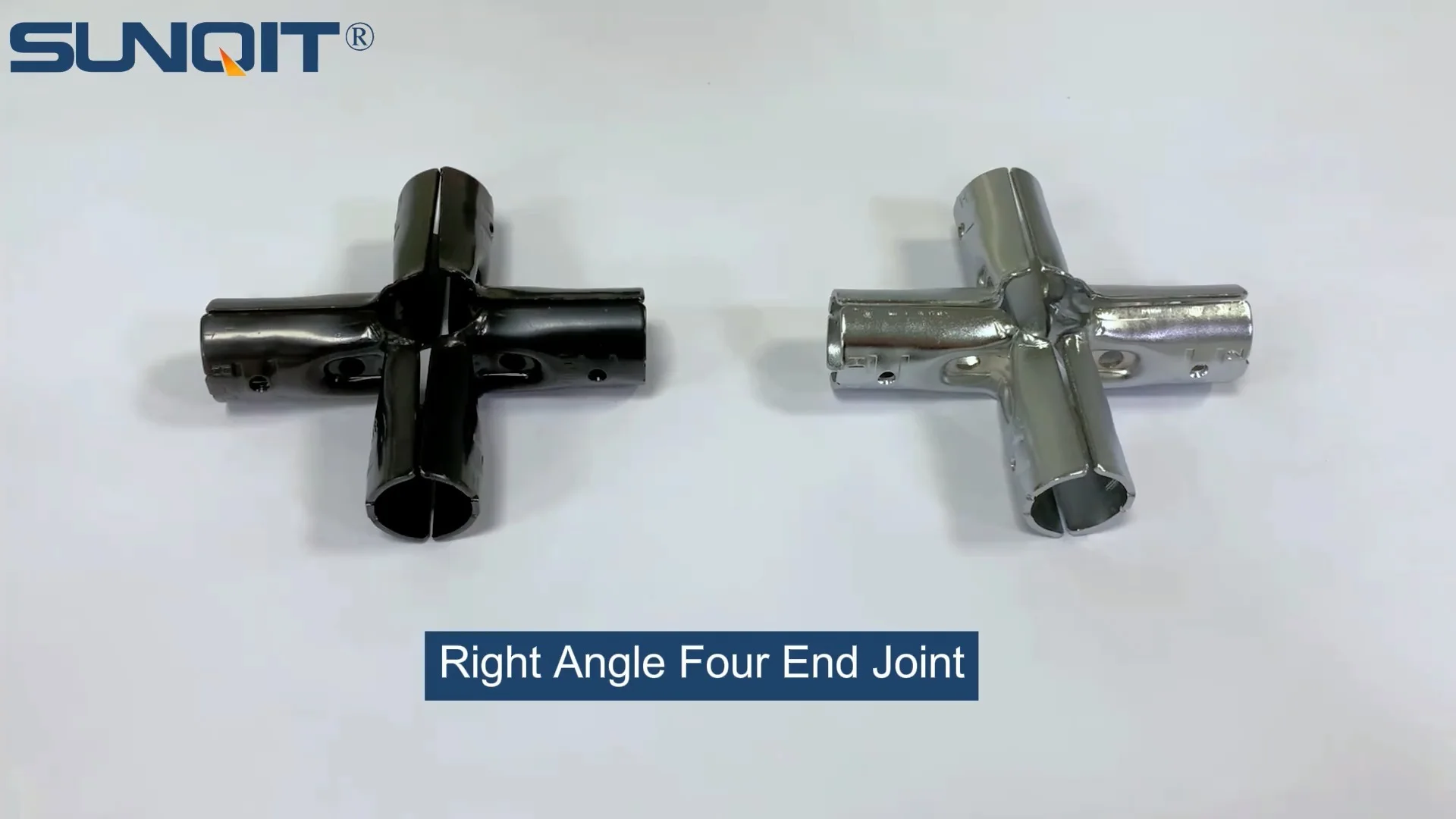
Five way straight lean pipe joint, for 5 pcs 28mm lean pipe connect in straight angle,which used widely in workbench, flow rack, hand trolley frame connection.
Walk into any modern manufacturing facility, and you'll likely spot them: workbenches humming with assembly lines, flow racks gliding with components, and material trolleys moving seamlessly across the floor. Behind this orchestrated efficiency lies a silent hero—the lean pipe joint . These unassuming connectors are the backbone of lean systems, holding together pipes, supporting weights, and ensuring every part of the workflow stays aligned. Among the most versatile of these joints is the five way straight lean pipe joint —a multi-armed workhorse designed to connect up to five pipes at once, making it indispensable for complex setups like multi-tiered material racks or intricate workbench structures. And when paired with chrome coating, it becomes even more resilient. But like any hardworking component, five way straight lean pipe joints face their share of challenges. Let's dive into the common problems facilities encounter, and how chrome coating emerges as a powerful solution.
Understanding the Five Way Straight Lean Pipe Joint: More Than Just a Connector
Before we tackle the problems, let's get to know this joint better. A five way straight lean pipe joint is engineered to do exactly what its name suggests: connect five pipes in a straight, linear configuration (though some designs allow for slight angles, depending on the manufacturer). Picture it as a central hub with five threaded or slotted arms, each designed to grip a lean pipe securely. These joints are the unsung organizers of the factory floor—they turn a jumble of aluminum or steel pipes into structured workbenches, sturdy flow racks, and even custom turnover trolleys. Their magic lies in flexibility: with a five way joint, you can build a three-row, three-floor material rack (like the aptly named "Material Rack B" from many suppliers) or a workbench with integrated tool holders, all without welding or complex tools.
But here's the catch: their versatility makes them workhorses, and workhorses take a beating. They're tightened and retightened during setup, jostled by moving materials, exposed to oils, coolants, and humidity, and subjected to the constant vibration of nearby machinery. Over time, even the toughest joints start to show signs of wear. And when they do, the entire structure—whether it's a workbench holding sensitive electronics or a flow rack carrying heavy components—can become unstable. That's where chrome coating steps in. Most high-quality five way joints come with a chrome coating , a thin layer of chromium electroplated onto the metal surface. At first glance, it might seem like a purely aesthetic choice (that shiny silver finish does make the factory floor look sharper), but its benefits run much deeper.
The Troubles Facilities Face: Common Problems with Five Way Straight Lean Pipe Joints
Let's talk about the real-world headaches. We spoke to maintenance managers and facility engineers across automotive, electronics, and logistics industries, and three problems kept popping up. These aren't just minor nuisances—they impact productivity, safety, and even the bottom line.
1. Corrosion: The Silent Degrader
In manufacturing, moisture is everywhere. Whether it's from steam cleaning, humid climates, or accidental spills of coolants or water-based lubricants, joints are constantly exposed to elements that love to eat away at metal. Even "stainless" components aren't immune—especially if the joint's coating is compromised. One engineer we talked to, Mike from a mid-sized electronics plant in Ohio, described finding rust spots on his five way joints after just six months in a with poor ventilation. "At first, it was just a few tiny spots on the arms," he said. "But within a year, those spots turned into pits. The threads started to corrode, making it impossible to tighten the pipes properly. We had to replace half the joints on our main assembly line, which meant shutting down production for a day." Corrosion doesn't just look bad; it weakens the joint's grip, turning a secure connection into a ticking time bomb for stability.
2. Loosening Under Vibration: When "Tight" Becomes "Wobbly"
Factories are noisy places, and that noise comes with vibration—from conveyor belts, robotic arms, even the hum of large machinery. Over time, that constant shaking does a number on five way joints. Imagine tightening a joint to hold three pipes steady on a workbench. At first, it's rock-solid. But after weeks of vibrations, the threads slowly loosen. The first sign? A slight wobble in the workbench surface. Then, components start sliding off the flow rack attached to that joint. By the time you notice, the joint might be so loose that the entire structure leans dangerously. Sarah, a production supervisor at a automotive parts plant, recalled a close call: "We had a material rack B (the 3-row, 3-floor type) that started leaning to one side. When we checked, the five way joints at the bottom had loosened so much, the whole rack was an inch off-kilter. If we hadn't caught it, the top shelf—loaded with 50-pound boxes—could've collapsed." Loosening isn't just about re-tightening; it's about the joint's ability to maintain tension under stress.
3. Chrome Coating Wear: When the Protective Layer Fails
Many five way joints come with chrome coating straight from the supplier, but not all coatings are created equal. Low-quality chrome plating can be thin or uneven, leading to scratches, peeling, or flaking. This isn't just a cosmetic issue—chrome acts as a barrier between the metal joint and the outside world. When the coating chips, the underlying metal is exposed to moisture and chemicals, accelerating corrosion. "We had a batch of joints where the chrome started peeling after just a few months," said Raj, a facility manager at a food packaging plant. "The arms had these rough, patchy spots where the coating was gone, and within weeks, those spots turned rusty. It was like the joint was wearing away right before our eyes." Even minor scratches from tools during installation or accidental bumps from trolleys can compromise the coating, leaving the joint vulnerable.

Chrome Coating: The Unsung Hero Solving These Problems
Now, let's shift from problems to solutions. Chrome coating isn't just a shiny add-on—it's a engineered defense system. Here's how it addresses each of the issues above:
1. Corrosion Resistance: A Shield Against Moisture and Chemicals
Chrome is naturally resistant to corrosion because it forms a thin, invisible layer of chromium oxide when exposed to oxygen. This layer acts like a suit of armor, blocking moisture, oils, and even mild chemicals from reaching the underlying metal. High-quality chrome-plated five way joints (like the five way straight lean pipe joint chrome variants from reputable suppliers) undergo a rigorous electroplating process, ensuring the coating is thick enough (typically 5-10 microns) and evenly applied. In salt spray tests—an industry standard for measuring corrosion resistance—chrome-coated joints often last 500+ hours without showing signs of rust, compared to uncoated joints that start corroding in under 100 hours. For facilities in humid regions or those dealing with water-based coolants, this is a game-changer. Mike, the electronics plant engineer, switched to chrome-coated joints after his corrosion nightmare: "We haven't had a single rust spot in two years now. Even in our damp storage area, the joints still look brand new."
2. Reduced Friction, Less Wear: Keeping Joints Tight and Stable
Chrome's smooth, hard surface does more than resist corrosion—it reduces friction. When you tighten a pipe into a chrome-coated joint, the smooth surface allows for better torque distribution, meaning the joint grips the pipe more evenly and holds that tension longer. Vibration still happens, but the reduced friction between the pipe and joint means less gradual loosening. Think of it like a well-oiled hinge versus a rusty one: the smoother surface stays tight longer. Sarah, the automotive parts supervisor, noticed the difference immediately after switching to chrome-coated joints: "We used to check and re-tighten joints every month. Now, we do it quarterly, and most are still as tight as the day we installed them. The vibration doesn't seem to rattle them as much." Plus, the hardness of chrome (it has a hardness rating of 800-1000 HV, compared to 150-200 HV for uncoated steel) means the joint's arms are less likely to deform under the pressure of tightening, ensuring a consistent grip over time.
3. Durable Coating: Scratch-Resistant and Long-Lasting
Not all chrome coatings are created equal, but when done right—with proper pre-treatment (cleaning, degreasing, acid etching) and controlled electroplating parameters—the result is a tough, scratch-resistant layer. Reputable suppliers test their chrome coatings for adhesion (to prevent peeling) and abrasion resistance (to withstand daily wear). For example, a good chrome coating should resist scratches from standard tools during installation and minor impacts from trolleys or equipment. Raj, the food packaging facility manager, learned this the hard way: "After the peeling fiasco, we started working with a five way straight lean pipe joint supplier who guaranteed their chrome coating. They even sent us samples to scratch test with a screwdriver—no marks. Two years later, those joints still look flawless, even in our busy packaging area."
| Problem | Uncoated Five Way Joints | Chrome-Coated Five Way Joints |
|---|---|---|
| Corrosion Resistance | Prone to rust in 3-6 months (humid environments) | Resists rust for 2+ years (with proper coating thickness) |
| Loosening Under Vibration | Requires re-tightening every 4-6 weeks | Stays tight for 3-6 months (reduced friction = better grip) |
| Coating/Wear Resistance | Metal surface scratches easily; prone to dents | Chrome layer resists scratches and minor impacts |
| Long-Term Cost | Higher replacement costs (every 1-2 years) | Lower replacement costs (lasts 3-5+ years) |
Real-World Impact: How One Plant Solved Its Joint Woes with Chrome Coating
Let's wrap this up with a story that brings it all together. A mid-sized electronics assembly plant in Texas was struggling with frequent workbench instability. Their main issue? Five way straight lean pipe joints that kept loosening and corroding, especially in their humid soldering area. The plant manager, Lisa, was tired of constant repairs: "We had a workbench E (single deck, no casters) that supported our soldering stations. The five way joints holding the upper shelf kept rusting, and the shelf would sag, making it hard for operators to reach components. We replaced joints every six months, costing us $2,000 a year in parts and downtime."
Lisa switched to chrome-coated five way joints from a trusted supplier. The difference was immediate. "First, the corrosion stopped—even in the soldering area, where moisture and flux fumes are constant. Second, the joints stayed tight. We went from monthly checks to quarterly, and even then, most were still secure. The operators noticed the stability right away—no more sagging shelves, no more components sliding off. After a year, we calculated we'd saved $1,500 in replacement parts and avoided two production shutdowns. Best of all, the workbenches still look new. It's not just about the joints—it's about how they make the whole operation run smoother."

Choosing the Right Chrome-Coated Joint: What to Look For
Not all chrome-coated five way joints are created equal. To ensure you're getting the benefits we've discussed, keep an eye out for these key features when working with a supplier:
- Coating Thickness: Aim for 5-10 microns (suppliers should provide this data).
- Adhesion Testing: Ask if the coating passes ASTM B571 (a standard adhesion test).
- Salt Spray Rating: Look for a minimum of 500 hours (ASTM B117) for corrosion resistance.
- Thread Quality: Smooth, precise threads ensure a tight grip on pipes.
- Warranty: Reputable suppliers offer 1-2 year warranties on chrome coating.

Final Thoughts: Chrome-Coated Joints as a Foundation for Lean Success
Five way straight lean pipe joints might seem like small components, but they're the glue that holds your lean system together. Corrosion, loosening, and coating wear can turn these hardworking connectors into productivity bottlenecks—but with high-quality chrome coating, they become reliable, long-lasting assets. By choosing the right chrome-coated joint and partnering with a trusted supplier, you're not just fixing problems—you're investing in a smoother, safer, and more efficient factory floor. After all, in lean manufacturing, every detail matters—and a strong joint is the first step toward a stronger operation.