- Company Articles
- FAQ
- FAQ
- Common Problems with One Side Rotatory Parallel Lean Pipe Joints & Troubleshooting

Common Problems with One Side Rotatory Parallel Lean Pipe Joints & Troubleshooting
Related Product
Parallel Lean Pipe Joint
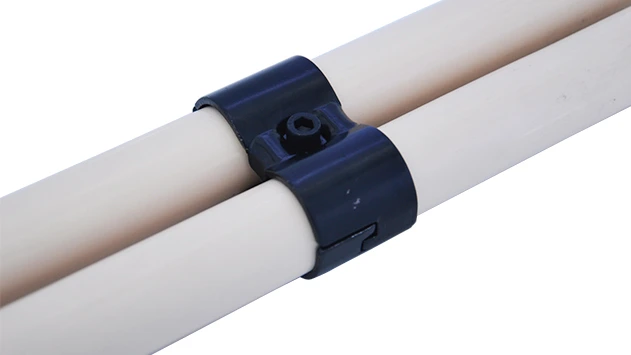
Parallel lean pipe joint used for 2 pcs 28MM lean pipe connection in parallel direction to enhance frame structure, usually for heavy payload requirement for workbench. flow rack, hand trolley.
In the world of lean manufacturing, where efficiency, flexibility, and adaptability are the cornerstones of success, every component in a production line plays a critical role. At the heart of these systems lies the lean pipe framework—a modular, cost-effective solution used to build everything from workbenches and flow racks to turnover trolleys and material handling stations. While the lean pipe itself is often the star of the show, it's the smaller, unsung heroes like lean pipe joints that truly hold the system together. Among these, the one side rotatory parallel lean pipe joint stands out for its unique ability to connect pipes in parallel while allowing rotation on one end, enabling quick adjustments and reconfigurations. Yet, even the most durable components can run into issues, and when these joints fail, they can disrupt workflows, slow down production, and compromise the stability of the entire lean system. In this article, we'll dive into the common problems that plague one side rotatory parallel lean pipe joints, explore their root causes, and provide actionable troubleshooting steps to keep your lean system running smoothly.
What Are One Side Rotatory Parallel Lean Pipe Joints?
Before we tackle the problems, let's first clarify what one side rotatory parallel lean pipe joints are and why they matter. These joints are specialized connectors designed to link two lean pipes in a parallel arrangement, with a key twist: one end of the joint features a rotating mechanism that allows the connected pipe to pivot or swivel, while the other end remains fixed. This design is a game-changer in lean systems, where adaptability is non-negotiable. For instance, in a flow rack used to transport components between workstations, these joints might be used to adjust the angle of the roller track, ensuring materials glide smoothly even as product sizes or production demands change. In workbenches, they allow operators to reposition shelves or tool holders without disassembling the entire structure—saving time and reducing downtime.
One side rotatory parallel lean pipe joints are typically made from materials like steel, aluminum, or a combination of both. Steel joints are valued for their strength and load-bearing capacity, making them ideal for heavy-duty applications. However, in environments where corrosion resistance or weight is a concern—such as cleanrooms or facilities with frequent reconfigurations—aluminum lean pipe joints are preferred. Aluminum's lightweight nature and natural resistance to rust make it a popular choice for modern lean systems, often paired with aluminum lean pipe to create a durable yet agile framework. Regardless of the material, the joint's core function remains the same: to balance stability with flexibility, ensuring the lean pipe structure can evolve alongside your production needs.
Common Problems & Troubleshooting
While one side rotatory parallel lean pipe joints are engineered for reliability, they're not immune to wear, misuse, or environmental factors. Below are the most common issues you might encounter, along with step-by-step solutions to diagnose and fix them.
1. Excessive Looseness During Rotation
Symptoms:
The joint feels wobbly when rotated, the connected lean pipe shifts unexpectedly under load, or you hear a rattling noise during operation. In severe cases, the pipe may even detach partially from the joint, putting nearby equipment or workers at risk.
Causes: Looseness is often traced to three main issues. First, improper installation torque: if the set screws or bolts securing the joint to the lean pipe weren't tightened to the manufacturer's specifications, vibration from daily use can cause them to back out over time. Second, worn internal components: the rotating mechanism (such as bearings or washers) may degrade due to friction, especially if the joint is used frequently without lubrication. Third, mismatched pipe and joint sizes: using a joint designed for a 28mm lean pipe with a 30mm aluminum lean pipe, for example, creates gaps that lead to instability.
Troubleshooting Steps:
- Check fasteners: Use a torque wrench to tighten set screws or bolts to the recommended torque (typically 8-10 Nm for steel joints, 6-8 Nm for aluminum lean pipe joints). If screws are stripped or damaged, replace them with genuine parts from your lean pipe supplier—generic fasteners may not fit properly.
- Inspect internal components: If the joint is designed to be disassembled (check the manufacturer's manual), remove the rotating end and examine bearings, washers, or gaskets for cracks, chips, or flattening. replace any worn parts; a small investment in new bearings can prevent a complete joint failure later.
- Verify size compatibility: Measure the outer diameter of your lean pipe and compare it to the joint's specifications. If they don't match, swap the joint for one designed for your pipe size. For example, if you're using 28mm aluminum lean pipe, ensure the joint's inner diameter is 28mm ± 0.5mm to ensure a snug fit.
Causes: Looseness is often traced to three main issues. First, improper installation torque: if the set screws or bolts securing the joint to the lean pipe weren't tightened to the manufacturer's specifications, vibration from daily use can cause them to back out over time. Second, worn internal components: the rotating mechanism (such as bearings or washers) may degrade due to friction, especially if the joint is used frequently without lubrication. Third, mismatched pipe and joint sizes: using a joint designed for a 28mm lean pipe with a 30mm aluminum lean pipe, for example, creates gaps that lead to instability.
Troubleshooting Steps:
- Check fasteners: Use a torque wrench to tighten set screws or bolts to the recommended torque (typically 8-10 Nm for steel joints, 6-8 Nm for aluminum lean pipe joints). If screws are stripped or damaged, replace them with genuine parts from your lean pipe supplier—generic fasteners may not fit properly.
- Inspect internal components: If the joint is designed to be disassembled (check the manufacturer's manual), remove the rotating end and examine bearings, washers, or gaskets for cracks, chips, or flattening. replace any worn parts; a small investment in new bearings can prevent a complete joint failure later.
- Verify size compatibility: Measure the outer diameter of your lean pipe and compare it to the joint's specifications. If they don't match, swap the joint for one designed for your pipe size. For example, if you're using 28mm aluminum lean pipe, ensure the joint's inner diameter is 28mm ± 0.5mm to ensure a snug fit.
2. Stiff or Jerky Rotation
Symptoms:
The joint resists rotation, requiring excessive force to adjust. Movement may feel uneven—sticking in some positions and slipping in others—or grind against internal parts, producing a squeaking or scraping sound.
Causes: Stiffness is usually a sign of poor maintenance or environmental interference. Dust, debris, or coolant from the production floor can infiltrate the rotating mechanism, creating friction. Without regular lubrication, metal-on-metal contact wears down surfaces, leading to rough movement. In humid environments, corrosion can also build up on uncoated steel joints, causing parts to seize. Another culprit is misalignment during installation: if the lean pipes connected to the joint are not parallel, the joint may bind under stress.
Troubleshooting Steps:
- Clean the joint: Use compressed air to blow out dust and debris from the rotating mechanism. For stubborn grime, wipe the joint with a lint-free cloth dampened with isopropyl alcohol (avoid harsh solvents that may damage plastic components).
- Lubricate moving parts: Apply a thin layer of silicone-based lubricant (or lithium grease for heavy-duty joints) to the rotating bearing or pivot point. Avoid oil-based lubricants, as they attract more dust. For aluminum lean pipe joints, use lubricants labeled "corrosion-resistant" to protect the metal.
- Realign the lean pipe: Use a spirit level to check if the connected pipes are parallel. If not, loosen the joint, adjust the pipes until they're straight, and retighten. This is especially critical in flow racks, where misalignment can cause products to jam or slide unevenly.
Causes: Stiffness is usually a sign of poor maintenance or environmental interference. Dust, debris, or coolant from the production floor can infiltrate the rotating mechanism, creating friction. Without regular lubrication, metal-on-metal contact wears down surfaces, leading to rough movement. In humid environments, corrosion can also build up on uncoated steel joints, causing parts to seize. Another culprit is misalignment during installation: if the lean pipes connected to the joint are not parallel, the joint may bind under stress.
Troubleshooting Steps:
- Clean the joint: Use compressed air to blow out dust and debris from the rotating mechanism. For stubborn grime, wipe the joint with a lint-free cloth dampened with isopropyl alcohol (avoid harsh solvents that may damage plastic components).
- Lubricate moving parts: Apply a thin layer of silicone-based lubricant (or lithium grease for heavy-duty joints) to the rotating bearing or pivot point. Avoid oil-based lubricants, as they attract more dust. For aluminum lean pipe joints, use lubricants labeled "corrosion-resistant" to protect the metal.
- Realign the lean pipe: Use a spirit level to check if the connected pipes are parallel. If not, loosen the joint, adjust the pipes until they're straight, and retighten. This is especially critical in flow racks, where misalignment can cause products to jam or slide unevenly.
3. Premature Wear and Tear
Symptoms:
Visible cracks or deformation on the joint's body, rough or pitted surfaces, or the joint no longer holds its position when rotated. In extreme cases, the joint may bend or snap under load, causing the entire lean system structure to collapse.
Causes: Wear and tear often stem from overloading—using a joint rated for 50kg to support a 100kg load, for example. Other factors include using low-quality joints (common with non-reputable suppliers), exposing the joint to harsh chemicals or extreme temperatures, or repeated impact (such as dropping heavy tools on the lean pipe structure). For aluminum lean pipe joints, wear can also occur if the joint is used with abrasive materials that scratch the surface, compromising corrosion resistance.
Troubleshooting Steps:
- Check load capacity: Refer to the joint's datasheet (provided by your lean pipe supplier) to confirm its maximum load rating. If your application exceeds this, replace the joint with a heavy-duty model. For example, if you're building a flow rack to hold 80kg bins, use a joint rated for at least 100kg to account for dynamic loads (e.g., bins being slid in and out).
- Inspect for damage: If cracks or deformation are minor, reinforce the joint with a secondary support bracket (available from most lean pipe suppliers). For severe damage, replace the joint immediately—repairs are rarely reliable for structural components.
- Upgrade materials: If wear is due to environmental factors, switch to more durable materials. For example, replace steel joints with stainless steel pipe series joints in corrosive environments, or opt for anodized aluminum lean pipe joints to scratch resistance.
Causes: Wear and tear often stem from overloading—using a joint rated for 50kg to support a 100kg load, for example. Other factors include using low-quality joints (common with non-reputable suppliers), exposing the joint to harsh chemicals or extreme temperatures, or repeated impact (such as dropping heavy tools on the lean pipe structure). For aluminum lean pipe joints, wear can also occur if the joint is used with abrasive materials that scratch the surface, compromising corrosion resistance.
Troubleshooting Steps:
- Check load capacity: Refer to the joint's datasheet (provided by your lean pipe supplier) to confirm its maximum load rating. If your application exceeds this, replace the joint with a heavy-duty model. For example, if you're building a flow rack to hold 80kg bins, use a joint rated for at least 100kg to account for dynamic loads (e.g., bins being slid in and out).
- Inspect for damage: If cracks or deformation are minor, reinforce the joint with a secondary support bracket (available from most lean pipe suppliers). For severe damage, replace the joint immediately—repairs are rarely reliable for structural components.
- Upgrade materials: If wear is due to environmental factors, switch to more durable materials. For example, replace steel joints with stainless steel pipe series joints in corrosive environments, or opt for anodized aluminum lean pipe joints to scratch resistance.
4. Misalignment Leading to System Instability
Symptoms:
The lean pipe structure leans to one side, pipes are not parallel or level, or adjacent joints show signs of stress (e.g., bending or cracks). This is particularly common in large structures like multi-tier flow racks or long workbenches.
Causes: Misalignment typically starts during installation. If the lean pipe is cut to uneven lengths, or the joint is mounted at an angle (even by 2-3 degrees), the error compounds across the structure. Over time, vibration or thermal expansion can worsen the issue. Another cause is using damaged lean pipe—if the pipe is bent, the joint will be forced into an awkward position to compensate.
Troubleshooting Steps:
- Level the structure: Use a laser level or spirit level to check if the lean system is plumb (vertical) and level (horizontal). Adjust feet or casters (if using a mobile structure) to correct tilting.
- Trim or replace pipes: Measure all lean pipes in the affected section; if lengths vary by more than 2mm, cut them to uniform size using a pipe cutter with a guide. For bent pipes, replace them—straightening bent pipe weakens it and may cause future issues.
- Realign joints: Loosen all joints in the misaligned section, then reposition them using a straightedge to ensure pipes are parallel. Tighten joints incrementally (start from the center and work outward) to avoid creating new stress points.
Causes: Misalignment typically starts during installation. If the lean pipe is cut to uneven lengths, or the joint is mounted at an angle (even by 2-3 degrees), the error compounds across the structure. Over time, vibration or thermal expansion can worsen the issue. Another cause is using damaged lean pipe—if the pipe is bent, the joint will be forced into an awkward position to compensate.
Troubleshooting Steps:
- Level the structure: Use a laser level or spirit level to check if the lean system is plumb (vertical) and level (horizontal). Adjust feet or casters (if using a mobile structure) to correct tilting.
- Trim or replace pipes: Measure all lean pipes in the affected section; if lengths vary by more than 2mm, cut them to uniform size using a pipe cutter with a guide. For bent pipes, replace them—straightening bent pipe weakens it and may cause future issues.
- Realign joints: Loosen all joints in the misaligned section, then reposition them using a straightedge to ensure pipes are parallel. Tighten joints incrementally (start from the center and work outward) to avoid creating new stress points.
5. Corrosion and Rust Buildup
Symptoms:
Orange/brown rust spots (on steel joints), white powdery deposits (on aluminum lean pipe joints, known as oxidation), or pitting on the joint's surface. Corrosion weakens the joint and can seize the rotating mechanism.
Causes: Exposure to moisture (e.g., high humidity, spills, or cleaning with water), chemicals (oils, coolants, or solvents), or salt air (in coastal facilities). Steel joints are most susceptible, but even aluminum lean pipe joints can corrode if their protective oxide layer is damaged (e.g., by scratches or abrasive cleaners).
Troubleshooting Steps:
- Clean corrosion: For steel joints, use a wire brush to remove rust, then apply a rust-inhibiting primer and paint. For aluminum lean pipe joints, gently scrub oxidation with a mixture of baking soda and water (1:1 ratio), then rinse and dry thoroughly.
- Apply protective coatings: For steel joints, spray on a clear anti-corrosion coating (e.g., polyurethane spray). For aluminum, apply a thin layer of car wax to seal the surface and enhance resistance to moisture.
- Upgrade to corrosion-resistant materials: If corrosion is persistent, switch to stainless steel pipe series joints or anodized aluminum lean pipe joints. Anodized aluminum has a thicker oxide layer, making it ideal for wet or humid environments.
Causes: Exposure to moisture (e.g., high humidity, spills, or cleaning with water), chemicals (oils, coolants, or solvents), or salt air (in coastal facilities). Steel joints are most susceptible, but even aluminum lean pipe joints can corrode if their protective oxide layer is damaged (e.g., by scratches or abrasive cleaners).
Troubleshooting Steps:
- Clean corrosion: For steel joints, use a wire brush to remove rust, then apply a rust-inhibiting primer and paint. For aluminum lean pipe joints, gently scrub oxidation with a mixture of baking soda and water (1:1 ratio), then rinse and dry thoroughly.
- Apply protective coatings: For steel joints, spray on a clear anti-corrosion coating (e.g., polyurethane spray). For aluminum, apply a thin layer of car wax to seal the surface and enhance resistance to moisture.
- Upgrade to corrosion-resistant materials: If corrosion is persistent, switch to stainless steel pipe series joints or anodized aluminum lean pipe joints. Anodized aluminum has a thicker oxide layer, making it ideal for wet or humid environments.
| Common Problem | Key Symptoms | Primary Causes | Troubleshooting Solution |
|---|---|---|---|
| Excessive Looseness During Rotation | Wobbling, rattling, partial detachment | Loose fasteners, worn bearings, mismatched sizes | Tighten fasteners to spec; replace worn bearings/screws; use compatible pipe size |
| Stiff or Jerky Rotation | Resistance, uneven movement, squeaking | Debris buildup, lack of lubrication, misalignment | Clean joint with compressed air; apply silicone lubricant; realign pipes |
| Premature Wear and Tear | Cracks, deformation, inability to hold position | Overloading, low-quality materials, impact damage | replace with higher load-rated joint; reinforce minor damage; use stainless steel/aluminum |
| Misalignment | Leaning structure, uneven pipes, joint stress | Uneven pipe lengths, bent pipes, angled installation | Level structure; trim/replace pipes; realign joints with straightedge |
| Corrosion/Rust | Rust spots, oxidation, pitting | Moisture, chemicals, salt air | Clean corrosion; apply anti-rust coating; upgrade to stainless steel/anodized aluminum |

Preventive Maintenance Tips
While troubleshooting fixes existing problems, preventive maintenance is key to avoiding issues in the first place. Here are simple habits to extend the life of your one side rotatory parallel lean pipe joints:
- Inspect regularly: Conduct weekly visual checks for looseness, corrosion, or damage—focus on high-stress areas like flow rack corners or workbench edges.
- Lubricate monthly: Apply a small amount of silicone lubricant to rotating joints (avoid over-lubricating, as this attracts dust). For aluminum lean pipe joints, use lubricants safe for anodized surfaces.
- Clean routinely: Wipe down joints with a dry cloth to remove dust; in dirty environments, use a mild detergent and water (rinse thoroughly and dry to prevent corrosion).
- Train staff: Teach operators to report loose or damaged joints immediately—small issues are easier to fix than big ones. Avoid using the lean pipe structure as a "catch-all" for tools or materials, which adds unnecessary load.
- Use genuine parts: Always source replacement joints, fasteners, or components from your original lean pipe supplier. Off-brand parts may not meet quality standards and can accelerate wear on your lean system.
- Inspect regularly: Conduct weekly visual checks for looseness, corrosion, or damage—focus on high-stress areas like flow rack corners or workbench edges.
- Lubricate monthly: Apply a small amount of silicone lubricant to rotating joints (avoid over-lubricating, as this attracts dust). For aluminum lean pipe joints, use lubricants safe for anodized surfaces.
- Clean routinely: Wipe down joints with a dry cloth to remove dust; in dirty environments, use a mild detergent and water (rinse thoroughly and dry to prevent corrosion).
- Train staff: Teach operators to report loose or damaged joints immediately—small issues are easier to fix than big ones. Avoid using the lean pipe structure as a "catch-all" for tools or materials, which adds unnecessary load.
- Use genuine parts: Always source replacement joints, fasteners, or components from your original lean pipe supplier. Off-brand parts may not meet quality standards and can accelerate wear on your lean system.

Conclusion
One side rotatory parallel lean pipe joints may be small, but their impact on your lean system's performance is enormous. By understanding the common problems—from looseness and corrosion to misalignment and wear—and following the troubleshooting steps outlined here, you can keep these critical components working reliably. Remember, the goal of lean manufacturing is to minimize waste, and downtime caused by joint failures is a waste no facility can afford. With regular inspections, proper maintenance, and a commitment to using quality parts, you'll ensure your lean pipe system remains the flexible, efficient backbone of your production line for years to come. Whether you're building a simple workbench or a complex flow rack, investing time in caring for your lean pipe joints today will pay off in smoother operations tomorrow.