- Company Articles
- FAQ
- FAQ
- Common Problems with Roller Track Placon Mount Connectors & Fixes

Common Problems with Roller Track Placon Mount Connectors & Fixes
Related Product
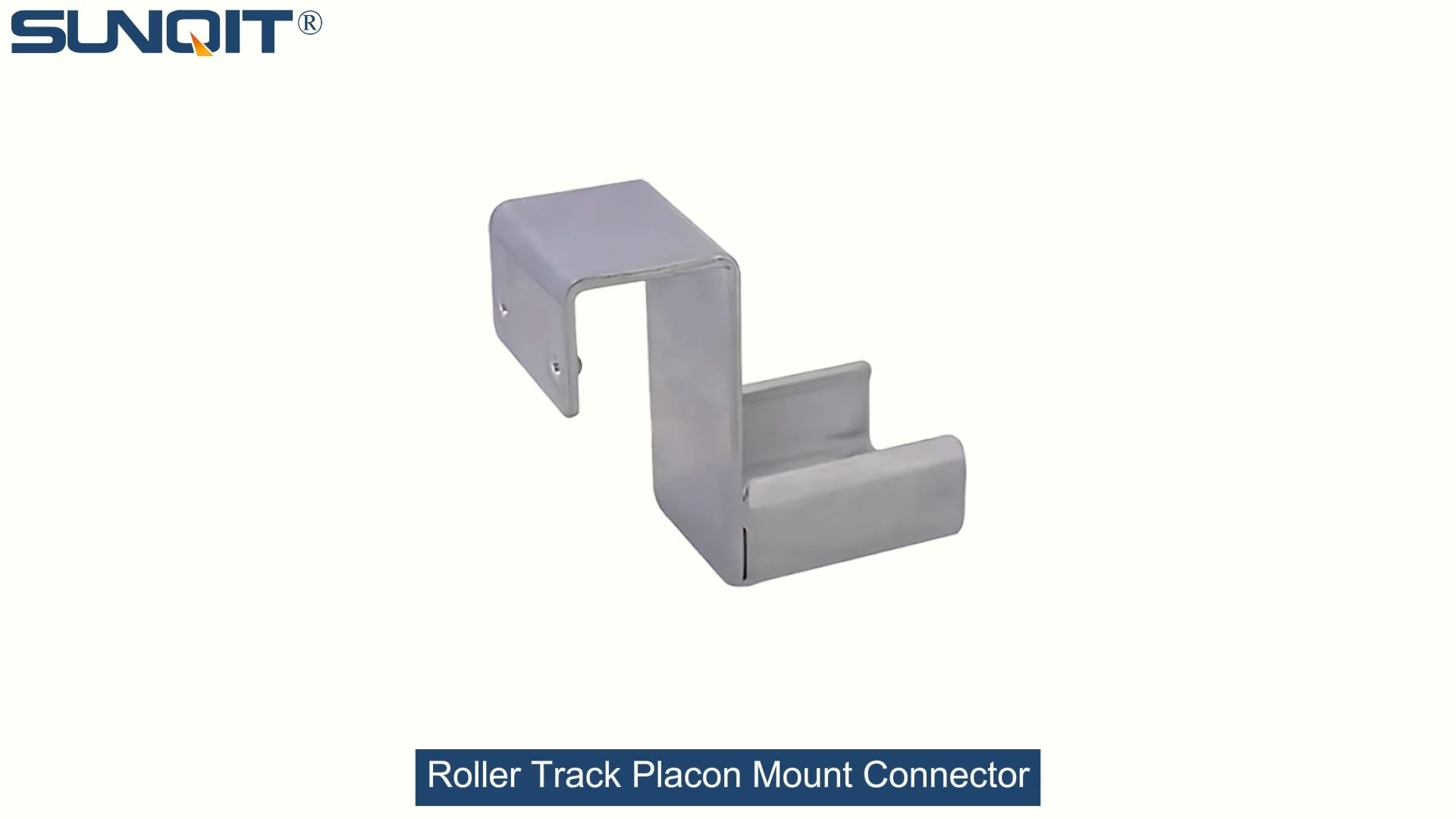
Roller Track Placon Mount Connector
Roller track placon mount work as a connector for roller track and pipe or aluminum profile in rack syetem, it is a necessary parts in rack system which widely used in industrial plant and logistic,warehouse storage.
In the fast-paced world of manufacturing, every small component plays a big role in keeping operations running smoothly. Take roller track placon mount connectors—those unassuming little parts that hold your roller tracks together. They might not grab headlines, but when they fail, suddenly your production line slows to a crawl, deadlines get tight, and frustration creeps in. Whether you're managing a 3C assembly line or a busy warehouse, dealing with loose, misaligned, or worn-out connectors can turn a productive day into a headache. Let's walk through the most common issues teams face with these critical aluminum profile accessories, why they happen, and how to fix them for good.
Why Roller Track Placon Mount Connectors Matter
Before diving into problems, let's quickly recap what these connectors do. Roller track placon mount connectors are the unsung heroes that attach roller tracks to aluminum profiles, ensuring materials glide from station to station without jams or delays. They're the backbone of efficient material flow—whether you're moving circuit boards in a 3C plant or medical supplies in a hospital warehouse. When they work well, you barely notice them. When they don't? Let's just say "smooth operation" becomes a distant memory.
5 Common Problems & How to Solve Them
1. Loose Connections During Operation
Picture this: Your morning shift starts strong, but by midday, you hear a strange rattling from the roller track. A quick check reveals the placon mount connector has loosened, causing the track to wobble. This isn't just annoying—it's a recipe for damaged products and slowdowns.
Why it happens: Most often, it's due to vibration. Over time, the constant movement of materials shakes the connector's screws loose. Sometimes, installers skip the final torque check, leaving screws "hand-tight" but not secure enough. In rare cases, the connector's material might fatigue from heavy use.
How to fix it: Start by powering down the line and tightening the screws with a torque wrench (aim for the manufacturer's recommended torque—usually 8-10 Nm for aluminum profiles). For recurring issues, swap standard screws for lock washers or thread-locking adhesive (like Loctite). If fatigue is the culprit, upgrade to a high-strength connector made from reinforced aluminum alloy.
2. Misalignment Causing Material Jams
There's nothing more frustrating than watching a box get stuck halfway down the roller track. When you investigate, you find the placon mount connector is slightly off-kilter, creating a tiny bump that stops materials in their tracks.
Why it happens: Misalignment usually starts during installation. Maybe the team skipped measuring twice before drilling, or they didn't use alignment tools to ensure the connector lines up with the track. Sometimes, using mismatched roller track and connector sizes (like pairing a 40mm track with a 30mm connector) throws everything off.
How to fix it: First, loosen the connector and gently tap it back into place using a rubber mallet—no brute force! Use a straightedge or laser level to confirm alignment with the track. If the issue keeps coming back, invest in precision-machined connectors designed for your specific roller track model. Pro tip: Mark the correct position with a pencil during initial setup to guide future reinstalls.
3. Insufficient Load Capacity Leading to Bending
You switch to heavier products, and suddenly the roller track sags in the middle. A closer look shows the placon mount connector is bending under the weight—definitely not what you signed up for.
Why it happens: This one's often a sizing issue. Maybe you chose a lightweight connector for a heavy-duty job, or the installation spacing is too wide (connectors spaced 3 feet apart can't support as much as those 1.5 feet apart). Cheap materials with low tensile strength are another culprit—they might look the part but fold under pressure.
How to fix it: First, check the connector's load rating (usually listed in kg or lbs). If it's below your needs, replace it with a heavy-duty model (look for ones rated for 50kg+ per connector). Add extra support by installing more connectors along the track—spacing them 1.5-2 feet apart distributes weight better. For extreme loads, pair connectors with aluminum profile gussets for added rigidity.
4. Compatibility Headaches with Aluminum Profiles
You order new connectors for your 4040 aluminum profiles, but they won't fit—either the holes don't line up, or the connector sits too loose. Now you're stuck with parts that don't work, and production is on hold.
Why it happens: Aluminum profiles come in all shapes and sizes—4040, 3030, 2020, etc.—and not all connectors are universal. A connector designed for a 3030 profile won't snugly fit a 4040, and some manufacturers use proprietary designs that don't play well with others. Even small differences in slot size (T-slot vs. V-slot) can throw off compatibility.
How to fix it: Always double-check the profile size before ordering (measure the width and slot dimensions!). If you're unsure, ask your supplier for a compatibility chart—reputable lean pipe suppliers will have one. For mixed-profile setups, opt for adjustable placon mount connectors that work with multiple sizes (look for models with sliding brackets). Pro move: Keep a sample profile in your toolbox to test connectors before full installation.
5. Premature Wear and Tear
After just a few months of use, the connector's mounting holes are stripped, or the plastic components are cracked. You're replacing them more often than you'd like, and the costs are adding up.
Why it happens: Wear usually comes down to environment and material quality. If your facility is dusty or humid, corrosion and debris can eat away at metal parts. Plastic connectors might degrade under UV light or extreme temperatures. Even over-tightening screws during installation can stress the connector, leading to early cracks.
How to fix it: For dusty areas, switch to stainless steel connectors (they resist corrosion better than regular aluminum). In humid environments, apply a protective coating (like anodizing) to metal parts. If plastic is cracking, upgrade to glass-reinforced nylon connectors—they're 3x more durable. And remember: Tighten screws to the recommended torque, not "as tight as possible!"
| Problem | Common Causes | Quick Fix |
|---|---|---|
| Loose connections | Vibration, under-tightened screws | Torque wrench + lock washers |
| Misalignment/jams | Poor installation, mismatched track size | Realign with laser level; use precision connectors |
| Insufficient load capacity | Wrong size, wide spacing | Upgrade to heavy-duty model; add support points |
| Compatibility issues | Mismatched aluminum profile size | Use adjustable connectors; check supplier charts |
| Premature wear | Corrosion, low-quality materials | Stainless steel/stainless steel connectors; protective coating |
Pro Tips to Prevent Future Issues
- Schedule monthly checks: Spend 10 minutes per week tightening screws and inspecting connectors—catch issues before they cause downtime.
- Train your team: Make sure installers know how to use torque wrenches and alignment tools. A little training goes a long way!
- Stock spare parts: Keep 5-10 extra connectors on hand. Waiting for replacements kills productivity.
- Ask your supplier: Reputable lean pipe suppliers (like SunQit) offer free technical support—use it! They can help you choose the right connector for your needs.

Final Thoughts: Invest in Quality, Save Time (and Sanity)
Roller track placon mount connectors might be small, but their impact on your production line is huge. By addressing these common problems—loose connections, misalignment, and the rest—you'll keep materials flowing, reduce downtime, and keep your team happy. And remember: The best fix is prevention. Choose high-quality connectors (look for ones made with reinforced aluminum or stainless steel), train your team to install them properly, and check in regularly. Your production line (and your stress levels) will thank you.
At the end of the day, efficient manufacturing is all about the details. And when it comes to details like roller track placon mount connectors, a little care goes a long way. Here's to smoother workflows, fewer headaches, and more productive days!