- Company Articles
- FAQ
- FAQ
- Common Problems with Three Way Aluminum Pipe Joints and Solutions

Common Problems with Three Way Aluminum Pipe Joints and Solutions
Related Product
Three Way Aluminum Pipe Joint
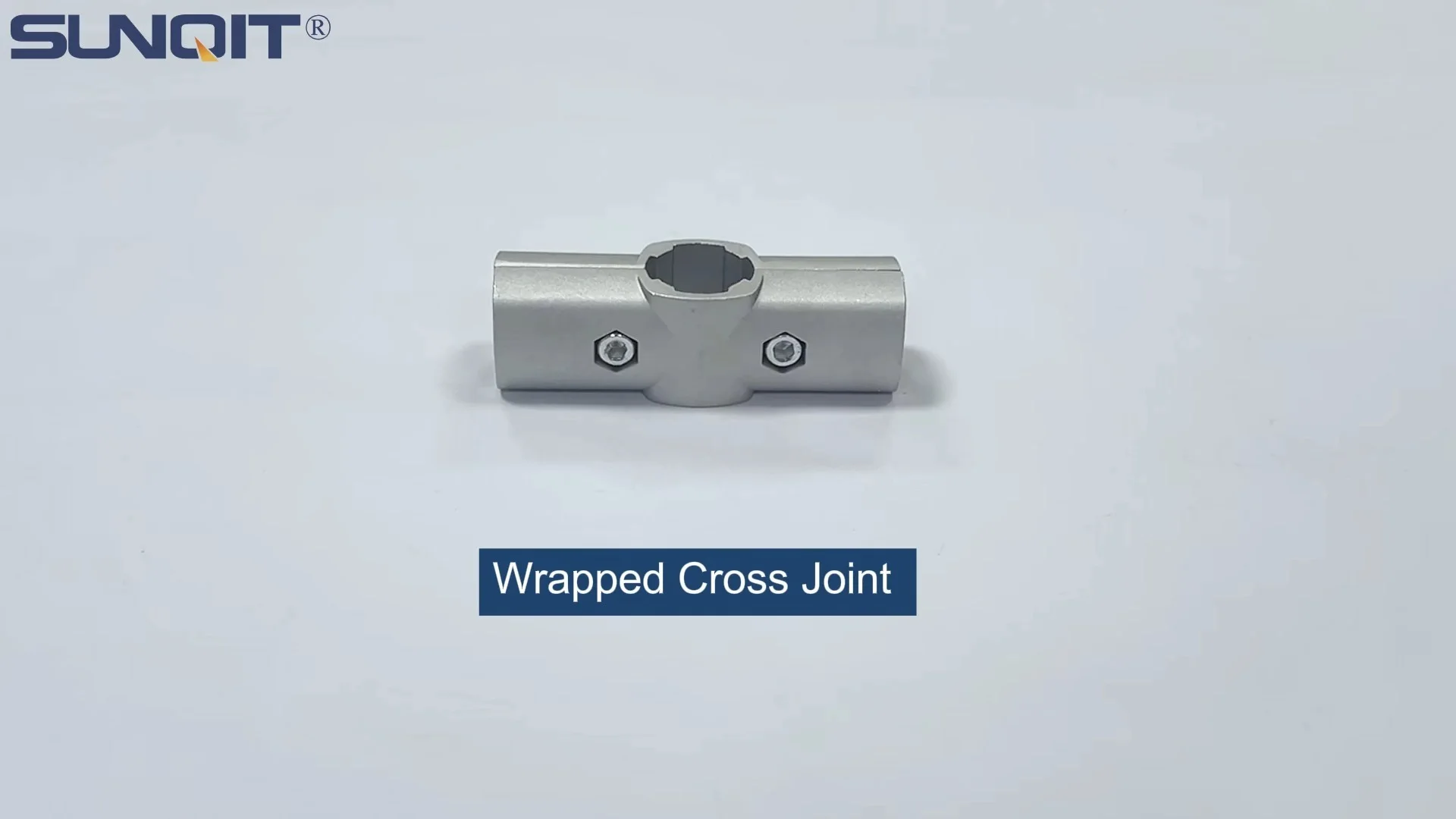
Aluminum 3 way pipe joint for 28mm aluminum pipe connection in 3 direction.
In the world of modular industrial systems—whether you're building a workbench for an assembly line, a material rack for a warehouse, or a custom conveyor setup—three way aluminum pipe joints are the quiet workhorses holding everything together. These unassuming components connect aluminum pipes at precise angles, enabling the flexibility and adaptability that make lean systems so valuable. But even the most reliable joints can run into issues, especially when exposed to the daily grind of manufacturing environments. Loose connections, misaligned structures, or premature wear can throw a wrench into productivity, compromise safety, and turn a well-designed setup into a frustrating headache. Let's dive into the most common problems with three way aluminum pipe joints, why they happen, and how to fix them—so you can keep your systems running smoothly.
1. Loosening Over Time: The Silent Saboteur
Picture this: You've just finished assembling a sleek aluminum profile workbench, carefully tightening each three way joint to ensure stability. A week later, you notice the top shelf wobbles when you place tools on it. A month after that, the entire structure creaks every time someone leans against it. Loosening is one of the most frequent complaints with three way joints, and it's often a result of the constant motion and vibration that define busy workplaces.
Why it happens: Most often, the culprit is insufficient initial tightening. If the joint isn't secured properly during assembly, even minor vibrations from machinery, foot traffic, or material handling can gradually loosen the connection. Low-quality joints with imprecise threading or weak locking mechanisms are especially prone to this—their threads may wear down quickly, making it impossible to maintain a tight fit. Thermal expansion and contraction, too, play a role: aluminum pipes and joints expand slightly in warm environments and contract in cool ones, which can create gaps in the connection over time.
Solutions to stop the wobble:
• Use a torque wrench for precise tightening: Guesswork won't cut it here. Most three way aluminum pipe joints specify a recommended torque (often between 15-25 Nm, depending on size). A torque wrench ensures you hit that sweet spot—not too loose, not so tight you strip the threads.
• Add thread-locking adhesive: For high-vibration areas (like near conveyor belts or heavy machinery), a drop of medium-strength thread-locking glue (such as Loctite 243) on the joint's threads can prevent loosening. Just be sure to use a removable formula—you'll want to disassemble the joint later if you need to reconfigure your setup.
• Invest in locking-style joints: Some manufacturers design three way joints with built-in locking mechanisms, like spring-loaded pins or nylon inserts that grip the pipe more securely. These are worth the extra cost for critical structures like workbenches or material racks where stability is non-negotiable.
• Pair with aluminum pipe clamps for extra security: For joints that bear heavy loads, adding an aluminum pipe clamp around the connection can act as a backup. These clamps cinch tightly around the pipe and joint, reducing the risk of slippage even if the joint itself loosens slightly.
• Schedule regular inspections: Make it a habit to check joints monthly (or weekly in high-traffic areas). A quick visual check and gentle tug can catch looseness before it leads to bigger issues. Tighten any wobbly joints immediately—don't wait for the creaking to get louder.
2. Misalignment During Assembly: When Straight Becomes Skewed
There's nothing more frustrating than spending hours assembling a material rack, only to step back and realize it leans to one side. Or worse, the shelves you painstakingly installed are crooked, making it impossible to stack boxes evenly. Misalignment is a common problem with three way joints, and it often starts with small errors during setup that snowball into bigger issues.
Why it happens: Misalignment usually boils down to two factors: imprecise manufacturing or user error. On the manufacturing side, low-quality three way joints may have ports that are slightly off-center or angles that aren't exactly 90 or 45 degrees. When you connect pipes to these joints, the misalignment multiplies down the line. On the user side, rushing through assembly is a big culprit—skipping the step of dry-fitting parts before tightening, or eyeballing angles instead of using a level. Even a tiny tilt in one joint can throw an entire structure off-kilter, especially in longer setups like conveyor tracks or multi-shelf racks.
Solutions to keep things straight:
• Choose joints with precision-machined ports: Not all three way joints are created equal. Look for products labeled with "±0.5° angle tolerance" or "CNC-machined ports"—these specs indicate the joint's angles are consistent and accurate. Reputable suppliers often provide dimensional drawings, so you can verify port alignment before buying.
• Dry-fit before final assembly: Before tightening any joints, connect all pipes and joints loosely to check alignment. Stand back and visually inspect the structure—does it lean? Are the pipes straight? Use a bubble level on horizontal surfaces and a square tool to check 90-degree angles at the joints. Adjust as needed before fully tightening.
• Mark reference lines on pipes: If you're building a long structure (like a roller track), mark the pipes at the joint locations with a pencil or tape. This ensures each joint is placed at the exact same distance, preventing uneven spacing that leads to misalignment.
• Use high-quality aluminum profile as a base: Even the best joint can't fix a warped pipe. Aluminum profile (especially extruded aluminum extrusion profile) is known for its straightness and consistency, but low-grade aluminum may have minor bends. Always inspect pipes for straightness before assembly—roll them on a flat surface to check for wobbles.
• Invest in alignment jigs for repetitive builds: If you're assembling multiple identical structures (like a row of workbenches), an alignment jig can save time and ensure consistency. These simple tools—often made from plywood or metal—act as a template, guiding where joints should be placed for perfect alignment every time.
3. Corrosion and Wear: When Aluminum Meets the Elements
Aluminum is naturally resistant to corrosion, thanks to its thin oxide layer that forms when exposed to air. But in harsh environments—think humid warehouses, factories with chemical cleaners, or outdoor setups—even aluminum joints can start to show signs of wear. White, powdery deposits, pitting, or stiff, hard-to-turn connections are all red flags that corrosion or wear is setting in.
Why it happens: Corrosion typically starts when the aluminum's protective oxide layer is damaged. Scratches from rough handling, exposure to saltwater (in coastal areas), or contact with acidic/alkaline chemicals (like industrial cleaners) can break down this layer, allowing moisture to attack the metal. Wear, on the other hand, often comes from friction—joints that are frequently disassembled and reassembled, or pipes that rub against the joint's interior during use, can wear down the threading or the joint's inner surfaces.
Solutions to fight corrosion and wear:
• Choose anodized three way joints: Anodizing is an electrochemical process that thickens the aluminum's oxide layer, making it more resistant to corrosion and scratches. Anodized joints are ideal for humid or chemical-exposed environments—they'll stand up to daily cleaning with mild detergents and resist pitting better than non-anodized options.
• Keep joints clean and dry: Wipe down joints regularly with a soft, damp cloth to remove dust, grease, or chemical residues. Avoid abrasive cleaners or steel wool, which can scratch the surface. If the area is prone to moisture, use a fan or dehumidifier to reduce humidity levels.
• Apply a protective coating: For extra protection in harsh environments, a thin layer of clear, industrial-grade sealant (like a silicone-based spray) can shield the joint from moisture and chemicals. Just be sure to avoid lubricants that attract dust—you don't want to create a gritty paste that accelerates wear.
• Use stainless steel components for extreme conditions: If your setup is exposed to saltwater, heavy chemicals, or constant moisture, consider mixing in stainless steel pipe series components. While aluminum is lighter and more cost-effective, stainless steel offers superior corrosion resistance—just note that it may require different tools for assembly.
• replace worn joints promptly: If a joint shows signs of deep pitting, stripped threads, or stiff movement that can't be fixed with cleaning, replace it. A worn joint is a weak link—waiting to replace it could lead to structural failure.

4. Inadequate Load Capacity: When "Sturdy" Isn't Sturdy Enough
You've built a material rack using three way aluminum pipe joints, and it looks great—until you load the top shelf with heavy boxes and hear a worrying "snap." Suddenly, the joint bends, and the shelf sags. Inadequate load capacity is a critical issue that can lead to damaged materials, injuries, or costly downtime. It's often a result of underestimating weight or choosing the wrong joint for the job.
Why it happens: Three way joints are rated for specific load capacities, which depend on factors like the thickness of the aluminum walls, the design of the joint (e.g., reinforced vs. standard), and the angle of the connected pipes (vertical loads are easier to handle than horizontal or diagonal ones). Overloading happens when users assume "all aluminum joints are the same" and pick the cheapest option without checking the specs. Low-grade joints with thin walls or weak internal reinforcement are especially prone to bending or breaking under heavy loads.
Solutions to boost load capacity:
• Check load ratings before you buy: Reputable suppliers (like lean pipe suppliers or aluminum profile suppliers) list load capacities for their joints—usually in kilograms or pounds. For example, a standard three way joint might handle 50kg per port, while a heavy-duty version can support 100kg or more. Always factor in the total weight the joint will bear (including the weight of the pipes and any accessories like shelves) and choose a joint rated for 20% more than that total to be safe.
• Opt for reinforced three way joints: Look for joints labeled "heavy-duty" or "reinforced." These often have thicker walls, gusseted (triangular) supports at the port intersections, or internal ribs that distribute weight more evenly. They may cost a bit more, but the extra strength is worth it for high-load applications like material racks or workbenches.
• Reduce stress with additional supports: If a joint is bearing a heavy horizontal load (like a long shelf), add vertical support pipes directly below it. This creates a "triangle" of support, reducing the strain on the joint. For example, instead of relying on a single three way joint to hold a 2-meter shelf, add a vertical pipe halfway along the shelf and connect it to the floor with a sturdy base joint.
• Pair with aluminum pipe accessories that distribute weight: Using accessories like cross-braces, corner brackets, or shelf supports can spread the load across multiple joints, reducing the strain on any single three way connection. For example, a workbench with cross-braces between the legs will transfer weight to the floor more evenly than one without.
• Test before full deployment: If you're unsure about a joint's capacity, test it with gradually increasing weights in a controlled setting. Start with 50% of the expected load, then 75%, then 100%. If the joint bends or the structure wobbles at any point, reinforce or replace the joint before putting it into use.

5. Compatibility Issues with Accessories: When Parts Refuse to Play Nice
You've ordered three way aluminum pipe joints from one supplier, aluminum pipes from another, and roller track accessories from a third—only to find the pipes don't fit the joint ports, or the roller track connector won't attach to the joint. Compatibility issues are a common headache in modular systems, and they're often caused by a lack of universal standards in the industry.
Why it happens: While many manufacturers aim for compatibility with standard aluminum profile sizes (like 20x20mm, 30x30mm, or 40x40mm), small variations in pipe diameter, thread pitch, or port spacing can throw things off. Cheap knockoff joints may cut corners on precision, resulting in ports that are slightly too small or too large. Even well-made joints from different brands can have subtle differences—for example, one brand's "30mm pipe" might actually measure 29.5mm, while another's is 30.2mm.
Solutions to ensure compatibility:
• Stick to a single supplier when possible: The easiest way to avoid compatibility issues is to buy all your components—pipes, joints, accessories—from the same supplier. Reputable lean system suppliers design their products to work together seamlessly, so you won't have to guess if a roller track placon mount will fit a three way joint.
• Check dimensional specs carefully: If you must mix suppliers, compare specs like pipe outer diameter, joint port size, thread type (e.g., M8 vs. M10), and accessory mounting hole spacing. Most suppliers list these details on their websites or product sheets—don't assume "standard" means "one-size-fits-all."
• Order samples first: For large projects, order a small set of joints, pipes, and accessories to test compatibility before buying in bulk. Assemble a mini-version of your structure to ensure everything fits—this saves time and money compared to returning a full order of incompatible parts.
• Use universal aluminum pipe accessories: Some accessories, like roller track placon mount connectors or caster accessories, are designed to work with multiple pipe sizes or joint types. Look for products labeled "universal" or "multi-fit"—they often have adjustable clamps or adapters that bridge small size differences.
• Ask the supplier for help: If you're unsure about compatibility, reach out to the supplier's customer service team. A good lean pipe supplier will have technical experts who can confirm if their joints work with another brand's accessories—or recommend alternatives that do.
Troubleshooting Table: Quick Fixes for Common Joint Issues
| Problem | Typical Cause | Quick Fix | Long-Term Prevention |
|---|---|---|---|
| Loose joint | Insufficient initial tightening; vibration | Tighten with torque wrench; apply thread-locking adhesive | Use locking-style joints; schedule monthly inspections |
| Misaligned structure | Off-center joint ports; rushed assembly | Loosen joints, realign with level/square, retighten | Dry-fit first; use alignment jigs for repetitive builds |
| Corrosion (white/powdery deposits) | Damaged oxide layer; exposure to moisture/chemicals | Clean with mild detergent; apply clear sealant | Choose anodized joints; avoid harsh cleaners |
| Bent/sagging joint | Overloading; low-grade joint with thin walls | replace joint; add support braces to reduce load | Check load ratings; use reinforced heavy-duty joints |
| Accessories won't attach | Mismatched specs from different suppliers | Use universal adapters; file down minor size differences (gently!) | Buy from a single supplier; order samples to test compatibility |
Wrapping Up: The Key to Reliable Three Way Aluminum Pipe Joints
Three way aluminum pipe joints may be small, but their impact on your modular systems is huge. By understanding the common problems—loosening, misalignment, corrosion, inadequate load capacity, and compatibility issues—and taking proactive steps to prevent or fix them, you can build structures that are sturdy, reliable, and built to last. Remember: the best solutions start with choosing quality components from trusted suppliers, taking the time to assemble them carefully, and keeping an eye on maintenance. After all, a tight, aligned, and well-maintained joint isn't just about stability—it's about keeping your team productive, your materials safe, and your operations running like clockwork.
So the next time you reach for a three way aluminum pipe joint, think beyond just connecting pipes. Think of it as an investment in the efficiency and safety of your workspace. With the right care and attention, those small joints will keep your big systems strong for years to come.