- Company Articles
- FAQ
- FAQ
- Common Questions About End Support for Roller Track Placon Mount with Stop: Installation & Use

Common Questions About End Support for Roller Track Placon Mount with Stop: Installation & Use
Related Product
End Support for Roller Track Placon Mount with Stop
Roller track placon mount work as a connector for roller track and pipe or aluminum profile in rack syetem, it is a necessary parts in rack system which widely used in industrial plant and logistic,warehouse storage.
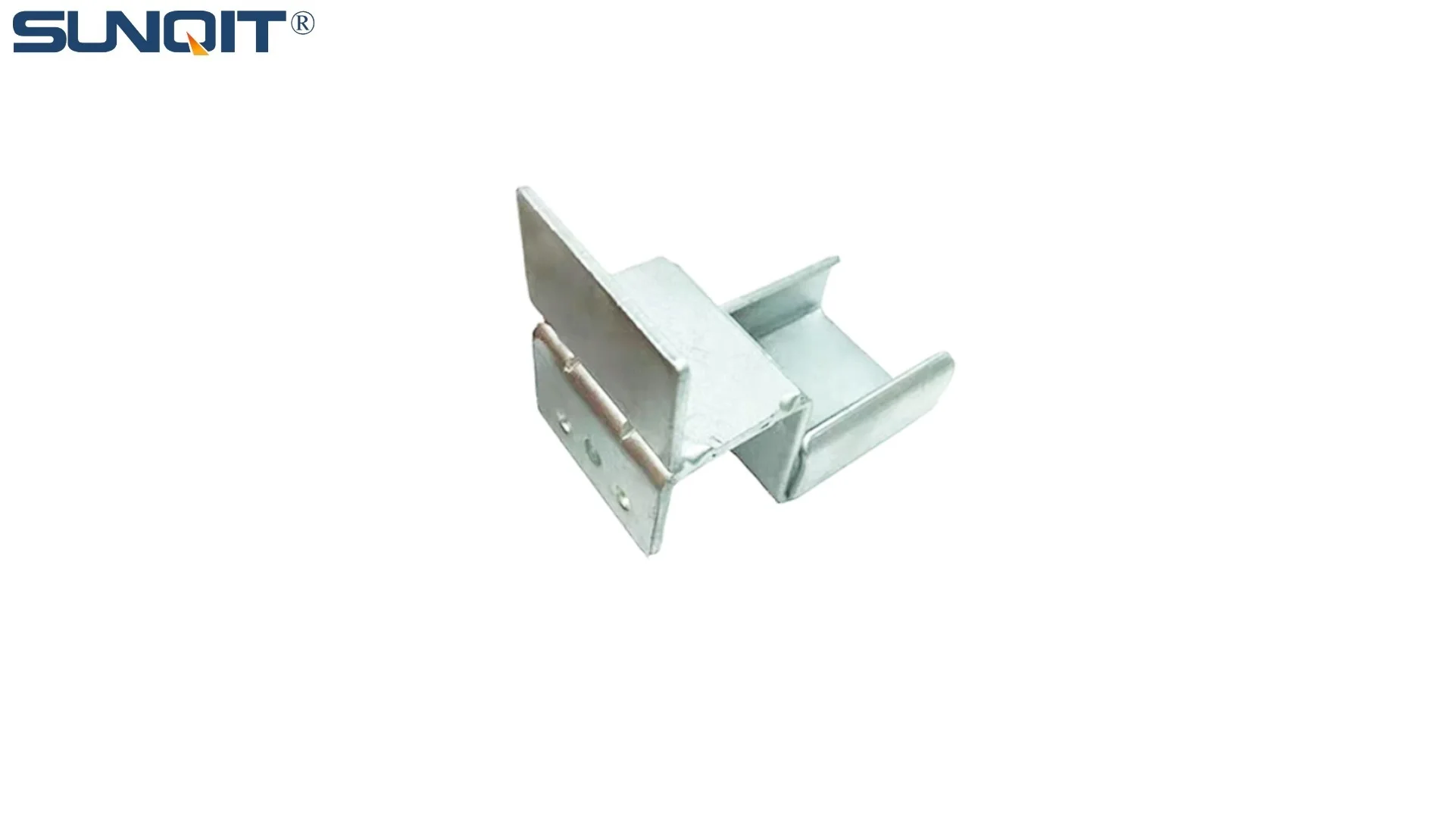
Whether you're setting up a new production line or upgrading your existing lean system, getting the details right on components like the end support for roller track placon mount with stop can make all the difference. Let's dive into the questions we hear most often—from installation headaches to day-to-day use—to help you keep your workflow smooth, efficient, and frustration-free.
What Exactly Is the End Support for Roller Track Placon Mount with Stop, and Why Does It Matter?
Let's start with the basics. If you've worked with roller tracks (you know, those smooth-rolling systems that move materials along assembly lines or between workstations), you've probably noticed they need strong, reliable support to stay aligned and functional. That's where this end support comes in—it's the unsung hero that anchors the end of your roller track, preventing sagging, misalignment, or even collapse under the weight of materials.
The "with stop" part? That's the built-in feature that gently but firmly halts items as they reach the end of the track. No more materials sliding off the edge, no more damaged parts, and no more chasing runaway components across the factory floor. It's a small detail, but anyone who's dealt with a misplaced box or a scratched circuit board knows: small details save big headaches.
In the world of lean manufacturing, where efficiency and sustainability are everything, this component fits right in. It's designed to work seamlessly with your existing lean pipe system and aluminum profile setups, ensuring your entire workflow stays in sync. Think of it as the final piece of the puzzle that turns a good roller track into a great one—durable, reliable, and built to keep up with the pace of your production.
What Tools and Prep Work Do I Need Before Installation?
Pro tip: Rushing into installation without prep is like baking a cake without reading the recipe—you might get there, but it'll be messier than it needs to be. Let's avoid that!
Good news: You won't need a whole workshop of tools, but having the right ones on hand will make the process go from "ugh, this is taking forever" to "done in 20 minutes." Here's your checklist:
- Basic hand tools: A Phillips-head screwdriver (magnetic helps!), an Allen wrench set (the size depends on your specific model—check the packaging!), and a level (a small 2-foot level works best for checking track alignment).
- Measuring tape or ruler: To ensure the support is positioned exactly where you need it—no guesswork allowed.
- Marker or pencil: To mark drill points (a pencil is easier to erase if you need to adjust!).
- Safety gear: Gloves to protect your hands from sharp edges on aluminum profiles, and safety glasses—because even small metal shavings can be a nuisance (or worse).
- Your roller track and placon mount: Sounds obvious, but double-check that you have the right roller track placon mount (like the "roller track placon mount for aluminum profile flat" or "high" version) that matches your end support. Mixing and matching can lead to wobbly tracks later.
Before you even pick up a tool, take 5 minutes to inspect the end support itself. Look for any dents, cracks, or missing parts—like the stop mechanism or mounting screws. If something looks off, reach out to your supplier (we all know how shipping can be!). Better to catch it now than mid-installation.
Finally, clear the area around your installation spot. A cluttered workspace isn't just annoying—it's a safety hazard. Move that stack of boxes, sweep up any debris, and give yourself enough room to kneel or stand comfortably while working. Trust us, your back (and your patience) will thank you.
Walk Me Through the Installation Steps—No Tech Jargon, Please!
We get it: Installation guides can feel like they're written in code. Let's break it down step by step, like we're explaining it to a friend over coffee.
| Step | What to Do | Pro Tip |
|---|---|---|
| 1. Position the Roller Track | Lay your roller track on a flat surface (or mount it temporarily to your aluminum profile frame) where you want it to live long-term. Make sure it's straight—use your level here! | If mounting to an aluminum profile, loosely attach the track first so you can adjust later. |
| 2. Mark the End Support Location | Slide the end support onto the end of the roller track. Line up the mounting holes with the holes on your placon mount or aluminum profile. Use your pencil to mark where the screws will go. | Double-check the "stop" direction! It should face upward or toward the direction materials are moving—you don't want it stopping items before they reach the end. |
| 3. Drill Pilot Holes (If Needed) | If your aluminum profile or placon mount doesn't have pre-drilled holes, use a drill bit slightly smaller than your screws to create pilot holes. This prevents the metal from cracking. | Go slow! Applying too much pressure can warp the profile or strip the hole. |
| 4. Attach the End Support | Align the end support with your marked holes. insert the screws and tighten them with your screwdriver or Allen wrench—snug, but not so tight that you strip the threads. | Alternate tightening screws (like you would with a car tire) to keep the support even. |
| 5. Test the Stop Mechanism | Slide a test item (like a box or a part similar to what you'll be moving) down the track. It should roll smoothly and stop gently at the end support—no bouncing, no sliding past. | If it stops too abruptly, check if the stop is bent or misaligned. A little wiggle with pliers (gently!) usually fixes it. |
| 6. Final Check | Give the end support a firm shake. It shouldn't move or rattle. Use your level again to ensure the track is still straight—installation can sometimes nudge things out of alignment. | Take a step back and visualize your workflow. Does the end support position make sense for your operators? Sometimes a small adjustment here saves big time later. |
Most installations take 30 minutes or less once you have the hang of it. And if you're installing multiple end supports (say, for a long conveyor line), do one first, test it, then replicate the process. Consistency is key!
What Are the Most Common Issues During Use, and How Do I Fix Them?
Even the best components hit snags sometimes. Here's how to troubleshoot like a pro—no need to call in the maintenance team (unless you want to show off your new skills).
Let's start with the problem we hear about most:
Issue 1: Materials are sliding past the stop instead of stopping.
Why it happens: The stop mechanism might be worn, bent, or just loose. Over time, heavy items or frequent use can nudge the stop out of position.
Fix: First, tighten the screws holding the stop in place—sometimes they just need a quick turn. If that doesn't work, inspect the stop itself. Is it cracked or bent? Most suppliers sell replacement stops, so you can swap it out without replacing the entire end support. If it's just a little bent, gently bend it back with pliers (cover the pliers with a cloth to avoid scratching the surface).
Issue 2: The roller track feels wobbly at the end support.
Why it happens: Either the end support isn't mounted tightly enough, or the placon mount (like the "roller track placon mount center support bracket") is misaligned with the aluminum profile.
Fix: Check all mounting screws—tighten any that are loose. If the wobble persists, use your level to see if the end support is tilted. You might need to adjust the position slightly or add a shim (a small piece of metal or plastic) under one side to level it out. For heavy-duty setups, consider adding a "roller track placon mount high" bracket for extra stability.
Issue 3: There's a loud squeaking or grinding noise when materials hit the stop.
Why it happens: Metal-on-metal contact without lubrication, or debris (like dust, dirt, or small pieces of plastic) stuck in the stop mechanism.
Fix: First, clean the stop and the area around it with a dry cloth or a small brush (a toothbrush works great for tight spots). Then, apply a tiny drop of lubricant (like silicone spray or machine oil) to the pivot point of the stop. Wipe off excess—you don't want it gumming up with dust later. The noise should quiet down immediately!
Issue 4: The end support seems to be "sagging" under heavy loads.
Why it happens: You might be using a standard-duty end support for a heavy-duty job. Not all end supports are created equal—some are designed for lighter materials, others for bulkier items.
Fix: Check the weight rating of your end support (it should be in the product specs). If you're regularly moving items heavier than that, reach out to your supplier about upgrading to a heavy-duty version. In the short term, adding a middle support bracket (like the "roller track placon mount center support bracket") can ease the load on the end support.
How Do I Maintain It to Keep It Working Like New?
Lean manufacturing isn't just about efficiency—it's about sustainability. A little maintenance goes a long way in extending the life of your equipment (and keeping your budget happy).
You don't need a fancy maintenance schedule—just a few quick habits to add to your routine. Here's what works:
- Weekly wipe-down: Take 2 minutes every Friday to wipe the end support and stop mechanism with a dry or slightly damp cloth. This removes dust, oil, and debris that can build up and cause jams or corrosion. For factories with extra dust (looking at you, woodworking or metal fabrication!), a quick blast with compressed air (on low setting!) can get into those tiny crevices.
- Monthly screw check: Grab your Allen wrench and give all mounting screws a gentle tighten. Vibration from the roller track can loosen screws over time—catching this early prevents bigger issues later.
- Quarterly lubrication: As we mentioned earlier, the stop mechanism's pivot point needs a little love. Every 3 months, apply a small amount of lubricant to keep it moving smoothly. Avoid heavy greases—they attract dirt. A light machine oil or silicone spray is perfect.
- Inspect after "incidents": If something heavy slams into the stop, or if there's a spill near the roller track, take 5 minutes to check the end support. Look for cracks, bent parts, or loose connections. Catching damage early can mean the difference between a quick fix and a costly replacement.
Remember: This end support is part of your lean system—designed to be reused and adapted as your needs change. With basic maintenance, it should last for years, even in busy production environments. And when the time comes to reconfigure your line? It's easy to detach, move, and reinstall, keeping your workflow flexible and your sustainability goals on track.
Is It Compatible with Other Roller Track Accessories?
No one likes buying a component only to find out it doesn't play nice with the rest of their setup. Let's clear up compatibility once and for all.
The short answer: Yes, but it depends on the specific accessories and your roller track system. Most end supports for roller track placon mount with stop are designed to work with standard lean pipe and aluminum profile systems, but here's a quick compatibility guide to save you guesswork:
| Accessory Type | Compatible? | Notes |
|---|---|---|
| Roller Track Placon Mounts | Yes | Works with flat, high, and center support brackets (e.g., "roller track placon mount for aluminum profile flat," "roller track placon mount for aluminum profile high"). |
| Aluminum Profiles | Yes | Fits standard 2020, 3030, 4040, and 4080 aluminum extrusion profiles—common in most lean systems. |
| Roller Track Connectors | Yes | Compatible with "roller track placon mount connector" and "roller track placon mount joint" for extending tracks. |
| Caster Wheels & Trolleys | Indirectly | If your roller track is mounted on a mobile trolley (like a "turnover trolley and rack"), the end support will still work—just ensure the trolley is stable when in use. |
| ESD Workbenches/Stations | Yes | Perfect for ESD (electrostatic discharge) environments—just ensure the end support is grounded if needed (check with your ESD specialist). |
If you're unsure about a specific accessory, a quick photo of your setup and a message to your supplier should clear things up. Most lean solution providers are happy to help you confirm compatibility—after all, they want your system to work as well as you do.
Can I Get Customized End Supports for Special Needs?
Every production line is unique—so why should your components be one-size-fits-all?
Absolutely! While standard end supports work for most setups, there are times when you need something a little different. Maybe you're working with extra-long roller tracks, ultra-heavy materials, or a custom conveyor system that bends around corners. That's where custom solutions come in.
Common customization options include:
- Adjustable stop height: For materials of different sizes—so you can lower the stop for small parts or raise it for taller boxes.
- Heavy-duty materials: Thicker aluminum or reinforced steel for end supports that need to handle constant heavy loads (think automotive parts or large medical equipment).
- Special finishes: Anti-corrosion coatings for humid environments (like food processing or clean rooms) or ESD-safe coatings for electronics manufacturing.
- Custom mounting holes: To fit non-standard placon mounts or aluminum profiles.
The key here is to work with a supplier who understands lean manufacturing and has experience with custom designs. They'll ask about your specific needs: What materials are you moving? How heavy are they? What's the environment like (temperature, humidity, dust)? How fast does the roller track run? The more details you provide, the better they can tailor the end support to your workflow.
And remember, customization doesn't have to mean "expensive" or "long lead times." Many suppliers keep core components in stock and can modify them quickly—so you get a solution that fits your line without derailing your timeline.
Final Thoughts: Why Bother with the Right End Support?
At the end of the day, the end support for roller track placon mount with stop might seem like a small part of your big production puzzle. But small parts have a way of making a big impact. A well-installed, well-maintained end support means fewer delays, fewer damaged materials, and fewer frustrating moments spent fixing preventable issues.
It's about more than just "a piece of metal"—it's about building a lean system that works for you, not against you. One that's efficient, sustainable, and adaptable to whatever your business throws at it next. So take the time to get it right—your team, your products, and your bottom line will thank you.
Still have questions? Don't hesitate to reach out to your supplier or lean solution provider. The best ones are happy to walk you through installation, troubleshoot issues, or help you design a custom setup. After all, their success depends on yours.