- Company Articles
- FAQ
- FAQ
- FAQ: Four Way Straight Lean Pipe Joint – Common Questions Answered

FAQ: Four Way Straight Lean Pipe Joint – Common Questions Answered
Related Product
Four Way Straight Lean Pipe Joint
Four way lean pipe joint for 4 pcs 28MM lean pipe connection in straight angle, which used widely in workbench, flow rack, hand trolley frame connection.
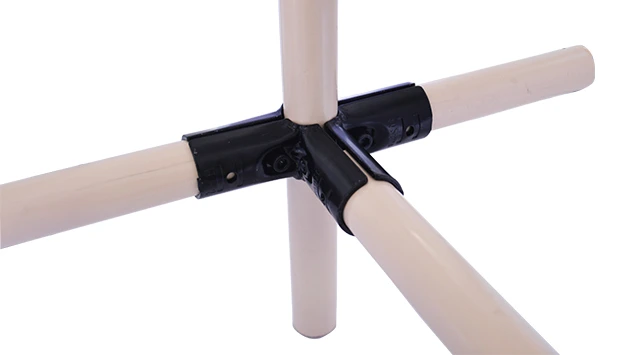
In the world of lean manufacturing and efficient workflow design, every component plays a silent but critical role in keeping operations running smoothly. Among these unsung heroes are lean pipe joints—small, unassuming connectors that hold together the modular structures powering assembly lines, workbenches, flow racks, and more. Today, we're zeroing in on one specific star of the show: the
four way straight lean pipe joint
. Whether you're a seasoned production manager, a logistics coordinator, or someone just starting to explore lean systems, you've probably wondered how these joints work, why they matter, and how to make the most of them. In this FAQ, we'll dive deep into all things four way straight lean pipe joints, answering your most pressing questions with practical insights and real-world context. Let's get started.
1. What Exactly Is a Four Way Straight Lean Pipe Joint, and How Does It Fit Into Lean Systems?
At its core, a four way straight lean pipe joint is a specialized connector designed to link lean pipes (also called "lean tubes") in a modular system. As the name suggests, it features four connection ports—typically aligned in a straight line or perpendicular directions—allowing users to join up to four lean pipes at once. Unlike simpler two-way or three-way joints, which limit connections to two or three pipes, the four way straight joint unlocks greater flexibility, enabling the creation of multi-directional structures that adapt to evolving workflow needs.
To understand its role in lean systems, let's first recall what a "lean system" is: a methodology focused on minimizing waste, maximizing efficiency, and promoting continuous improvement. Lean pipe systems (often built with aluminum lean pipe, steel pipes, or plastic-coated pipes) are physical manifestations of this philosophy—modular, customizable structures like workbenches, flow racks, and material trolleys that can be quickly assembled, reconfigured, or disassembled as production demands change.
The four way straight joint is the "glue" that holds these systems together. Imagine building a flow rack for a warehouse: you need vertical supports, horizontal shelves, and crossbars to stabilize the structure. A four way joint at the intersection of these pipes lets you connect the vertical pipe, two horizontal pipes (left and right), and a crossbar (front or back) in one go—no welding, no drilling, just a simple twist or clamp. This speed and adaptability make it indispensable for lean environments where downtime is costly and flexibility is key.
In short, the four way straight lean pipe joint isn't just a part—it's a enabler of lean principles. It turns static, fixed structures into dynamic, responsive tools that grow and change with your business.
2. What Materials Are Four Way Straight Lean Pipe Joints Made Of, and Why Does It Matter for Durability?
The material of a four way straight lean pipe joint directly impacts its performance, lifespan, and suitability for different environments. Most manufacturers offer joints in three primary materials, each with unique benefits:
- Aluminum: Lightweight yet surprisingly strong, aluminum joints are a top choice for applications where portability and corrosion resistance matter. Aluminum lean pipe joints are often anodized (coated with a protective oxide layer) to enhance durability and prevent rust, making them ideal for cleanrooms, food processing facilities, or outdoor use. They're also easy to handle during assembly, reducing worker fatigue—a small but meaningful detail in fast-paced production lines.
- Steel (with or without coating): Steel joints are the workhorses of heavy-duty applications. Hot-dipped galvanized steel offers excellent rust resistance, while chrome-plated steel adds a sleek finish and extra protection against wear. These joints excel in environments with high load capacities, such as automotive manufacturing or industrial warehouses, where shelves and workbenches must support heavy tools or materials.
- Plastic-Coated Steel: For applications requiring electrical conductivity (like electronics manufacturing) or where scratch resistance is critical, plastic-coated steel joints are a go-to. The plastic coating—often polypropylene or PVC—insulates against static electricity (ESD protection) and prevents damage to sensitive components, making them a staple in ESD workbench setups.
Why does material choice matter? Let's take an example: a food and beverage plant using stainless steel pipe series for hygiene. A steel joint here would rust quickly, but an aluminum or stainless steel joint (sometimes grouped under "stainless steel pipe series") would resist corrosion from cleaning chemicals and moisture. Similarly, a warehouse in a humid climate might opt for aluminum joints over uncoated steel to avoid rust-related failures.
Durability also ties to load capacity . A steel joint might support 500 lbs per connection, while an aluminum joint could handle 300 lbs—critical numbers if you're building a material rack B (3 row and 3 floor) designed to hold heavy inventory. Choosing the wrong material could lead to bent joints, collapsed structures, or frequent replacements—all of which contradict lean principles by introducing waste (downtime, replacement costs) into the system.

3. What Are the Key Features That Make Four Way Straight Joints Stand Out From Other Lean Pipe Joints?
Four way straight lean pipe joints aren't just "more ports than two-way joints"—they come packed with features that make them uniquely valuable in lean systems. Here are the standout qualities to look for:
- Multi-Directional Connectivity: The most obvious feature is the four connection ports, which can be oriented in straight lines (e.g., front/back/left/right) or at 90-degree angles. This allows for the creation of complex structures like L-shaped workbenches with overhead shelves, or flow racks with both horizontal and vertical dividers—all without needing multiple joint types.
- Tool-Free Assembly (Often): Many modern four way joints use a "twist-lock" or "clamp" design, meaning you can connect pipes by hand, with no need for wrenches, screws, or welding. For example, some aluminum joints feature internal threads that grip the pipe when twisted, while steel joints might use a cam lever to tighten the connection. This cuts assembly time from hours to minutes—a game-changer for lean teams needing to reconfigure a line between shifts.
- Reusability: Unlike welded joints, which are permanent, four way straight joints are (detachable). If a workbench needs to be shortened, or a flow rack repurposed for a new product line, you can simply loosen the joint, remove the pipes, and reuse both the joint and pipes elsewhere. This reusability aligns with lean's "reduce waste" ethos by minimizing scrap.
- Load-Bearing Strength: Despite their modularity, high-quality four way joints are engineered to handle significant weight. For instance, a steel four way joint might support up to 800 lbs when properly installed, making it suitable for heavy-duty applications like automotive part storage or industrial workbench setups with power tools.
- Compatibility: Most four way joints are designed to fit standard lean pipe sizes (e.g., 28mm, 30mm, or 40mm diameters), ensuring they work with existing lean pipe and accessories in your facility. Whether you're using aluminum pipe, stainless steel pipe series, or plastic-coated lean pipe, a compatible joint ensures seamless integration.
To put this in context, consider a manufacturer switching from a fixed wooden workbench to a lean pipe workbench. With two-way joints, they might struggle to add side shelves or overhead lighting mounts. But with four way straight joints, they can connect the main workbench frame, a side shelf pipe, an overhead light bar pipe, and a tool holder pipe—all at the same junction. The result? A custom workbench that grows with their needs, built in a fraction of the time.

4. How Do You Properly Install a Four Way Straight Lean Pipe Joint? A Step-by-Step Guide
Installing a four way straight lean pipe joint is straightforward, but attention to detail ensures a stable, safe structure. Here's a step-by-step guide, using a common aluminum lean pipe joint as an example:
- Gather Your Tools and Materials: You'll need: the four way straight joint, lean pipes (cut to your desired length), a rubber mallet (optional, for tapping pipes into place), and a hex key or cam lever tool (if the joint uses mechanical tightening). If working with ESD-sensitive materials, ensure the joint and pipes are ESD-rated (look for "ESD workbench" or "ESD workstation" labels).
- Inspect the Joint and Pipes: Check for defects: cracks in the joint, bent pipe ends, or debris in the connection ports. Even small burrs on a pipe can prevent a tight fit, so use a file to smooth rough edges if needed.
- Align the Pipes with the Joint Ports: Identify the direction of each pipe. For a flow rack, you might have two vertical pipes (up/down), one horizontal pipe (left), and one horizontal pipe (right). insert each pipe into the joint's ports until it hits the internal stop (most joints have a built-in limit to prevent over-insertion).
-
Tighten the Joint:
- For twist-lock joints: Hold the joint steady and twist the pipe clockwise until it's snug. You'll feel resistance when the threads or cam mechanism engage.
- For hex key joints: insert the hex key into the joint's set screw and turn clockwise until tight. Avoid over-tightening—this can strip the threads or warp the pipe.
- For cam lever joints: Flip the lever from "open" to "closed" position. A firm click indicates a secure connection.
- Test Stability: Gently shake the structure to check for wobbling. If a pipe feels loose, loosen the joint, reinsert the pipe, and retighten. Repeat until all connections are firm.
- Repeat for Additional Joints: Continue assembling the structure, using four way joints at key intersections (e.g., the corners of a workbench or the shelves of a flow rack). For larger structures, use a level to ensure pipes are straight—this prevents uneven weight distribution and reduces stress on joints.
Pro tip: If you're new to lean pipe assembly, start small. Build a simple turnover trolley or small material rack first to get a feel for how the joints and pipes interact. As you gain confidence, move on to larger projects like a full workbench or multi-tier flow rack.
5. What Are the Most Common Applications for Four Way Straight Lean Pipe Joints? Real-World Examples
Four way straight lean pipe joints shine in any scenario where modularity, strength, and multi-directional connectivity are needed. Here are the most common applications, with real-world examples to illustrate their impact:
- Workbenches: Lean pipe workbenches are the backbone of assembly lines, and four way joints are critical for their construction. For example, a "workbench E (single deck-without caster)" might use four way joints at each corner to connect the vertical legs, horizontal front/back rails, and crossbars for stability. Add a fourth pipe to one joint, and you've got a side shelf for tools or parts bins—no need for extra brackets.
- Flow Racks: Flow racks (also called "gravity racks") use inclined roller tracks to move materials from the back to the front, reducing pick time. Four way joints are used to build the rack's frame, connecting vertical supports, horizontal shelf rails, and roller track guide rails (like plastic roller track guide rail yellow or grey). A material rack B (3 row and 3 floor), for instance, relies on four way joints to link the vertical columns to the three horizontal rows, ensuring each shelf is level and sturdy enough to hold heavy bins.
- Turnover Trolleys: These mobile carts transport materials between workstations. Four way joints connect the trolley's frame, handle, and shelves. For example, a hand trolley A might use four way joints at the base to link the front/back rails and caster mounts (caster wheel and accessories), while another joint at the top connects the handlebar and side rails.
- Assembly Line Structures: In automotive or electronics manufacturing, assembly lines often use overhead racks for tools, parts, or cables. Four way joints allow these racks to branch off in multiple directions—e.g., a main horizontal rail with vertical drops for tool hooks and horizontal extensions for parts bins.
- ESD Workstations: In electronics production, ESD (electrostatic discharge) workstations prevent static damage to sensitive components. Four way joints made with ESD-safe materials (like plastic-coated steel) connect the workstation frame, ESD mats, and grounding rods, ensuring the entire structure is grounded.
One notable example comes from a small appliance manufacturer we worked with: They needed to reconfigure their assembly line to produce a new blender model. Using four way straight joints, their team disassembled the old flow rack, reused the pipes and joints, and built a new rack with wider shelves and additional roller track (using roller track placon mount for rail connection) in under four hours. Without the joints' flexibility, they would have needed to buy a new rack—costing time and money.
6. How Do Four Way Straight Joints Compare to Other Joint Types? A Quick Comparison
To truly appreciate four way straight joints, it helps to compare them to other common lean pipe joints. Below is a table breaking down key differences in function, applications, and load capacity:
| Joint Type | Number of Ports | Primary Function | Best For | Typical Load Capacity |
|---|---|---|---|---|
| Four Way Straight | 4 | Connect pipes in straight or perpendicular directions | Multi-shelf flow racks, complex workbenches, overhead assembly structures | 600–800 lbs (steel); 300–500 lbs (aluminum) |
| Three Way | 3 | Connect three pipes (e.g., T-junctions or Y-junctions) | Simple shelves, corner supports, T-shaped tool racks | 500–700 lbs (steel); 250–400 lbs (aluminum) |
| Two Way | 2 | Connect two pipes in a straight line or 90° angle | Straight rails, vertical supports, basic trolley frames | 400–600 lbs (steel); 200–350 lbs (aluminum) |
| 90° Crossing | 4 (two perpendicular pairs) | Cross two pipes at 90° (e.g., a horizontal pipe over a vertical pipe) | Overhead rail crossings, grid-style storage racks | 500–700 lbs (steel); 250–400 lbs (aluminum) |
The key takeaway? Four way straight joints are the most versatile, but they're not always the most cost-effective. For simple structures (like a basic hand trolley), two-way or three-way joints may suffice. But when you need to build something complex—say, a workbench with side shelves, overhead tool storage, and a material bin rack—four way joints save time and reduce the number of parts needed.
7. What Maintenance Practices Ensure Four Way Straight Lean Pipe Joints Last Longer?
Like any tool, four way straight lean pipe joints require basic maintenance to perform at their best. Neglecting them can lead to loose connections, reduced load capacity, or even structural failure. Here's how to keep them in top shape:
-
Regular Inspection:
Check joints monthly (or quarterly, for low-use structures) for signs of wear:
- Loose connections: Wiggle pipes to see if they shift in the joint. If yes, retighten the joint.
- Cracks or corrosion: Steel joints may rust in humid environments; aluminum joints may show pitting. replace any joint with visible damage.
- Stripped threads or worn cam levers: If a twist-lock joint spins freely, or a cam lever doesn't click, the internal mechanism is worn—replace the joint.
- Cleaning: Dirt, grease, or debris can gum up joint mechanisms. Wipe joints with a damp cloth monthly, and use a mild detergent for heavy grime. For ESD joints, avoid harsh chemicals that might damage the ESD coating.
- Lubrication (If Needed): Some joints with moving parts (e.g., cam levers or internal rotatary aluminum joint) benefit from occasional lubrication. Use a dry lubricant (like graphite spray) to avoid attracting dust, and apply sparingly—over-lubrication can make joints slippery.
- Proper Loading: Never exceed the joint's load capacity. If you're unsure of the capacity, check the manufacturer's specs or test with gradually increasing weight. Overloading bends the joint's ports, weakening the connection over time.
- Care During Disassembly: When reconfiguring a structure, loosen joints slowly and evenly to avoid warping the ports. Never yank pipes out of joints—this can bend the pipe or crack the joint.
- Storage: If joints are not in use, store them in a dry, cool place. Avoid stacking heavy objects on them, as this can deform the ports.
One client—a logistics warehouse—learned the hard way: They ignored a loose four way joint on a flow rack, and over time, the joint wore down. Eventually, the shelf collapsed, damaging $2,000 worth of inventory. A monthly inspection would have caught the loose connection, saving the cost of repairs and lost inventory.
8. How Do You Choose a Reliable Supplier for Four Way Straight Lean Pipe Joints?
Not all four way straight lean pipe joints are created equal. A cheap, low-quality joint might save money upfront but cost more in downtime, repairs, or replacements later. Here's what to look for in a supplier:
- Material Quality: Ask for material certifications (e.g., aluminum joints should meet ASTM standards; steel joints should be galvanized or chrome-plated to resist corrosion). A reputable supplier will provide test reports or material data sheets.
- Load Capacity Testing: Suppliers should publish load capacity ratings for each joint type, tested under real-world conditions. Avoid suppliers who only list "estimated" capacities—look for third-party lab results.
- Range of Products: A good supplier offers not just joints, but a full line of lean pipe and accessories (e.g., aluminum pipe, roller track, caster wheel, and workbench components). This ensures compatibility—you won't end up with a joint that doesn't fit your existing pipes.
- Customization Options: If your facility has unique needs (e.g., extra-large ports for thick pipes, or ESD-safe joints in custom colors), choose a supplier who can customize joints to your specs.
- Customer Support: Lean systems can be complex—you need a supplier who offers technical help. Do they have a team to answer installation questions? Can they provide assembly guides or video tutorials?
- Lead Times and Inventory: In lean environments, delays are costly. Look for suppliers with local warehouses or short lead times (2–5 days) to avoid waiting weeks for joints.
- Reviews and References: Check online reviews or ask for customer references. A supplier with happy clients in your industry (e.g., manufacturing, logistics) is more likely to understand your needs.
When evaluating suppliers, don't hesitate to ask for samples. A sample joint lets you test fit, feel the quality, and even perform a quick load test (e.g., attaching pipes and hanging a weight to see if it holds). It's a small investment that can prevent big headaches later.
9. Are There Common Mistakes to Avoid When Using Four Way Straight Lean Pipe Joints?
Even with a quality joint and proper installation, mistakes can happen. Here are the most common pitfalls and how to steer clear of them:
- Mixing Pipe Sizes: Four way joints are designed for specific pipe diameters. Using a 30mm pipe with a joint meant for 28mm pipes results in a loose, unstable connection. Always check that pipe and joint sizes match.
- Over-Tightening: It's tempting to crank down on a joint to "make sure it's tight," but over-tightening strips threads, warps pipes, or cracks the joint. Stop when you feel resistance—most joints only need a firm "hand-tight" fit.
- Ignoring Leveling: A structure that's off-level puts uneven stress on joints. Use a level during assembly to ensure vertical pipes are straight and horizontal pipes are flat. This prevents joints from bending under uneven weight.
- Using Damaged Pipes: A bent or dented pipe won't seat properly in a joint, even if the joint is new. Inspect pipes for damage before assembly, and cut off bent ends if possible.
- Forgetting to Ground ESD Joints: In ESD workstations, joints must be grounded to prevent static buildup. Use ESD-specific joints and connect them to a grounding wire or mat—don't assume the joint itself is grounded.
- Skimping on Joints: To save money, some teams use fewer joints than needed, relying on "extra pipes" to stabilize a structure. This weakens the system—each intersection needs a joint to distribute weight evenly.
One final tip: Train your team! Even experienced workers can make mistakes if they're unfamiliar with a new joint type. A 15-minute training session on proper installation and inspection can prevent most issues.
10. Looking Ahead: How Are Four Way Straight Lean Pipe Joints Evolving to Meet Future Lean Needs?
As lean systems become more advanced—with trends like automation, IoT integration, and "lights-out" manufacturing—four way straight lean pipe joints are evolving too. Here's what to watch for:
- Smart Joints: Some manufacturers are experimenting with "smart" joints embedded with sensors that monitor load, temperature, or vibration. These joints could send alerts to a phone or dashboard if a connection loosens or a structure is overloaded—preventing failures before they happen.
- Eco-Friendly Materials: With sustainability becoming a key lean goal, we're seeing more joints made from recycled aluminum or biodegradable plastics. These materials reduce environmental impact without sacrificing strength.
- 3D-Printed Custom Joints: For niche applications (e.g., medical device manufacturing with unique workflow needs), 3D printing allows for one-off four way joints with custom port angles or sizes. This on-demand production cuts lead times and reduces waste from mass-produced, one-size-fits-all joints.
- Modular Add-Ons: Future joints may integrate modular accessories—like built-in cable clips for IoT sensors, or QR codes that link to digital assembly guides when scanned with a phone. This turns joints into "smart hubs" that connect physical and digital lean systems.
While these innovations are still emerging, the core value of four way straight joints—flexibility, durability, and efficiency—will remain unchanged. They'll continue to be the quiet enablers of lean systems, helping businesses adapt, grow, and thrive in an ever-changing market.
Whether you're building a simple workbench or a complex assembly line, the four way straight lean pipe joint is more than a connector—it's a tool for innovation. By understanding its features, applications, and maintenance needs, you can unlock the full potential of your lean system, reduce waste, and keep your operations running at peak efficiency. And remember: The best lean systems aren't just built with pipes and joints—they're built with curiosity, adaptability, and a commitment to continuous improvement. Now go build something great.