- Company Articles
- FAQ
- FAQ
- FAQs: 2040 EU Standard Aluminum Profile Sizing, Pricing & Availability

FAQs: 2040 EU Standard Aluminum Profile Sizing, Pricing & Availability
Related Product
2040 EU Standard Aluminum Profile
2040 is a 2.00 x 4.00CM fractional 20 series square extrusion T-slot profile with four open T-slots, two side with 2.00cm face, the other side with 4.00cm face. The profile has align-a-grooves to assist in aligning connecting profiles.
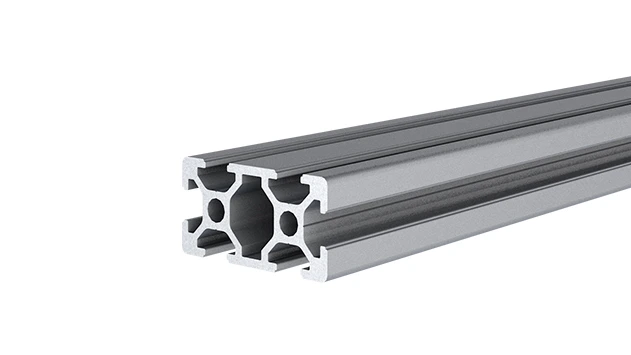
If you're diving into the world of industrial workbenches, machine frames, or lean manufacturing setups, chances are you've come across the 2040 EU Standard Aluminum Profile. It's a workhorse in the industry—versatile, durable, and surprisingly adaptable. But with so many details to unpack—from what "2040" actually means to how much it costs and where to find it—we've put together this FAQ guide to answer your most pressing questions. Whether you're a small business owner building a custom workstation or a procurement manager sourcing parts for a large-scale project, let's break down everything you need to know about this popular aluminum extrusion profile.
Understanding the Basics: What is the 2040 EU Standard Aluminum Profile?
Q1: What does "2040" mean in the 2040 EU Standard Aluminum Profile, and how is it sized?
Great question! The "2040" in the profile name is a quick way to describe its cross-sectional dimensions. In the EU standard, aluminum profiles are typically named using their width and height in millimeters—so "2040" translates to
20mm wide and 40mm tall
. Think of it like a rectangular tube, but with a T-slot design along its length (those grooves you see on the sides) that lets you attach accessories like brackets, panels, or connectors.
But sizing isn't just about width and height. Let's get into the nitty-gritty. A standard 2040 EU profile has a wall thickness that usually ranges from 1.5mm to 2mm, depending on the manufacturer and intended use. Thicker walls mean more strength, but they also add weight—so it's a balance between durability and practicality. For example, a 1.5mm wall 2040 profile might weigh around 0.7 kg per meter, while a 2mm version could hit 0.9 kg/m.
Tolerances matter too. EU standards (like DIN 6060 or EN 755) set strict rules for how much a profile's actual dimensions can vary from the "nominal" 20x40mm. Typically, width and height tolerances are around ±0.2mm, and straightness is within 0.5mm per meter. These tight specs ensure that when you buy a 2040 profile from one supplier, it will fit with aluminum profile accessories from another—no unpleasant surprises during assembly.
To visualize, here's a quick breakdown of key sizing specs for a common 2040 EU profile:
| Dimension | Standard Value | Tolerance |
|---|---|---|
| Width (W) | 20mm | ±0.2mm |
| Height (H) | 40mm | ±0.2mm |
| Wall Thickness | 1.5mm–2.0mm | ±0.1mm |
| Weight per Meter | 0.7–0.9 kg/m | ±5% |
| T-slot Width | 6mm or 8mm | ±0.1mm |
Compare this to smaller profiles like the 2020 (20x20mm) or larger ones like the 4040 (40x40mm), and the 2040 stands out as a "middleweight" option—narrow enough to save space but tall enough to support more load. It's why you'll often see it in workbenches, small machine frames, or material racks where you need a mix of stability and flexibility.
Q2: What material is the 2040 EU Standard Aluminum Profile made from, and how strong is it?
Most 2040 EU standard profiles are made from
6063-T5 aluminum alloy
—a go-to material for extruded aluminum products. Here's why: 6063 is a heat-treatable alloy with good corrosion resistance, excellent extrudability (meaning it can be shaped into complex T-slot designs easily), and a smooth surface finish that takes well to anodizing or powder coating. The "T5" refers to the temper (heat treatment process)—it's cooled from extrusion temperature and then artificially aged, resulting in a balance of strength and ductility.
So, how strong is it? Let's put it in perspective. A 2040 profile with a 1.5mm wall can typically support a vertical load of around 50–70 kg per linear meter before bending (depending on how it's mounted). For horizontal spans—say, a workbench shelf made from 2040 profiles—you're looking at safely holding 20–30 kg over a 1-meter span without noticeable deflection. That's more than enough for most workshop tools, electronic equipment, or small parts storage.
It's also lightweight compared to steel, which makes assembly easier (no need for heavy lifting gear!) and reduces shipping costs. And since aluminum doesn't rust, it's a solid choice for indoor or semi-outdoor use—think factory floors, cleanrooms, or even garage workstations where moisture might be a concern.
Pricing: How Much Does a 2040 EU Standard Aluminum Profile Cost?
Q3: What factors affect the price of 2040 Aluminum Profiles, and is there a difference between wholesale and retail pricing?
Pricing can vary quite a bit, but let's break down the key factors that drive cost:
1. Quantity:
Like most industrial materials, buying in bulk (wholesale) will save you money. A single 2040 profile cut to 1-meter length might cost $8–$12 at a retail hardware store, but if you order 100 meters or more from a lean system supplier or aluminum extrusion specialist, that price could drop to $5–$7 per meter. Suppliers often offer tiered pricing: the more you buy, the lower the per-unit cost.
2. Customization:
Want your profiles cut to specific lengths, drilled with holes, or finished with a custom color? That adds to the price. Cutting a profile to 1.2m instead of the standard 3m or 6m length might cost an extra $1–$2 per cut. Drilling or tapping T-slots for bolts could add $3–$5 per profile. Anodizing (a common finish that adds corrosion resistance and a matte silver look) is usually included in the base price, but powder coating (for colors like blue, red, or black) might cost $2–$4 more per meter.
3. Supplier Type:
Where you buy matters. Big-box retailers mark up prices for convenience, while specialized aluminum profile suppliers or lean system suppliers—who focus on industrial clients—can offer better rates because they source directly from extrusion mills. If you're in Europe, local suppliers might have lower shipping costs than importing from Asia, but Asian suppliers might undercut on bulk orders (just factor in longer lead times).
4. Market Conditions:
Aluminum is a commodity, so prices fluctuate with global metal markets. If the price of aluminum ingots spikes (due to trade policies, energy costs, or demand), you might see a 5–10% increase in profile prices within a few weeks. It's always a good idea to check with suppliers for current quotes, especially for large orders.
As a rough guide, here's what you might expect to pay (as of 2025):
- Retail (1–10 meters): $8–$15/m (cut to length, standard finish)
- Wholesale (100+ meters): $5–$9/m (standard lengths, anodized finish)
- Custom (cut, drilled, coated): $10–$20/m (depending on complexity)
Pro tip: If you need aluminum profile accessories (like connectors, end caps, or brackets) to go with your 2040 profiles, ask about bundle discounts. Many suppliers will knock 5–10% off if you buy profiles and accessories together.
Q4: Are there cheaper alternatives to the 2040 EU Standard Profile, and do they sacrifice quality?
You might come across "non-standard" or "economy" 2040 profiles priced 20–30% lower than EU standard ones. These are often made from lower-grade aluminum (like 6005 instead of 6063) or have looser tolerances. For example, a non-standard profile might have T-slots that are slightly off-size, making it hard to fit standard accessories, or wall thickness that varies by 0.5mm along the length, weakening the structure.
So, when is a cheaper alternative okay? If you're building a lightweight, temporary structure (like a trade show display) that won't bear heavy loads, it might work. But for anything permanent—workbenches, machine guards, or production line frames—saving a few dollars now could cost you later. A warped or weak profile might fail under stress, leading to damaged equipment or safety hazards.
Another alternative is to use a smaller profile (like 2020) if your load requirements are lower. A 2020 profile costs about 30% less than 2040, but it's only 20x20mm, so it can't handle as much weight. It's all about matching the profile to your needs!

Availability: Where to Buy 2040 EU Standard Aluminum Profiles and Accessories
Q5: How easy is it to find 2040 profiles in stock, and what's the typical lead time for custom orders?
2040 is one of the most popular aluminum extrusion profiles, so it's usually in stock at major suppliers. If you're in Europe, companies like Bosch Rexroth, Item, or Misumi keep large quantities of standard 2040 profiles (and aluminum profile accessories) on hand, with same-day or next-day shipping for in-stock items. In North America, suppliers like 80/20 Inc. or TSLOTS carry EU-compatible 2040 profiles (though they might use different branding).
For custom orders—like profiles with special finishes, non-standard lengths, or custom drilling—lead times are longer. You're looking at 2–4 weeks for most customizations, as the supplier has to either modify stock profiles or place a special order with the extrusion mill. If you need a very large quantity (1000+ meters) or a unique alloy, lead times could stretch to 6–8 weeks, so plan ahead!
A quick note on regional availability: If you're in a smaller country or remote area, you might have to order from a larger EU supplier, which could add 2–3 days to shipping. Check with local distributors first—many stock basics like 2040 profiles, 2040 aluminum profile end caps, and standard connectors to save on delivery time.
Q6: What aluminum profile accessories are commonly available for 2040 profiles, and do I need to buy them from the same supplier?
The beauty of EU standard profiles is that accessories are (mostly) interchangeable across brands. Here are the most common ones you'll need:
Connectors:
These join profiles at angles—90° aluminum profile connectors for corners, 45° for slopes, or T-joints for branching. Most are made of aluminum or steel and use bolts to clamp into T-slots.
End Caps:
These snap or bolt onto the ends of profiles to cover sharp edges and give a clean look. 2040 aluminum profile end caps are usually $0.50–$1 each and come in plastic or metal.
Brackets & Plates:
Use these to mount panels (like plywood or acrylic), shelves, or tools. L-angle brackets, flat plates, and hinge brackets are all standard.
Fasteners:
T-slot nuts, bolts, and washers that slide into the T-slots to secure accessories. M5 or M6 bolts are typical for 2040 profiles.
You don't have to buy accessories from the same supplier as your profiles, but it's a good idea to stick to EU standard sizes. For example, a T-slot nut designed for a 6mm slot will work with any 2040 profile that has a 6mm T-slot (most do). Mixing brands is fine—just double-check the slot width and connector dimensions before ordering.
Practical Tips: Installing and Using 2040 EU Standard Aluminum Profiles
Q7: Do I need special tools to cut or assemble 2040 profiles, and are there common mistakes to avoid?
Assembling 2040 profiles is surprisingly DIY-friendly—you don't need to be a pro! Here's what you'll need:
Tools:
- A miter saw or hacksaw with a metal-cutting blade (to cut profiles to length)
- A drill with metal bits (for drilling holes, if needed)
- An Allen wrench set (most connectors use hex bolts)
- A rubber mallet (to tap connectors into place without damaging the profile)
- A level (to ensure your structure is straight)
Common Mistakes to Avoid:
1.
Over-tightening bolts:
T-slot nuts can strip if you crank down too hard—snug is enough!
2.
Ignoring tolerances:
If two profiles don't align perfectly, check the straightness. A little bend can be fixed with a clamp, but severe warping means the profile is defective.
3.
Skimping on connectors:
Using too few brackets or connectors weakens the structure. For a workbench, space connectors every 30–40cm along the length for stability.
4.
Forgetting end caps:
Sharp aluminum edges can cut hands—always cap exposed ends, especially if the profile is at waist height.
With a little patience, you can build everything from a simple shelving unit to a complex conveyor frame using 2040 profiles and basic tools.
Q8: What are some creative or unexpected uses for 2040 EU Standard Aluminum Profiles?
Beyond the obvious (workbenches, machine frames), people get really creative with 2040 profiles! Here are a few fun examples:
-
DIY 3D Printer Frames:
The rigidity of 2040 profiles makes them perfect for building stable 3D printer frames—many hobbyists swear by them.
-
Retail Displays:
Lightweight yet sturdy, 2040 profiles can be assembled into custom shelving or product stands, with accessories to clip on signage or hooks.
-
Garden Greenhouses:
Anodized 2040 profiles resist rain and humidity, making them a durable (if pricier) alternative to PVC pipes for small greenhouses.
-
Home Gym Equipment:
Build a squat rack, dip station, or weight bench—just make sure to use thicker-wall profiles (2mm+) for heavy weights!
The key is that T-slot design—once you start seeing all the aluminum profile accessories available (hinges, wheels, locks), the possibilities are endless.
Final Thoughts: Is the 2040 EU Standard Aluminum Profile Right for You?
Q9: How do I decide if 2040 is the right profile for my project, or if I should upgrade to a larger size like 3030 or 4040?
Start by asking:
What's the maximum weight my structure needs to support, and how much space do I have?
-
Choose 2040 if:
You need a balance of strength and space. It's ideal for workbenches, small shelving, or machine guards where you don't have room for a bulkier profile.
-
Upgrade to 3030 (30x30mm) if:
You need more load capacity (it can handle ~50% more weight than 2040) or want to mount heavier accessories (like power tools) without bending.
-
Go for 4040 (40x40mm) if:
You're building something industrial-grade—a production line conveyor, heavy-duty storage rack, or robot mounting frame. It's the strongest of the three but takes up more space and costs ~30% more than 2040.
If you're still unsure, most suppliers will send free samples—order a 1-meter length of 2040 and 3030, test-fit your accessories, and see which feels sturdier. It's a small investment to avoid!
Q10: Where can I learn more about EU standards for aluminum profiles, or find technical drawings for 2040 profiles?
For deep dives into EU standards, check out the
EN 755
series (specifications for aluminum and aluminum alloys) or
DIN 6060
(extruded profiles for general engineering). Most suppliers also post technical datasheets on their websites—look for "2040 profile CAD drawings" or "dimensions and tolerances" to download PDF or CAD files (STEP, DWG) for your project.
And if you're stuck, reach out to a lean system supplier or aluminum profile specialist—they're usually happy to walk you through specs or help with design advice. After all, their job is to make sure you get the right parts for the job!
We hope this FAQ guide has cleared up any confusion about 2040 EU Standard Aluminum Profiles. From sizing and pricing to installation tips, this versatile extrusion profile is a staple for a reason—strong, adaptable, and widely available. Whether you're building a single workstation or outfitting an entire factory, understanding the details will help you make smart choices and get the most out of your investment. Happy building!