- Company Articles
- FAQ
- FAQ
- FAQs About 2020 EU Standard Aluminum Profile: Compliance & Usage

FAQs About 2020 EU Standard Aluminum Profile: Compliance & Usage
Related Product
2020 EU Standard Aluminum Profile
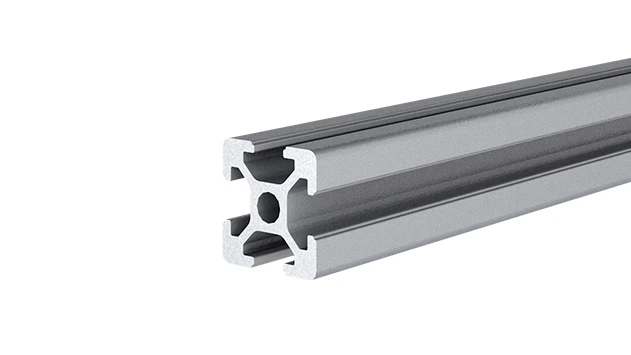
2020 is a 2.00 x 2.00CM fractional 20 series square extrusion T-slot profile with four open T-slots, one on each 2.00 face. The profile has align-a-grooves to assist in aligning connecting profiles.
If you've ever walked through a busy workshop, a sleek retail display, or a high-tech manufacturing plant, chances are you've seen aluminum profiles hard at work. Lightweight, durable, and endlessly customizable, they're the backbone of everything from workbenches to conveyor systems. But not all aluminum profiles are created equal—especially when it comes to meeting strict EU standards. The 2020 EU standard aluminum profile, in particular, has become a go-to for businesses prioritizing safety, consistency, and long-term reliability. In this guide, we're breaking down the most common questions about these profiles, from compliance requirements to practical usage tips. Whether you're a small business owner setting up a production line or a hobbyist tackling a DIY project, let's dive into what makes these profiles stand out.
1. What Exactly Is the 2020 EU Standard Aluminum Profile, and How Does It Differ From Non-Standard Options?
At its core, the 2020 EU standard aluminum profile is a specific type of aluminum extrusion profile designed and manufactured to meet the rigorous safety, quality, and performance standards set by the European union in 2020. Unlike generic or non-standard profiles—often mass-produced with loose tolerances—these profiles are engineered for precision, consistency, and compatibility. Think of it like the difference between a generic tool and a professional-grade one: both might look similar, but the EU standard version is built to last and work seamlessly with other components.
One key difference is dimensional accuracy. EU standard profiles adhere to strict size tolerances, meaning if you order a 20x20mm profile, you'll get exactly that—no surprises that throw off your assembly. Non-standard profiles, on the other hand, might vary in width or thickness by a few millimeters, which can derail projects requiring tight fits, like modular workbenches or automated machinery. Another big distinction is material quality. EU standard profiles use high-grade aluminum alloys (typically 6063-T5, known for its strength and corrosion resistance), while non-standard options might cut corners with cheaper alloys that bend or degrade faster under stress.
Perhaps most importantly, compliance with EU standards ensures these profiles are safe for use in commercial and industrial settings. They're tested for factors like load-bearing capacity, chemical resistance, and fire safety—something you can't always guarantee with off-brand alternatives. For businesses operating in the EU or exporting to European markets, this compliance isn't just a nice-to-have; it's legally required to avoid fines or product recalls.
2. What Compliance Certifications Should I Look for When Sourcing 2020 EU Standard Aluminum Profiles?
When shopping for 2020 EU standard aluminum profiles, certifications are your proof that the product meets the mark. Skipping this step could mean ending up with a profile that looks the part but fails under scrutiny. Here are the key certifications to watch for:
| Certification | What It Covers | Why It Matters |
|---|---|---|
| CE Marking | Indicates compliance with EU health, safety, and environmental requirements. | Legally required for products sold in the EU; ensures the profile is safe for its intended use. |
| RoHS Compliance | Restricts the use of hazardous substances (e.g., lead, mercury) in electrical/electronic equipment. | Crucial if the profile will be used in electronics manufacturing or near sensitive equipment. |
| REACH Registration | Regulates chemicals used in production to protect human health and the environment. | Ensures no harmful chemicals are present, making the profile safe for workers and end-users. |
| ISO 9001 | Quality management system certification for the manufacturer. | Signals consistent production processes and reliable product quality. |
Don't just take the supplier's word for it—ask to see physical copies or digital certificates. Reputable suppliers will happily provide these documents, while those hesitant might be cutting corners. For example, a profile without CE marking could contain subpar materials that weaken over time, putting your assembly at risk of collapse. Similarly, non-RoHS compliant profiles might leach harmful substances, which is a big issue in industries like food processing or medical device manufacturing.
Pro tip: If you're unsure about a certification, cross-check it with the official EU database. The European Commission's website has tools to verify CE marks and ensure they're not counterfeit. It's a small step that can save you from costly mistakes down the line.

3. What Are the Key Material Specifications of 2020 EU Standard Aluminum Profiles?
Understanding the material specs of 2020 EU standard aluminum profiles helps you choose the right one for your project—whether you're building a lightweight display shelf or a heavy-duty production line. Let's break down the essentials:
Alloy Type: The majority of EU standard profiles use 6063-T5 aluminum alloy. Why? It's a heat-treated alloy that balances strength, weldability, and corrosion resistance—perfect for both structural and decorative applications. T5 refers to the temper (hardness level), achieved by cooling the extrusion quickly and then artificially aging it. This process gives the profile a tensile strength of around 180 MPa, which is more than enough for most industrial uses, like supporting tool racks or conveyor systems.
Wall Thickness: For 20x20mm profiles, wall thickness typically ranges from 1.2mm to 2.0mm, depending on the intended load. Thicker walls (2.0mm) are better for heavy-duty setups, like workbenches that hold machinery, while 1.2mm works well for lighter applications, such as retail displays. EU standards dictate that thickness must be consistent across the entire profile—no thin spots that weaken the structure.
Dimensional Tolerances: EU standards are strict here. For a 20x20mm profile, the width and height should be within ±0.2mm of the stated size. This precision ensures that aluminum profile accessories, like end caps or connectors, fit perfectly. Imagine trying to attach a 20mm end cap to a profile that's actually 20.5mm wide—it just won't work, and you'll end up with a wobbly, unprofessional finish.
Surface Finish: Most EU standard profiles come with either anodized or powder-coated finishes. Anodizing creates a protective oxide layer (usually 10-15μm thick) that resists scratches and corrosion, making it ideal for humid environments like warehouses. Powder coating, on the other hand, offers more color options and a smoother texture, popular for retail or office settings. Both finishes are tested to meet EU standards for adhesion and durability—no flaking or fading after a few months of use.
These specs might seem technical, but they directly impact performance. A profile with inconsistent wall thickness could bend under weight, while poor dimensional tolerance makes assembling with aluminum profile accessories a frustrating chore. Always check the material data sheet (supplied by the manufacturer) to confirm these specs match your project's needs.
4. How Do Aluminum Profile Accessories Like End Caps and Fixings Work With 2020 EU Standard Profiles?
You could have the best aluminum profile in the world, but without the right accessories, it's just a piece of metal. Aluminum profile accessories—think end caps, fixings, connectors, and brackets—are what turn individual profiles into functional systems, like workbenches, shelving, or machine guards. And because 2020 EU standard profiles are built to precise tolerances, their accessories are designed to fit perfectly, creating sturdy, rattle-free assemblies.
Aluminum Profile End Caps: These small, often overlooked pieces are crucial for safety and aesthetics. Made from plastic or rubber, they snap onto the ends of profiles to cover sharp edges (preventing cuts) and keep dust, debris, and moisture out of the internal T-slot. EU standard end caps are sized to match the profile's exact dimensions—so a 20x20mm profile gets a 20mm end cap that fits snugly, no gaps. Non-standard end caps might be too loose or tight, either falling off or cracking the profile's edges when forced on.
Aluminum Profile Fixings: These include bolts, nuts, and brackets that hold profiles together. The T-slot design of EU standard profiles allows for easy, tool-free adjustment—you can slide a nut along the slot and tighten it exactly where you need. Fixings like corner brackets or hinge brackets are also standardized, meaning a 20mm bracket from one supplier will work with a 20mm profile from another. This interchangeability is a huge plus for modular setups; if you need to reconfigure your workbench later, you won't have to replace all the fixings.
Connectors and Joints: For building frames or multi-profile structures, connectors like 90° angle brackets or T-joints are essential. EU standard connectors are made from the same high-grade aluminum as the profiles, ensuring they can handle the same load. For example, a 20mm corner bracket will have a load capacity of around 50kg, matching the profile's own strength. Cheap, non-standard connectors might use plastic or low-grade steel that bends, leading to wobbly assemblies.
The key takeaway? Always pair EU standard profiles with EU standard accessories. Mixing and matching with non-standard parts can compromise safety and functionality. A common mistake is using generic plastic end caps on a premium profile—they might fit at first, but over time, the plastic can warp, leaving sharp edges exposed. Invest in quality accessories; they're a small cost compared to the risk of injury or equipment failure.
5. Can 2020 EU Standard Aluminum Profiles Be Used Interchangeably With Other Sizes or Non-EU Standard Profiles?
It's tempting to think, "Aluminum is aluminum—why not mix and match?" But when it comes to 2020 EU standard profiles, interchangeability is tricky, and often not recommended. Here's why:
Size Differences: EU standard profiles are precise, but other sizes (like 15x15mm or 30x30mm) have different T-slot widths and depths. A 20mm profile's T-slot is typically 6mm wide, while a 30mm profile might have an 8mm slot. This means fixings and accessories won't cross-fit. For example, a 20mm bolt won't tighten in a 30mm slot, leaving your joint loose. Even within the same size category, non-EU standard profiles might have slightly different slot dimensions, making interchangeability hit-or-miss.
Load Capacity Mismatch: EU standard profiles are tested to handle specific weights—say, 100kg per linear meter for a 2.0mm wall profile. Mixing them with a thinner, non-standard profile could create weak points. Imagine building a shelf with 20mm EU standard uprights but using a cheaper, thinner crossbar. The crossbar might sag under weight, even if the uprights are strong enough. This isn't just about functionality; it's a safety hazard—items could fall, or the entire structure could collapse.
Compliance Issues: If you're using the profile in a commercial setting, mixing EU and non-EU standard parts could void your compliance certifications. For example, a CE-marked assembly requires all components to meet CE standards. Throw in a non-CE connector, and the entire system might no longer comply with EU law, leaving you liable for fines.
That said, there are exceptions. If you're working on a purely decorative project with no load requirements—like a small display shelf for trinkets—mixing might be okay. But for industrial, commercial, or safety-critical applications, stick to one standard. If you need to combine sizes, look for transition brackets designed specifically for that purpose (e.g., a 20mm to 30mm adapter bracket from a reputable supplier). These are tested to maintain strength and compatibility.
6. What Are the Most Common Applications for 2020 EU Standard Aluminum Profiles?
The versatility of 2020 EU standard aluminum profiles is one of their biggest selling points. Their combination of strength, light weight, and modularity makes them a favorite across industries. Here are some of the most common ways businesses and hobbyists put them to work:
Workbenches and Assembly Stations: In manufacturing plants, these profiles are the backbone of custom workbenches. You can add shelves, tool hooks, and even ESD (electrostatic discharge) mats for electronics assembly. The modular design means you can adjust the height or add extensions as needed—no need to buy a whole new bench when your team grows.
Material Racks and Storage Systems: Warehouses use them to build lightweight but sturdy material racks. With adjustable shelves and roller tracks (another type of aluminum profile accessory), these racks make it easy to slide boxes or components in and out. The corrosion resistance of EU standard profiles is a bonus in humid warehouses, where steel racks might rust over time.
Conveyor Frames: In production lines, aluminum profiles frame conveyor belts, providing a stable base that's easy to install and modify. Their light weight reduces the load on motors, making the conveyor more energy-efficient. Plus, the T-slot design allows for quick attachment of sensors or guides.
Retail Displays: Stores love the sleek, modern look of anodized aluminum profiles. They're used to build product shelves, signage frames, and even pop-up display booths. The ability to quickly reconfigure (thanks to standardized accessories) means retailers can switch up their displays for sales or seasons without a full overhaul.
DIY and Hobby Projects: Hobbyists aren't left out either. From 3D printer enclosures to custom PC cases, the precision and ease of assembly make these profiles perfect for at-home projects. Many hobbyists praise how easy it is to cut the profiles to size with a hacksaw and assemble them with basic tools—no welding required.
No matter the application, the key advantage is adaptability. A profile used in a workbench today can be disassembled and repurposed into a storage rack tomorrow. This flexibility is why so many businesses see EU standard aluminum profiles as a long-term investment, not just a one-time purchase.
7. Final Thoughts: Why Invest in 2020 EU Standard Aluminum Profiles?
At the end of the day, choosing 2020 EU standard aluminum profiles is about more than just following rules—it's about building with confidence. These profiles offer peace of mind that comes from knowing your assembly is safe, durable, and built to last. Whether you're a small business owner looking to optimize your workshop or a manufacturer scaling up production, the precision, compliance, and versatility of EU standard profiles make them worth the investment.
Remember, the right profile isn't just a piece of metal—it's the foundation of your project. By prioritizing compliance, material quality, and compatible accessories, you're setting yourself up for success. And if you ever have doubts, don't hesitate to reach out to a reputable supplier—they'll help you find the perfect profile for your needs. After all, the best projects start with the best materials.