- Company Articles
- FAQ
- FAQ
- FAQs About All Direction Roller Track: Expert Answers

FAQs About All Direction Roller Track: Expert Answers
Related Product
All Direction Roller Track
All direction roller track made of steel frame and multiple direction move wheel which will make boxes are always in contact with the rollers, reducing jams and enhancing flow reliability.
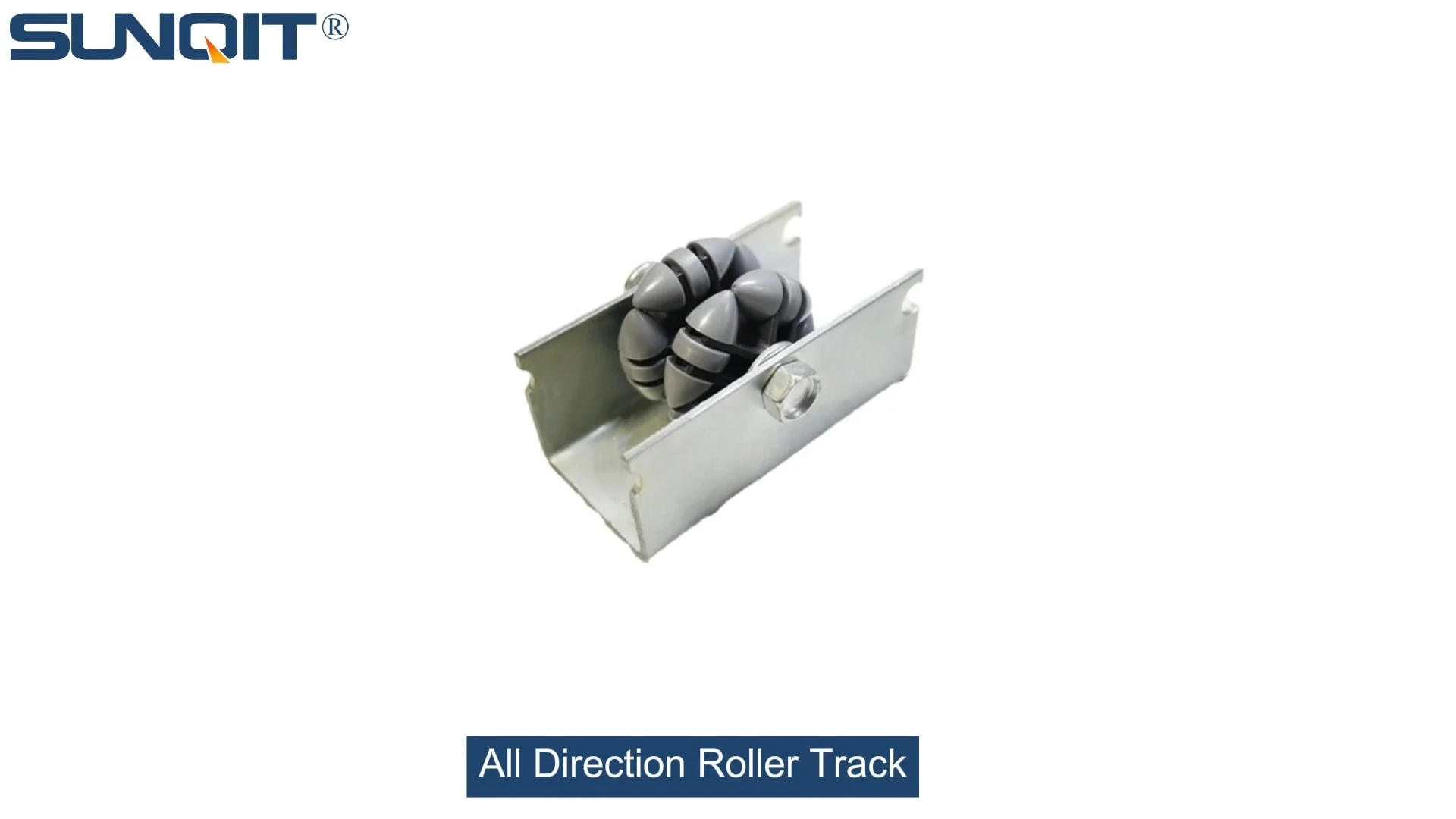
If you're involved in manufacturing, warehousing, or any industry that relies on efficient material handling, you've probably heard of all direction roller tracks. These nifty components are workhorses in lean production environments, but they also come with plenty of questions. We've gathered the most common queries we get from clients—from small workshops to large-scale factories—and brought in our lean system experts to provide clear, practical answers. Let's dive in!
What Exactly Is an All Direction Roller Track, and How Does It Differ From Standard Roller Tracks?
An all direction roller track—sometimes called a "ball transfer table" or "omnidirectional roller track"—is a material handling solution designed to let items glide smoothly in
any direction
. Unlike standard roller tracks, which only allow movement along a fixed path (usually straight), these tracks use small, rotating balls (or rollers) that can spin 360 degrees. Imagine a tabletop covered in tiny ball bearings: you can push a box forward, backward, left, right, or even diagonally with minimal effort.
So, what makes it special? Standard roller tracks are great for linear workflows—think conveyor belts moving products from Point A to B. But all direction tracks shine when you need flexibility. For example, in a 3C assembly line (where you're handling small, delicate parts like phone components), workers might need to rotate a circuit board or shift a component from one workstation to another at an angle. An all direction roller track makes that seamless, reducing the risk of dropping or damaging items. It's like upgrading from a one-lane road to a roundabout for your materials!
So, what makes it special? Standard roller tracks are great for linear workflows—think conveyor belts moving products from Point A to B. But all direction tracks shine when you need flexibility. For example, in a 3C assembly line (where you're handling small, delicate parts like phone components), workers might need to rotate a circuit board or shift a component from one workstation to another at an angle. An all direction roller track makes that seamless, reducing the risk of dropping or damaging items. It's like upgrading from a one-lane road to a roundabout for your materials!
What Materials Are All Direction Roller Tracks Made Of, and How Do I Choose the Right One?
Most all direction roller tracks are built with either aluminum, steel, or stainless steel—each with its own superpowers. Let's break it down:
Aluminum: Lightweight, corrosion-resistant, and easy to assemble. It's a top pick for industries where weight matters (like mobile workstations) or environments with mild moisture (e.g., medical device assembly). Aluminum tracks also blend well with aluminum lean pipes, which are common in lean systems for their modularity.
Steel: Heavy-duty and built for high loads. If you're moving metal parts, engine components, or heavy boxes (think automotive or industrial machinery), steel tracks won't bend or warp. They're tougher but heavier, so they're often fixed in place rather than mobile.
Stainless Steel: The "hygiene hero." Perfect for food processing, pharmaceutical, or medical settings where cleanliness is non-negotiable. Stainless steel resists rust, chemicals, and bacteria buildup, making it easy to sanitize.
How to choose? Ask: What's the maximum weight of the items I'm moving? (Steel for heavy loads, aluminum for lighter ones.) Will the track be exposed to water, chemicals, or food residue? (Stainless steel is your friend.) And do I need it to integrate with existing aluminum lean pipe workbenches? (Go aluminum for a seamless fit.) Our team often recommends aluminum for most general manufacturing cases—it's the sweet spot of strength, flexibility, and cost.
Aluminum: Lightweight, corrosion-resistant, and easy to assemble. It's a top pick for industries where weight matters (like mobile workstations) or environments with mild moisture (e.g., medical device assembly). Aluminum tracks also blend well with aluminum lean pipes, which are common in lean systems for their modularity.
Steel: Heavy-duty and built for high loads. If you're moving metal parts, engine components, or heavy boxes (think automotive or industrial machinery), steel tracks won't bend or warp. They're tougher but heavier, so they're often fixed in place rather than mobile.
Stainless Steel: The "hygiene hero." Perfect for food processing, pharmaceutical, or medical settings where cleanliness is non-negotiable. Stainless steel resists rust, chemicals, and bacteria buildup, making it easy to sanitize.
How to choose? Ask: What's the maximum weight of the items I'm moving? (Steel for heavy loads, aluminum for lighter ones.) Will the track be exposed to water, chemicals, or food residue? (Stainless steel is your friend.) And do I need it to integrate with existing aluminum lean pipe workbenches? (Go aluminum for a seamless fit.) Our team often recommends aluminum for most general manufacturing cases—it's the sweet spot of strength, flexibility, and cost.
Can All Direction Roller Tracks Be Integrated With Other Lean System Components?
Absolutely! In fact, their best strength is how well they play with others in a lean setup. Here are a few common pairings we see daily:
Lean Pipe Workbenches: Mount an all direction roller track on top of a lean pipe workbench (like our Workbench E) to create a flexible assembly station. For example, in a 3C factory, workers can place a laptop chassis on the track, spin it to access different ports, and then slide it onto a conveyor—all without leaving their seat.
Conveyors: Use them as "transfer points" between conveyors. Say a standard roller conveyor brings a box to a packing station; an all direction track at the end lets workers pivot the box to face the packing materials, then push it onto a secondary conveyor. No more lifting or twisting!
Turnover Trolleys: Attach a compact aluminum roller track to a turnover trolley, and suddenly you've got a mobile workstation that can transport parts and let workers rearrange them on the go. We've seen this in medical warehouses, where nurses need to quickly sort supplies and load them into different storage racks.
The key here is "modularity"—a core principle of lean systems. All direction tracks are designed to bolt onto or clip into existing aluminum profiles or lean pipe structures, so you don't have to rebuild your entire setup. It's like adding a new tool to your toolbox, not replacing the whole box.
Lean Pipe Workbenches: Mount an all direction roller track on top of a lean pipe workbench (like our Workbench E) to create a flexible assembly station. For example, in a 3C factory, workers can place a laptop chassis on the track, spin it to access different ports, and then slide it onto a conveyor—all without leaving their seat.
Conveyors: Use them as "transfer points" between conveyors. Say a standard roller conveyor brings a box to a packing station; an all direction track at the end lets workers pivot the box to face the packing materials, then push it onto a secondary conveyor. No more lifting or twisting!
Turnover Trolleys: Attach a compact aluminum roller track to a turnover trolley, and suddenly you've got a mobile workstation that can transport parts and let workers rearrange them on the go. We've seen this in medical warehouses, where nurses need to quickly sort supplies and load them into different storage racks.
The key here is "modularity"—a core principle of lean systems. All direction tracks are designed to bolt onto or clip into existing aluminum profiles or lean pipe structures, so you don't have to rebuild your entire setup. It's like adding a new tool to your toolbox, not replacing the whole box.
What Load Capacities Do These Tracks Support, and How Do I Avoid Overloading Them?
Load capacity depends on the material, ball size, and how the track is installed—but most standard all direction roller tracks can handle anywhere from 50kg to 300kg per square meter. For example, our 40mm aluminum roller track (with 1-inch swivel roller balls) typically supports around 150kg/m², while a steel track with larger balls can hit 250kg+.
The trick is to check the even distribution of weight. These tracks aren't meant for "point loads"—like dropping a 200kg engine block onto a single spot. Instead, spread the weight out: a flat box or pallet will work better than an irregularly shaped item. If you're unsure, ask your supplier for a load test report—reputable lean pipe suppliers should have data on how their tracks perform under different weights.
Pro tip: If you need to move extra-heavy items, opt for a track with denser ball spacing (more balls per square inch) or reinforce the frame with aluminum profile accessories like support brackets. Our engineers once helped a car parts manufacturer beef up their track by adding parallel aluminum joints, boosting the load capacity by 40% without replacing the entire system.
The trick is to check the even distribution of weight. These tracks aren't meant for "point loads"—like dropping a 200kg engine block onto a single spot. Instead, spread the weight out: a flat box or pallet will work better than an irregularly shaped item. If you're unsure, ask your supplier for a load test report—reputable lean pipe suppliers should have data on how their tracks perform under different weights.
Pro tip: If you need to move extra-heavy items, opt for a track with denser ball spacing (more balls per square inch) or reinforce the frame with aluminum profile accessories like support brackets. Our engineers once helped a car parts manufacturer beef up their track by adding parallel aluminum joints, boosting the load capacity by 40% without replacing the entire system.
Are There Common Mistakes to Avoid When Installing All Direction Roller Tracks?
Installation might seem straightforward, but small missteps can lead to jamming, uneven movement, or even track failure. Here are the top pitfalls we've seen (and how to dodge them):
1. Ignoring Leveling: If the track isn't perfectly level, items will "drift" toward the lower side instead of moving smoothly. Use a spirit level during installation, and adjust with leveling feet if needed—especially if you're mounting the track on a lean pipe workbench that might wobble.
2. Skipping the Underframe: Don't just bolt the track to a flimsy surface! It needs a sturdy base—like an aluminum profile frame or a steel workbench. We once fixed a client's jamming track by replacing their particleboard base with a 4040 aluminum extrusion profile; the extra rigidity made all the difference.
3. Over-Tightening Bolts: Aluminum tracks can warp if you crank down the bolts too hard. Snug them until they're secure, but don't strip the threads. A good rule: hand-tighten, then give a quarter-turn with a wrench.
4. Forgetting Edge Protection: If the track is at the end of a conveyor or workbench, add end stops or side guides (like our plastic roller track guide rails). Without them, items might slide off the edge—we've seen this happen in busy warehouses where workers are rushing. A $5 guide rail can save you from a $500 product drop!
When in doubt, ask your supplier for an installation guide. Most lean system suppliers (including us) offer free diagrams or even on-site support for first-time installs.
1. Ignoring Leveling: If the track isn't perfectly level, items will "drift" toward the lower side instead of moving smoothly. Use a spirit level during installation, and adjust with leveling feet if needed—especially if you're mounting the track on a lean pipe workbench that might wobble.
2. Skipping the Underframe: Don't just bolt the track to a flimsy surface! It needs a sturdy base—like an aluminum profile frame or a steel workbench. We once fixed a client's jamming track by replacing their particleboard base with a 4040 aluminum extrusion profile; the extra rigidity made all the difference.
3. Over-Tightening Bolts: Aluminum tracks can warp if you crank down the bolts too hard. Snug them until they're secure, but don't strip the threads. A good rule: hand-tighten, then give a quarter-turn with a wrench.
4. Forgetting Edge Protection: If the track is at the end of a conveyor or workbench, add end stops or side guides (like our plastic roller track guide rails). Without them, items might slide off the edge—we've seen this happen in busy warehouses where workers are rushing. A $5 guide rail can save you from a $500 product drop!
When in doubt, ask your supplier for an installation guide. Most lean system suppliers (including us) offer free diagrams or even on-site support for first-time installs.
Which Industries Benefit Most From All Direction Roller Tracks? Any Real-World Examples?
These tracks are versatile, but they're absolute stars in industries where
precision
and
speed
collide. Here are the top sectors we serve, with real examples:
3C Assembly (Phones, Laptops, etc.): In a smartphone factory, workers assemble tiny parts (screens, batteries, circuit boards) on lean pipe workbenches fitted with all direction tracks. They can rotate a phone case 180° to attach a camera module, then slide it to the next station—no picking up the case, no fumbling. One of our clients in Shenzhen cut assembly time by 22% after adding these tracks to their lines.
Medical Device Manufacturing: When building MRI machines or surgical tools, cleanliness and precision are non-negotiable. Stainless steel all direction tracks (resistant to harsh disinfectants) let workers move sterile components without touching them directly, reducing contamination risks.
Warehouse Logistics: For order picking, imagine a cart with an all direction track on top. A worker can sort packages from a conveyor, spin them to face the correct bin, and slide them in—all while standing in one spot. A logistics client in Shanghai reported a 30% faster picking rate after upgrading their carts with these tracks.
Automotive Parts: Heavy components like brake calipers or gearboxes are tricky to maneuver. Steel all direction tracks let workers shift these parts into position for assembly without straining their backs. We helped a car parts supplier reduce workplace injuries by 45% with this simple swap.
Even small workshops love them! A local electronics repair shop uses a mini aluminum roller track on their bench to slide laptops between techs—no more passing devices hand-to-hand.
3C Assembly (Phones, Laptops, etc.): In a smartphone factory, workers assemble tiny parts (screens, batteries, circuit boards) on lean pipe workbenches fitted with all direction tracks. They can rotate a phone case 180° to attach a camera module, then slide it to the next station—no picking up the case, no fumbling. One of our clients in Shenzhen cut assembly time by 22% after adding these tracks to their lines.
Medical Device Manufacturing: When building MRI machines or surgical tools, cleanliness and precision are non-negotiable. Stainless steel all direction tracks (resistant to harsh disinfectants) let workers move sterile components without touching them directly, reducing contamination risks.
Warehouse Logistics: For order picking, imagine a cart with an all direction track on top. A worker can sort packages from a conveyor, spin them to face the correct bin, and slide them in—all while standing in one spot. A logistics client in Shanghai reported a 30% faster picking rate after upgrading their carts with these tracks.
Automotive Parts: Heavy components like brake calipers or gearboxes are tricky to maneuver. Steel all direction tracks let workers shift these parts into position for assembly without straining their backs. We helped a car parts supplier reduce workplace injuries by 45% with this simple swap.
Even small workshops love them! A local electronics repair shop uses a mini aluminum roller track on their bench to slide laptops between techs—no more passing devices hand-to-hand.
How Do I Maintain All Direction Roller Tracks to Keep Them Running Smoothly?
Maintenance is simple, but skipping it is the #1 reason tracks fail early. Here's a quick routine to keep them gliding like new:
Daily Wipe-Down: Dust, oil, and small debris (like metal shavings in a machine shop) can clog the balls. A quick wipe with a dry cloth (or a damp cloth for sticky residues) takes 30 seconds and prevents jams.
Monthly Lubrication: Use a light machine oil or silicone spray on the ball bearings—avoid heavy greases, which attract dirt. Focus on the pivot points where the balls rotate; a little goes a long way. Our maintenance team swears by a spray bottle with a thin nozzle to reach tight spots.
Quarterly Inspections: Check for loose bolts, cracked frames, or balls that won't spin. replace worn parts immediately—most suppliers sell replacement roller balls or connectors separately (no need to buy a whole new track). For example, if a ball gets stuck, popping in a new 1-inch swivel roller ball takes 2 minutes and costs less than $5.
Deep Clean for Harsh Environments: In factories with coolant or chemicals (like metalworking), hose down stainless steel tracks monthly (yes, they're water-resistant!) and dry thoroughly. For aluminum tracks, avoid harsh chemicals—stick to mild soap and water.
Think of it like maintaining a bike: a little care keeps it rolling for years. One client neglected their track for 6 months, and the balls seized up—costing them a day of downtime to fix. Don't be that client!
Daily Wipe-Down: Dust, oil, and small debris (like metal shavings in a machine shop) can clog the balls. A quick wipe with a dry cloth (or a damp cloth for sticky residues) takes 30 seconds and prevents jams.
Monthly Lubrication: Use a light machine oil or silicone spray on the ball bearings—avoid heavy greases, which attract dirt. Focus on the pivot points where the balls rotate; a little goes a long way. Our maintenance team swears by a spray bottle with a thin nozzle to reach tight spots.
Quarterly Inspections: Check for loose bolts, cracked frames, or balls that won't spin. replace worn parts immediately—most suppliers sell replacement roller balls or connectors separately (no need to buy a whole new track). For example, if a ball gets stuck, popping in a new 1-inch swivel roller ball takes 2 minutes and costs less than $5.
Deep Clean for Harsh Environments: In factories with coolant or chemicals (like metalworking), hose down stainless steel tracks monthly (yes, they're water-resistant!) and dry thoroughly. For aluminum tracks, avoid harsh chemicals—stick to mild soap and water.
Think of it like maintaining a bike: a little care keeps it rolling for years. One client neglected their track for 6 months, and the balls seized up—costing them a day of downtime to fix. Don't be that client!
Can All Direction Roller Tracks Be Customized for Special Needs, Like ESD Protection or Unique Sizes?
Absolutely! The best lean system suppliers (including us) live and breathe customization. Here are the most common tweaks we do:
ESD Protection: ESD (Electrostatic Discharge) is a big deal in electronics manufacturing—static electricity can fry sensitive chips. We can coat aluminum tracks with anti-static paint or use conductive roller balls to ground static, turning the track into an ESD workstation. A 3C client once needed this for their circuit board line, and we retrofitted their existing tracks with ESD-safe materials in a week.
Custom Sizes: Need a track that's 2.3 meters long instead of the standard 2m? No problem. We cut aluminum profiles to size and add end supports to keep it stable. For odd shapes—like a curved track for a circular workstation—we'll design a custom frame using aluminum hinges and connectors.
Special Coatings: For food-grade environments (think snack packaging lines), we can add FDA-approved plastic coatings to stainless steel tracks to prevent rust and meet hygiene standards. In outdoor or wet areas, we'll use marine-grade stainless steel to fight corrosion.
Load-Boosting Upgrades: If you need to handle heavier loads than standard, we'll beef up the frame with thicker aluminum pipes or add extra support brackets. One automotive client wanted to move 400kg engine blocks, so we doubled the ball density and reinforced the track with 85 steel roller track supports—problem solved.
The key is to talk to your supplier early about your needs. The more details you share (weight, environment, workflow), the better they can tailor the track to your process. Custom doesn't have to mean expensive, either—modular lean systems let you mix and match parts, so you only pay for what you need.
ESD Protection: ESD (Electrostatic Discharge) is a big deal in electronics manufacturing—static electricity can fry sensitive chips. We can coat aluminum tracks with anti-static paint or use conductive roller balls to ground static, turning the track into an ESD workstation. A 3C client once needed this for their circuit board line, and we retrofitted their existing tracks with ESD-safe materials in a week.
Custom Sizes: Need a track that's 2.3 meters long instead of the standard 2m? No problem. We cut aluminum profiles to size and add end supports to keep it stable. For odd shapes—like a curved track for a circular workstation—we'll design a custom frame using aluminum hinges and connectors.
Special Coatings: For food-grade environments (think snack packaging lines), we can add FDA-approved plastic coatings to stainless steel tracks to prevent rust and meet hygiene standards. In outdoor or wet areas, we'll use marine-grade stainless steel to fight corrosion.
Load-Boosting Upgrades: If you need to handle heavier loads than standard, we'll beef up the frame with thicker aluminum pipes or add extra support brackets. One automotive client wanted to move 400kg engine blocks, so we doubled the ball density and reinforced the track with 85 steel roller track supports—problem solved.
The key is to talk to your supplier early about your needs. The more details you share (weight, environment, workflow), the better they can tailor the track to your process. Custom doesn't have to mean expensive, either—modular lean systems let you mix and match parts, so you only pay for what you need.
How Do All Direction Roller Tracks Fit Into Lean Manufacturing Principles?
Lean manufacturing is all about eliminating waste—time, effort, space, you name it—and all direction roller tracks are like a lean superhero. Here's how they check the boxes:
Eliminates Motion Waste: In traditional setups, workers might walk 10 steps to grab a part, then 10 steps back. With an all direction track, the part glides to them. One study in a warehouse found this reduced worker movement by 35%—that's hours saved per week!
Reduces Inventory Waste: Tracks make it easy to set up "kanban" systems (just-in-time inventory). Parts arrive exactly when needed, so you don't pile up excess stock. For example, a medical device client used tracks to feed parts to assembly lines, cutting inventory costs by 20%.
Flexible and Reusable: Lean isn't static—it's about adapting. All direction tracks are modular, so if you rearrange your production line next year, you can unbolt the track, move it, and reassemble it with new aluminum joints. No need to buy new equipment—saving money and reducing waste (hello, sustainability!).
Improves Quality: When items glide smoothly, there's less jostling, dropping, or scraping. A client in consumer electronics reported 50% fewer damaged screens after switching to all direction tracks, since workers no longer had to "muscle" components into place.
In short, they're not just a tool—they're a way to live lean. We once helped a factory redesign their entire workflow around these tracks, and they cut lead times by 18% in 3 months. Lean isn't magic; it's small changes that add up.
Eliminates Motion Waste: In traditional setups, workers might walk 10 steps to grab a part, then 10 steps back. With an all direction track, the part glides to them. One study in a warehouse found this reduced worker movement by 35%—that's hours saved per week!
Reduces Inventory Waste: Tracks make it easy to set up "kanban" systems (just-in-time inventory). Parts arrive exactly when needed, so you don't pile up excess stock. For example, a medical device client used tracks to feed parts to assembly lines, cutting inventory costs by 20%.
Flexible and Reusable: Lean isn't static—it's about adapting. All direction tracks are modular, so if you rearrange your production line next year, you can unbolt the track, move it, and reassemble it with new aluminum joints. No need to buy new equipment—saving money and reducing waste (hello, sustainability!).
Improves Quality: When items glide smoothly, there's less jostling, dropping, or scraping. A client in consumer electronics reported 50% fewer damaged screens after switching to all direction tracks, since workers no longer had to "muscle" components into place.
In short, they're not just a tool—they're a way to live lean. We once helped a factory redesign their entire workflow around these tracks, and they cut lead times by 18% in 3 months. Lean isn't magic; it's small changes that add up.
How Do I Choose a Reliable Supplier for All Direction Roller Tracks?
Not all roller tracks are created equal—and neither are suppliers. Here's what to look for to avoid duds:
1. Experience in Your Industry: A supplier who knows 3C assembly inside out might not get the needs of a medical device plant. Ask: "Have you worked with [your industry] before?" and request case studies. We specialize in 3C, medical, and automotive, so we understand the unique pain points (like ESD for 3C or sterility for medical).
2. Quality Materials: Cheap steel bends; low-grade aluminum corrodes. Ask what grade of aluminum or steel they use—we stick to 6063-T5 aluminum (strong, lightweight) and 304 stainless steel (rust-resistant). Reputable suppliers will share material certifications.
3. Customization Support: If they only sell "one-size-fits-all" tracks, run. The best suppliers have in-house engineers who can design tweaks (like ESD coatings or custom lengths) and provide CAD drawings before you buy.
4. After-Sales Service: What if a track breaks 6 months later? Look for suppliers who offer warranties (we offer 1 year on parts) and have a responsive support team. Avoid companies that ghost you after delivery.
5. Lean Expertise: A great supplier doesn't just sell parts—they help you use them better. We often send our lean consultants to clients' facilities to suggest how tracks can integrate with their existing lean pipe systems, saving them time and money. It's not just a sale; it's a partnership.
Pro tip: Ask for a sample! Most suppliers will send a small track section so you can test it with your actual products. It's the best way to avoid buyer's remorse.
1. Experience in Your Industry: A supplier who knows 3C assembly inside out might not get the needs of a medical device plant. Ask: "Have you worked with [your industry] before?" and request case studies. We specialize in 3C, medical, and automotive, so we understand the unique pain points (like ESD for 3C or sterility for medical).
2. Quality Materials: Cheap steel bends; low-grade aluminum corrodes. Ask what grade of aluminum or steel they use—we stick to 6063-T5 aluminum (strong, lightweight) and 304 stainless steel (rust-resistant). Reputable suppliers will share material certifications.
3. Customization Support: If they only sell "one-size-fits-all" tracks, run. The best suppliers have in-house engineers who can design tweaks (like ESD coatings or custom lengths) and provide CAD drawings before you buy.
4. After-Sales Service: What if a track breaks 6 months later? Look for suppliers who offer warranties (we offer 1 year on parts) and have a responsive support team. Avoid companies that ghost you after delivery.
5. Lean Expertise: A great supplier doesn't just sell parts—they help you use them better. We often send our lean consultants to clients' facilities to suggest how tracks can integrate with their existing lean pipe systems, saving them time and money. It's not just a sale; it's a partnership.
Pro tip: Ask for a sample! Most suppliers will send a small track section so you can test it with your actual products. It's the best way to avoid buyer's remorse.
How Do All Direction Roller Tracks Compare to Other Material Handling Tools, Like Skate Wheel Tracks or Conveyors?
Great question! Let's break down the pros and cons with a quick comparison:
| Feature | All Direction Roller Track | Skate Wheel Track | Powered Conveyor |
|---|---|---|---|
| Movement | All directions (360°) | Linear only | Linear (fixed path) |
| Cost | Mid-range ($$) | Budget ($) | High ($$$) |
| Best For | Flexible workflows, small/irregular items | Light loads, straight-line transport | Heavy loads, high-volume, automated lines |
| Installation | Easy (bolt-on, no power needed) | Easy (lightweight, simple brackets) | Complex (needs wiring, professional setup) |
| Maintenance | Low (wipe, lubricate balls) | Low (clean wheels) | High (motors, belts, sensors) |
So, when to pick which? Use all direction tracks if you need flexibility (e.g., assembly workstations where workers adjust item positions). Skate wheel tracks are fine for lightweight, straight-line tasks (like moving empty boxes). Powered conveyors? Save them for heavy, high-volume jobs (like shipping 1000+ packages/day).
Many clients mix and match: a powered conveyor brings parts to a workstation, an all direction track lets workers position them, then a skate wheel track sends finished products to packing. It's all about building a system that fits your workflow—not forcing your workflow to fit a tool.
Many clients mix and match: a powered conveyor brings parts to a workstation, an all direction track lets workers position them, then a skate wheel track sends finished products to packing. It's all about building a system that fits your workflow—not forcing your workflow to fit a tool.
Are There Any Hidden Costs I Should Watch Out For?
Most suppliers quote a base price for the track itself, but there are a few "extras" that can add up if you're not prepared:
Accessories: End stops, side guides, mounting brackets, and leveling feet are often sold separately. A basic track might cost $100, but adding these can bump it to $150. Ask for a "complete kit" quote to avoid surprises.
Shipping: Aluminum and steel tracks are heavy! If you're ordering from a supplier far away, shipping costs can hit 10-20% of the total price. Look for local lean pipe suppliers or ask about bulk shipping discounts.
Installation Tools: You might need specialized wrenches or drills to mount the track. Some suppliers (like us) include basic tools with large orders—just ask!
Replacement Parts: Over time, balls or connectors wear out. Check if replacement parts are readily available and affordable. Cheap imported tracks might have unique parts that are impossible to replace, forcing you to buy a whole new track.
The good news? These costs are manageable with planning. Our sales team always provides a detailed quote with "base track + recommended accessories" so clients know exactly what they're paying for. Transparency is key!
Accessories: End stops, side guides, mounting brackets, and leveling feet are often sold separately. A basic track might cost $100, but adding these can bump it to $150. Ask for a "complete kit" quote to avoid surprises.
Shipping: Aluminum and steel tracks are heavy! If you're ordering from a supplier far away, shipping costs can hit 10-20% of the total price. Look for local lean pipe suppliers or ask about bulk shipping discounts.
Installation Tools: You might need specialized wrenches or drills to mount the track. Some suppliers (like us) include basic tools with large orders—just ask!
Replacement Parts: Over time, balls or connectors wear out. Check if replacement parts are readily available and affordable. Cheap imported tracks might have unique parts that are impossible to replace, forcing you to buy a whole new track.
The good news? These costs are manageable with planning. Our sales team always provides a detailed quote with "base track + recommended accessories" so clients know exactly what they're paying for. Transparency is key!
We hope these answers clear up any confusion about all direction roller tracks! Whether you're setting up a new lean system or upgrading an old one, remember: the best track is the one that fits your workflow. If you have more questions, drop us a line—our experts are always happy to chat (no sales pitch, promise!). Here's to smoother, faster, and leaner material handling!