- Company Articles
- FAQ
- FAQ
- FAQs About Gusset ALP 4040: Answering Common Bracket Selection Questions

FAQs About Gusset ALP 4040: Answering Common Bracket Selection Questions
Related Product
Gusset ALP 4040
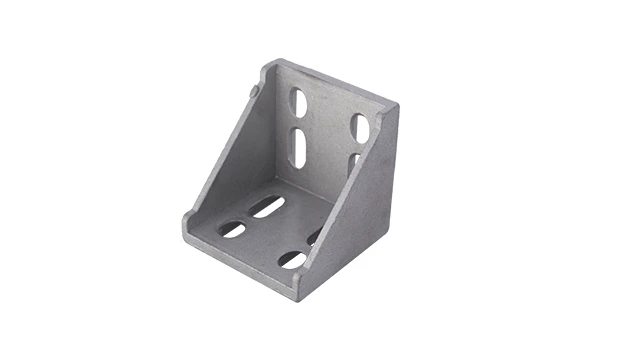
The 4040 bracket/Gusset is an external fastening method that creates a 90 degree connection. 4040 means this size is used for 40 series aluminum profile with a quick connection by bolt and nut. It is a lightweight bracket that requires no machining servic
If you've ever spent hours staring at a half-assembled workbench, wondering why the frame feels wobbly despite using what seemed like the "right" brackets, you're not alone. In the world of aluminum profiles and lean manufacturing setups, the smallest components often make the biggest difference—and gusset brackets like the Gusset ALP 4040 are a perfect example. These unassuming pieces of hardware might not grab headlines, but they're the silent workhorses holding together everything from production line workbenches to material racks. Whether you're a seasoned facility manager or a small business owner building your first workshop, choosing the right gusset bracket can mean the difference between a sturdy, long-lasting setup and a frustrating, unstable mess.
In this article, we're diving deep into the Gusset ALP 4040—one of the most widely used brackets in aluminum profile systems. We'll answer the questions we hear most often from customers, from "What even is a Gusset ALP 4040?" to "How do I know if it's strong enough for my project?" Along the way, we'll touch on compatibility with aluminum profiles, installation tips, common mistakes to avoid, and why this bracket has become a staple in lean system setups. By the end, you'll have a clear understanding of when, why, and how to use the Gusset ALP 4040 to build safer, more efficient workspaces.
1. What Exactly Is a Gusset ALP 4040, and What Role Does It Play in Aluminum Profile Systems?
Let's start with the basics: A gusset bracket is a structural component designed to reinforce joints between two or more pieces of material, typically by adding rigidity and distributing weight more evenly. Think of it like the corner brace on a bookshelf—without it, the shelves might sag or the frame could twist under load. The Gusset ALP 4040 takes this concept and tailors it specifically for use with 4040 series aluminum profiles, which are among the most common in industrial and commercial setups (you'll often see them in workbenches, machine guards, and material handling racks).
So, what makes the "ALP 4040" part important? "ALP" likely stands for "Aluminum Profile," highlighting its material and intended use, while "4040" refers to the size of the aluminum profile it's designed to work with. Most 4040 aluminum profiles have a square cross-section, measuring 40mm by 40mm—a standard size that balances strength and versatility for everything from light-duty workbenches to medium-weight material racks. The Gusset ALP 4040 is shaped to fit snugly at the joint of two 4040 profiles (usually at a 90-degree angle), with pre-drilled holes that align with the T-slots on the profile. This design ensures a secure connection that resists twisting and bending, even when the structure is under stress.
But why does this matter in real-world terms? Imagine a workbench in a manufacturing plant where operators regularly place 50kg toolboxes, heavy machinery, or stacks of raw materials. Without proper reinforcement, the joints where the legs meet the tabletop frame could slowly loosen over time, leading to a wobbly surface. A wobbly workbench isn't just annoying—it's a safety hazard. Tools might slide off, precision work becomes harder, and in extreme cases, the entire structure could collapse. The Gusset ALP 4040 prevents this by "locking" the joint in place, distributing the weight across the bracket and into the profiles themselves. It's like adding an extra layer of muscle to the frame, ensuring it stays rigid no matter what's thrown at it.
Another way to think about it: Aluminum profiles are lightweight and modular, which is why they're so popular in lean systems. But that lightness can sometimes be a drawback when it comes to rigidity. Gusset brackets like the ALP 4040 by adding targeted strength exactly where it's needed. They're part of the broader family of aluminum profile accessories that turn basic tubes and connectors into functional, durable structures—no welding or heavy machinery required.
2. When Should I Choose the Gusset ALP 4040 Over Other Bracket Options?
Not all brackets are created equal, and choosing between the Gusset ALP 4040 and other options (like the Gusset ALP 3030, small iron corner codes, or even lean pipe joints) depends on your specific project. Let's break down the scenarios where the ALP 4040 shines—and when you might want to reach for something else.
First, consider the size of your aluminum profile. The Gusset ALP 4040 is engineered for 4040 profiles, which are larger and sturdier than smaller profiles like 3030 or 2020. If you're working with a 3030 profile (30mm by 30mm), the ALP 4040 will be too big—it won't align with the T-slots, and the extra material will just add unnecessary weight. In that case, the Gusset ALP 3030 (designed for 3030 profiles) would be the better fit. Similarly, if you're using ultra-light 2020 profiles for a small shelf or display, a heavy-duty ALP 4040 would be overkill; a simple L-bracket or small iron corner code might suffice.
Next, think about the load your structure will bear. The ALP 4040 is built for medium to heavy-duty applications. Thanks to its thick aluminum construction (typically 2mm or more) and triangular design (which is inherently strong against bending), it can support significantly more weight than thinner, flimsier brackets. For example, if you're building a workbench that needs to hold 200kg or more, or a material rack with multiple layers of heavy parts, the ALP 4040 is a safe bet. On the flip side, if you're putting together a lightweight cart for moving small tools, you might not need the ALP 4040's heft—save cost and weight by using a simpler bracket.
Environmental factors also play a role. The Gusset ALP 4040 is made from aluminum, which is naturally resistant to corrosion. This makes it ideal for indoor environments like factories, warehouses, or labs, where moisture or humidity might be a concern (though it's not as corrosion-resistant as stainless steel, which is better for outdoor or highly damp areas). If your project is outdoors or in a chemical-heavy environment, you might need to look for stainless steel alternatives—but for most indoor industrial or commercial setups, aluminum gussets like the ALP 4040 are more than durable enough.
Another key consideration is modularity. One of the biggest advantages of aluminum profile systems is their ability to be disassembled and reconfigured. The Gusset ALP 4040 works with T-slot nuts and bolts, which means you can remove and reuse it if you need to redesign your structure later. This is a big plus for lean manufacturing setups, where flexibility is key. In contrast, fixed brackets or welded joints lock you into a single design, making it harder to adapt as your needs change.
To sum up: Choose the Gusset ALP 4040 when you're working with 4040 aluminum profiles, need medium to heavy load support, value corrosion resistance and reusability, and want a bracket that integrates seamlessly with other aluminum profile accessories. If your project involves smaller profiles, lighter loads, or extreme environments, other brackets might be a better fit.
| Feature | Gusset ALP 4040 | Gusset ALP 3030 | Small Iron Corner Code | Lean Pipe Joint |
|---|---|---|---|---|
| Compatible Profile Size | 4040 aluminum profiles | 3030 aluminum profiles | Various (smaller profiles, wood, metal) | Lean pipes (1.2-2.0mm PE coated or stainless steel) |
| Typical Weight Capacity | 150-300kg per joint (depending on installation) | 80-150kg per joint | 50-100kg per joint | 50-200kg per joint (varies by joint type) |
| Best For | Heavy workbenches, material racks, machine frames | Medium-duty shelves, carts, small workstations | Light shelves, DIY projects, non-aluminum structures | Lean pipe systems, temporary setups, low-cost structures |
| Corrosion Resistance | High (aluminum construction) | High (aluminum construction) | Low (iron, prone to rust without coating) | Medium (PE coated or stainless steel options) |

3. How Do I Properly Install the Gusset ALP 4040 to Ensure Maximum Stability?
Even the best bracket won't perform well if installed incorrectly. The Gusset ALP 4040 is designed for easy, tool-based installation (no welding required), but there are a few key steps to follow to ensure it provides the rigidity you need. Let's walk through the process, from prep to final checks.
Step 1: Gather Your Tools and Materials Before you start, make sure you have everything you need: the Gusset ALP 4040 bracket(s), 4040 aluminum profiles (cut to size), T-slot nuts (compatible with your profile's slot size), bolts (typically M6 or M8, depending on the bracket's hole size), a hex key (Allen wrench), and a level. You may also need a rubber mallet for gently adjusting profiles into place and a measuring tape to ensure alignment.
Step 2: Position the Bracket at the Joint Place the Gusset ALP 4040 at the corner where two 4040 profiles meet (most often a 90-degree angle, though some setups use 45-degree or 135-degree joints—check your bracket's design). The bracket should lie flat against the sides of both profiles, with its holes aligned with the T-slots on the profiles. If the holes don't line up, double-check that you're using a 4040 profile—mixing sizes (e.g., using a 4080 profile by mistake) will cause misalignment.
Step 3: insert T-Slot Nuts and Bolts Slide T-slot nuts into the T-slots of the aluminum profiles, positioning them directly under the bracket's holes. T-slot nuts are a critical part of aluminum profile accessories because they allow you to attach brackets anywhere along the profile, not just at pre-drilled holes. Once the nuts are in place, insert bolts through the bracket's holes and into the nuts. Hand-tighten the bolts first to hold the bracket in position.
Step 4: Torque the Bolts to the Right Tension Using the hex key, tighten the bolts until they're snug—but don't overdo it. Over-tightening can strip the T-slot nuts or warp the bracket, weakening the joint. A good rule of thumb is to tighten until you feel resistance, then give the wrench a quarter-turn more. If you're unsure, consult the bracket manufacturer's torque specifications (most recommend 8-10 Nm for M6 bolts in aluminum profiles).
Step 5: Check Alignment with a Level Before fully securing all brackets, use a level to ensure the profiles are straight and square. A slight misalignment at the joint can put extra stress on the Gusset ALP 4040, reducing its effectiveness. If the structure is wobbly, loosen the bolts slightly, adjust the profiles, and retighten. For larger setups (like a workbench with four legs), check both horizontal and vertical alignment to avoid a "leaning" frame.
Step 6: Repeat for Additional Brackets Most structures require multiple Gusset ALP 4040 brackets—for example, a workbench might need one at each corner where the legs meet the tabletop frame, plus additional brackets along the rails for extra support. As a general guideline, space brackets no more than 500mm apart on horizontal rails carrying heavy loads. This ensures weight is distributed evenly across multiple brackets, preventing any single joint from bearing too much stress.
Pro Tip: If you're building a structure that will be moved (like a mobile workbench with casters), add an extra Gusset ALP 4040 at the base of each leg. Casters introduce extra movement, and the brackets will help keep the legs stable when the cart is in motion.
Common installation mistakes to avoid: Skipping the level check (leading to a crooked structure), using low-quality T-slot nuts (which can slip under load), or reusing bent brackets (even a small bend weakens the bracket's ability to resist torque). Taking the time to install the bracket correctly will pay off in a structure that's stable, safe, and long-lasting.

4. What Weight Capacity Can the Gusset ALP 4040 Support, and How Does That Impact My Project?
One of the most critical questions when choosing any bracket is, "How much weight can it hold?" For the Gusset ALP 4040, the answer depends on several factors: the material thickness of the bracket, the quality of the aluminum (alloy type), the number of bolts used, the spacing between brackets, and the type of load (static vs. dynamic). Let's break this down to give you a clear idea of what to expect.
First, the bracket itself: Most Gusset ALP 4040 brackets are made from 6063-T5 aluminum alloy, a common choice for structural components because it balances strength, corrosion resistance, and machinability. The thickness of the bracket's material typically ranges from 2mm to 3mm—thicker brackets can support more weight. A 2mm-thick ALP 4040 can generally handle 150-200kg per joint under static load (weight that doesn't move, like a stationary toolbox on a workbench), while a 3mm-thick bracket can support 250-300kg per joint. These numbers are based on ideal conditions: properly installed brackets with high-quality bolts and T-slot nuts, and profiles that are securely anchored.
But "per joint" is key here. Most structures use multiple brackets, so the total weight capacity isn't just a single bracket's limit—it's the sum of all brackets working together. For example, a workbench with four legs (each with a Gusset ALP 4040 at the top joint) could theoretically support 4 x 200kg = 800kg. But this assumes the weight is evenly distributed across the tabletop. If you place all 800kg in one corner, that single bracket would bear the brunt, leading to failure. Always distribute weight as evenly as possible, and err on the side of overestimating—if your project requires 500kg of support, design for 750kg to account for unexpected loads (like someone standing on the workbench to reach a high shelf).
Dynamic loads (weight that moves, like a cart rolling over a material rack or tools being placed/removed from a workbench) add another layer of complexity. Dynamic loads create sudden stress spikes that can exceed static load limits. For example, dropping a 50kg toolbox onto a workbench exerts more force than placing it gently. In these cases, reduce the bracket's weight capacity by 20-30% to account for impact. So a 200kg static limit becomes 140-160kg for dynamic use.
Another factor is bracket spacing. If you're building a long horizontal beam (like a shelf or workbench rail) supported by Gusset ALP 4040 brackets at the ends, the middle of the beam will sag under load—even if the brackets themselves are strong enough. To prevent this, add intermediate brackets along the beam. As a general rule, space brackets no more than 800mm apart for beams carrying heavy loads. For example, a 2-meter-long beam should have brackets at both ends and one in the middle (three brackets total) to distribute weight evenly.
Real-world example: Let's say you're building a material rack B (3 row and 3 floor) using 4040 profiles and Gusset ALP 4040 brackets. Each floor needs to hold 300kg of parts. With three floors, that's 900kg total. If each floor has four corner brackets (one at each post), that's 12 brackets total. 900kg ÷ 12 brackets = 75kg per bracket—well within the 150kg static limit of a 2mm bracket. But if you skimp and use only two brackets per floor, that's 300kg ÷ 4 brackets = 75kg per bracket per floor, which still works—but if one bracket fails, the entire floor could collapse. Redundancy is your friend here.
Finally, remember that the aluminum profiles themselves have weight limits. Even the strongest Gusset ALP 4040 can't save a setup where the profiles are too thin or short to support the load. Always check the profile manufacturer's specifications for bending and compressive strength, and pair them with brackets that complement (not exceed) those limits.
5. Is the Gusset ALP 4040 Compatible with All 4040 Aluminum Profiles, or Are There Exceptions?
Aluminum profiles come in a dizzying array of styles, and while the Gusset ALP 4040 is designed for 4040 profiles, not all 4040 profiles are identical. Compatibility depends on two key factors: the profile's T-slot design and its "standard" (EU vs. national, for example). Let's break down what you need to know to avoid compatibility headaches.
First, T-slot design: Most 4040 aluminum profiles have T-slots running along their length—these are the grooves that T-slot nuts slide into. The size and shape of these slots can vary. EU standard profiles (like the 4040A, 4040B, or 4040C EU standard aluminum profile) typically have T-slots with a 10mm opening and 8mm width (measured at the narrowest point of the slot). National standard profiles (common in some regions) may have slightly different slot sizes, like 8mm openings or 6mm widths. The Gusset ALP 4040 is usually designed for EU standard T-slots, so if you're using a national standard profile with smaller slots, the T-slot nuts and bolts may not fit through the bracket's holes or into the slots.
How to check? Measure the T-slot opening on your profile with a caliper. If it's 10mm, you're likely good to go with a standard ALP 4040. If it's smaller, look for a bracket specifically labeled for your profile's slot size, or use smaller T-slot nuts (though this may reduce weight capacity). Some manufacturers offer "universal" ALP 4040 brackets with slotted holes (elongated holes) that can accommodate minor variations in slot spacing—these are a good choice if you're unsure about your profile's specs.
Second, profile shape: Not all 4040 profiles are square tubes. Some have extra features like grooves for rubber strips (used for sealing or noise reduction), channels for cable management, or angled edges. These features can sometimes interfere with the Gusset ALP 4040's ability to lie flat against the profile. For example, a 4040 profile with a raised edge along one side may prevent the bracket from making full contact with the profile's surface, leaving gaps that reduce stability. In these cases, look for brackets with notches or cutouts that match the profile's unique shape, or opt for a different bracket style that can accommodate the profile's design.
Third, wall thickness: 4040 profiles come with different wall thicknesses (e.g., 1.5mm, 2.0mm, or 3.0mm). Thicker walls are stronger but also slightly wider on the inside, which can affect how tightly T-slot nuts grip. However, this is rarely an issue for the Gusset ALP 4040, as T-slot nuts are designed to adjust to minor variations in wall thickness. The bigger concern is if the profile is so thin that it bends under the bracket's clamping force—always pair brackets with profiles that have sufficient wall thickness for your load.
Exceptions to watch for: Custom extrusions (profiles made to unique specifications for a particular industry) are the biggest wildcard. If your project uses custom 4040 profiles with non-standard T-slots, shapes, or sizes, the Gusset ALP 4040 may not fit. In these cases, work with your aluminum profile supplier to source brackets made specifically for your custom profile, or modify the ALP 4040 (e.g., drilling new holes) if you have the tools and expertise (though modifying brackets can void warranties and reduce strength).
One final note: Compatibility isn't just about the bracket and profile—it's about the entire system. The Gusset ALP 4040 works best with other aluminum profile accessories from the same manufacturer or compatible brands. Mixing and matching components from different suppliers (e.g., using Brand A brackets with Brand B T-slot nuts) can lead to fit issues, even if the profile is standard. When in doubt, ask your supplier for a compatibility chart or sample components to test before ordering in bulk.
6. What Are the Most Common Mistakes to Avoid When Using the Gusset ALP 4040?
Even experienced builders make mistakes with brackets, and the Gusset ALP 4040 is no exception. Avoiding these common pitfalls will save you time, money, and frustration down the line.
Mistake 1: Underestimating Load Requirements It's easy to assume "bigger is better," but using a heavy-duty Gusset ALP 4040 for a light load (like a small shelf holding 20kg) is a waste of money. Conversely, using a light-duty bracket for a heavy load is dangerous. Always calculate your project's maximum weight (including dynamic loads) and choose a bracket with a capacity that exceeds that number by at least 50%. If you're unsure, overestimate—better to have extra strength than not enough.
Mistake 2: Ignoring Environmental Conditions Aluminum is corrosion-resistant, but it's not immune to harsh environments. If your structure will be used in a humid area (like a food processing plant), a marine environment, or near chemicals, the Gusset ALP 4040's bare aluminum surface may develop a white oxide layer over time. While this layer is harmless (it's aluminum's natural defense against corrosion), it can look unsightly. To prevent this, choose brackets with anodized or powder-coated finishes, which add an extra layer of protection. Avoid using bare aluminum brackets in saltwater or acidic environments—stainless steel brackets may be a better choice here.
Mistake 3: Incorrect Bracket Spacing As we mentioned earlier, spacing brackets too far apart causes beams to sag, while spacing them too close adds unnecessary weight and cost. A good starting point is 500-800mm between brackets for horizontal beams carrying heavy loads. For vertical posts (like workbench legs), one bracket per joint is usually enough, but adding a second bracket halfway up the post can prevent twisting in tall structures.
Mistake 4: Using Low-Quality Hardware The Gusset ALP 4040 is only as strong as the bolts and T-slot nuts holding it in place. Cheap, low-grade bolts can snap under load, and poorly made T-slot nuts can slip in the T-slot, loosening the joint. Invest in high-quality stainless steel or zinc-plated hardware—look for bolts with a tensile strength of at least 8.8 (a common rating for structural bolts) and T-slot nuts with a smooth, precise fit in the profile's T-slots.
Mistake 5: Rushing Installation Skipping steps like checking alignment with a level or torquing bolts to the right tension is a recipe for failure. A bracket that's slightly misaligned will put uneven stress on the joint, leading to premature wear. Take the time to ensure profiles are square, brackets are flush against the profiles, and bolts are tightened correctly—your future self (and your back) will thank you when the structure doesn't wobble or collapse.
Mistake 6: Overlooking Maintenance Aluminum profile systems are low-maintenance, but they're not no-maintenance. Over time, bolts can loosen due to vibration (common in manufacturing environments), and T-slot nuts can wear down. Inspect Gusset ALP 4040 brackets quarterly: check for loose bolts, signs of bending or cracking, and corrosion. Tighten loose bolts, replace worn hardware, and clean brackets with a mild detergent if they're dirty—this simple upkeep will extend the life of your structure.
7. How Does the Gusset ALP 4040 Support Lean Manufacturing Principles?
Lean manufacturing is all about maximizing efficiency, minimizing waste, and creating flexible systems that adapt to change—and the Gusset ALP 4040 plays a surprisingly important role in making this possible. Let's break down how this humble bracket supports lean goals in real-world production environments.
First, modularity: Lean systems thrive on the ability to reconfigure workspaces quickly as production needs change. The Gusset ALP 4040, paired with 4040 aluminum profiles and T-slot hardware, allows you to build structures that can be disassembled and reassembled in minutes—no welding, cutting, or specialized tools required. For example, if a manufacturing line needs to switch from assembling small electronics to larger appliances, you can take apart a workbench built with ALP 4040 brackets, re-cut the profiles, and reassemble it into a taller, sturdier workbench—all without buying new materials. This reduces waste (no need to throw away old structures) and saves time compared to building from scratch.
Second, stability equals uptime: In lean manufacturing, downtime is the enemy. A wobbly workbench or sagging material rack can slow down production as workers adjust tools, retrieve fallen parts, or wait for repairs. The Gusset ALP 4040's ability to reinforce joints ensures structures stay stable, even under the daily wear and tear of a busy factory. This means fewer interruptions, more consistent workflow, and higher productivity—all key lean metrics.
Third, safety first: Lean isn't just about efficiency; it's about creating safe work environments. A collapsed workbench or falling material can lead to injuries, workers' compensation claims, and lost time. The Gusset ALP 4040 reduces these risks by adding structural integrity to critical points in the workspace. When employees feel safe, they're more focused and productive—another win for lean.
Fourth, scalability: As a business grows, its production needs grow too. The Gusset ALP 4040 makes it easy to scale structures up or down. Need to add a second shelf to a material rack? Just add two more ALP 4040 brackets and a new 4040 profile. Want to extend a workbench to accommodate an extra worker? Add brackets and profiles to one end. This scalability means you can start small and invest in additional components as needed, rather than overbuilding upfront—a core lean principle of "just-in-time" resource allocation.
Fifth, compatibility with other lean tools: The Gusset ALP 4040 isn't used in isolation. It works with other lean system components like conveyors, flow racks, and turnover trolleys. For example, a flow rack built with 4040 profiles and ALP 4040 brackets can smoothly transport parts from one workstation to the next, reducing the need for manual material handling (a common source of waste in lean terms). Similarly, a workbench with ALP 4040 brackets can be outfitted with tool holders, bins, and ESD (electrostatic discharge) mats—all of which contribute to a more organized, efficient workspace.
Finally, cost-effectiveness: While the Gusset ALP 4040 may cost more upfront than a cheap iron bracket, its durability and reusability make it more cost-effective over time. A well-built structure with ALP 4040 brackets can last for years, even in harsh environments, reducing the need for frequent replacements. And because it's reusable, you won't have to buy new brackets every time you reconfigure your workspace—saving money and reducing waste.
Final Thoughts: Why the Gusset ALP 4040 Deserves a Spot in Your Toolkit
At first glance, the Gusset ALP 4040 might seem like just another bracket—but as we've explored, it's a critical component that bridges the gap between basic aluminum profiles and functional, durable structures. Whether you're building a workbench, a material rack, or a custom machine frame, this bracket brings stability, flexibility, and peace of mind to your projects.
Remember: The key to success with the Gusset ALP 4040 (or any bracket) is to start with clear goals. Know your load requirements, check your aluminum profile specs, and take the time to install it properly. Avoid common mistakes like under-estimating weight, ignoring environmental factors, or rushing the installation process. And don't forget that the Gusset ALP 4040 is part of a larger ecosystem of aluminum profile accessories—paired with the right T-slot nuts, bolts, and profiles, it can transform a pile of parts into a workspace that supports lean manufacturing, safety, and efficiency for years to come.
So the next time you're planning a project with 4040 aluminum profiles, give the Gusset ALP 4040 the attention it deserves. It might not be the flashiest part of your setup, but it will be one of the most important—quietly holding everything together so you can focus on what matters: building better, smarter, and more productive workspaces.