- Company Articles
- FAQ
- FAQ
- FAQs About One Way Rotatory Straight Lean Pipe Joint Chrome Answered by Experts

FAQs About One Way Rotatory Straight Lean Pipe Joint Chrome Answered by Experts
Related Product
One Way Rotatory Straight Lean Pipe Joint Chrome
Two way lean pipe joint for 2 pcs 28MM lean pipe connection in straight angle with rotatory fucntion, which used widely in workbench, flow rack, hand trolley frame connection.
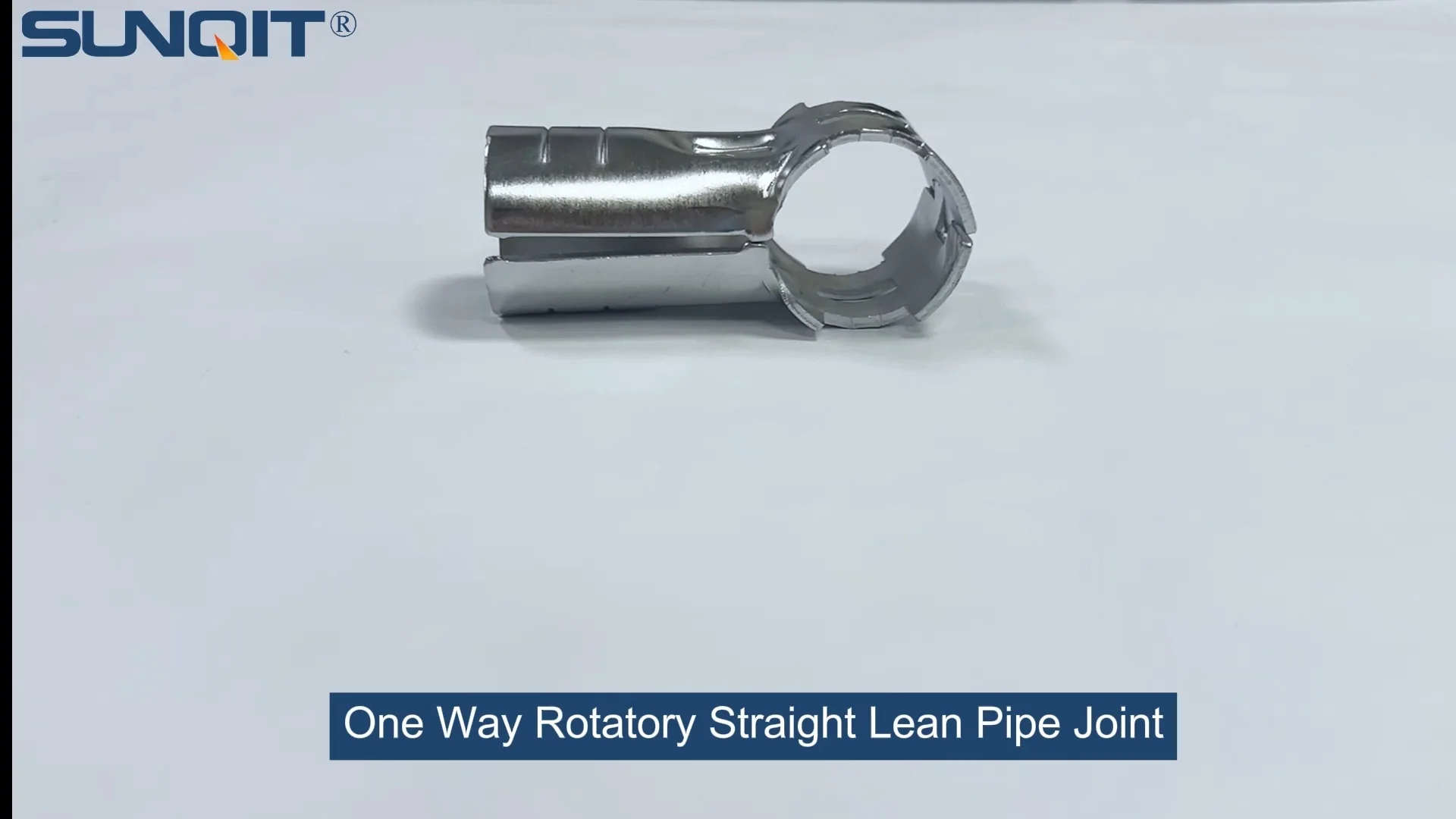
Imagine walking into a bustling manufacturing facility: assembly lines hum, workers move with purpose, and every tool, part, and workstation seems to have its place. But behind that efficiency often lies a hidden challenge: rigid, inflexible setups that struggle to adapt when production needs change. Maybe a team needs to reconfigure a workbench to accommodate a new product line, or adjust a flow rack to speed up material handling—but traditional fixed joints slow them down, requiring tools, time, and sometimes even new parts. This is where the one way rotatory straight lean pipe joint chrome steps in. A small but mighty component in the world of lean manufacturing, this joint isn't just a hardware piece; it's a solution to the "we need to adapt, and fast" problem that plagues so many operations. In this article, we've gathered the most common questions about this joint, answered by industry experts who've seen firsthand how it transforms rigid workspaces into agile, responsive environments. Whether you're a facility manager, a lean coordinator, or someone just starting to build a lean system, read on to demystify this key accessory and learn how it can elevate your operations.
1. What Exactly Is a One Way Rotatory Straight Lean Pipe Joint Chrome, and How Does It Work?
Let's start with the basics. At its core, a one way rotatory straight lean pipe joint chrome is a specialized connector designed to link lean pipes (the modular tubes used in lean manufacturing setups) while allowing controlled, one-directional rotation. Think of it as a hinge with a focus on simplicity and functionality. Unlike fixed joints that lock pipes into a rigid angle, this joint lets one section of pipe rotate relative to another—but only in one direction, preventing accidental over-rotation or instability.
"The 'straight' in the name refers to its primary use: connecting pipes in a linear or near-linear setup, like along a workbench edge or a flow rack," explains Maria Gonzalez, a lean systems consultant with 15 years of experience. "The 'one way rotatory' feature is what makes it unique. Inside the joint, there's a mechanism—usually a spring-loaded pin or a ratchet-like design—that lets the pipe rotate smoothly in, say, a 180-degree arc one way but locks when pushed the opposite direction. This is crucial for setups where you need controlled movement, like tilting a material shelf to feed parts to an assembly line or adjusting a workstation's height without fully disassembling it."
The "chrome" part? That's the finishing touch—literally. The joint is coated in chrome, which adds durability and resistance to wear, but more on that later. For now, remember: this joint bridges the gap between rigidity and flexibility, letting teams build structures that stay stable when needed but adapt quickly when they don't.
2. What Makes the Chrome Coating So Important for This Joint?
If you've ever handled metal parts in a factory, you know they take a beating. Oils, coolants, humidity, and even the occasional bump or scrape can wear down uncoated metal over time, leading to rust, corrosion, or a sticky, hard-to-move mechanism. That's where the chrome coating comes in—it's not just for shine.
"Chrome plating is a game-changer for durability here," says James Chen, an engineer at a leading lean pipe supplier. "We test these joints in harsh environments: high-moisture facilities, areas with frequent chemical exposure, even outdoor storage yards. Without chrome, the underlying metal (usually steel) would start to corrode within months, making the rotation stiff or, worse, seized. Chrome acts as a barrier, preventing moisture and contaminants from reaching the metal core. It also adds a smooth surface, which reduces friction during rotation—so the joint keeps moving freely, even after years of use."
There's also a practical safety angle. Uncoated metal can develop sharp edges or burrs as it wears, posing a risk to workers handling the pipes. Chrome's hard, smooth finish resists chipping and maintains a consistent texture, keeping the joint safe to touch during adjustments. And let's not overlook aesthetics: in facilities where presentation matters (like customer-facing demo areas or cleanrooms), the chrome finish adds a professional, polished look that plain metal joints lack. In short, chrome isn't just about looks—it's about longevity, performance, and safety.
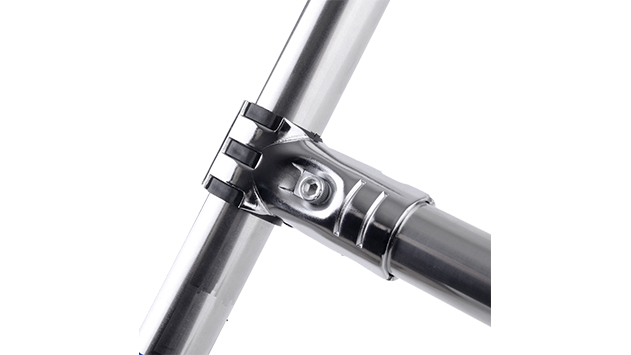
3. How Does This Joint Differ from Standard Lean Pipe Joints? Let's Break It Down.
Walk into any lean pipe supplier's catalog, and you'll see a dizzying array of joints: fixed 90-degree joints, swivel joints, T-joints, cross joints—the list goes on. So what makes the one way rotatory straight chrome joint stand out? To answer that, we asked our experts to compare it to three common alternatives. Here's a quick breakdown:
| Joint Type | Rotation Capability | Best For | Key Limitation | One Way Rotatory Advantage |
|---|---|---|---|---|
| Fixed Straight Joint | None (locks pipes rigidly) | Static structures (e.g., permanent shelving) | Cannot adjust angles without disassembly | Allows on-the-fly rotation for dynamic setups |
| 360-Degree Swivel Joint | Full rotation (both directions) | Applications needing 360° movement (e.g., rotating tool holders) | Can be unstable; risk of over-rotation | One-way lock prevents accidental movement |
| 90-Degree Fixed Joint | Locks at 90° angle only | Right-angle connections (e.g., workbench legs to frame) | Limited to 90°; no linear rotation | Works in straight lines with adjustable angles |
| One Way Rotatory Straight Chrome Joint | Controlled one-way rotation (typically 180°) | Dynamic linear setups (e.g., adjustable flow racks, tilting workbenches) | Not ideal for multi-directional rotation needs | Balances flexibility, stability, and durability (chrome coating) |
"The biggest differentiator is the balance it strikes," notes Chen. "Fixed joints are stable but rigid; 360-swivel joints are flexible but can be wobbly. This joint says, 'I'll let you rotate when you need to, but I'll stay put when you don't.' For most lean environments, that's the sweet spot."

4. What Load Capacity Can Users Expect, and Does It Hold Up in Heavy-Duty Settings?
It's a fair question: if you're using this joint to support a shelf loaded with heavy parts, you need to know it won't buckle. The short answer? Load capacity varies by manufacturer and joint size, but most standard one way rotatory straight lean pipe joint chrome models can handle between 50 to 150 pounds per joint—more than enough for most assembly line or workbench applications.
"We always recommend checking the manufacturer's specs, but in practice, these joints are built tough," says Gonzalez. "The chrome coating isn't just for corrosion resistance—it also adds a thin layer of hardness, so the joint can withstand the stress of supporting weight while rotating. For example, a flow rack using these joints to tilt bins of small parts (think screws, washers, or electronic components) might have 3-4 joints per shelf, each carrying 30-40 pounds. That's well within the safe range."
What about heavier loads? If you're working with, say, automotive parts or large machinery components, look for heavy-duty variants. Some suppliers offer reinforced models with thicker steel cores and upgraded internal mechanisms that can handle 200+ pounds. The key is to match the joint to your use case: don't overbuy for light loads, but never skimp on capacity for heavy ones. And remember—load capacity decreases slightly when the joint is rotated to extreme angles, so factor that into your design.
5. Is It Compatible with Different Lean Pipe Materials, Like Aluminum Lean Pipe or Stainless Steel?
Lean pipes come in all flavors: traditional steel with a plastic coating, lightweight aluminum lean pipe, corrosion-resistant stainless steel, even specialty options like ESD-safe varieties. The good news? Most one way rotatory straight lean pipe joint chrome models are designed to be material-agnostic, as long as the pipe diameter matches.
"The standard lean pipe diameter is 28mm (about 1.1 inches), and most joints are sized for that," explains Chen. "Whether your pipe is aluminum lean pipe (popular for its light weight and rust resistance), stainless steel (great for cleanrooms or food processing), or classic PE-coated steel, the joint's inner diameter should fit snugly. The chrome coating doesn't react with these materials, so you won't get galvanic corrosion or sticking issues."
There's one exception: very thin-walled pipes (less than 1.0mm thickness) might be too flexible to work well with this joint, as the rotation could cause the pipe to bend instead of the joint moving. But for most standard pipes—including aluminum lean pipe, which typically has a 1.2-2.0mm wall thickness—compatibility isn't an issue. "We've even seen customers mix materials: aluminum pipes on one side, steel on the other, connected by this joint," adds Gonzalez. "It's all about the diameter and wall strength, not the material itself."
6. How Easy Is It to Install and Adjust Without Special Tools?
Let's be honest: no one wants to fumble with wrenches, drills, or complicated instructions when trying to reconfigure a workstation. The beauty of lean manufacturing is its emphasis on simplicity, and this joint delivers on that promise.
"Installation is usually tool-free," says Gonzalez. "Most models have a setscrew or a clamp-style design: you slide the joint onto the pipe, tighten the screw by hand (or with a basic hex key, if needed), and you're done. Adjusting it is just as easy: to rotate, apply gentle pressure in the allowed direction, and it moves smoothly. When you let go, the one-way mechanism locks it in place. No tools, no hassle—even a new operator can learn to use it in 2 minutes."
That ease of use is a big reason facilities love this joint. Imagine a team needs to lower a flow rack shelf by 10 degrees to reduce bending for workers. With fixed joints, they'd have to unscrew everything, reposition, and retighten—15-20 minutes per shelf. With this joint? Loosen the setscrew, rotate the shelf, retighten, and they're back to work in 2 minutes. "It's not just about saving time," Chen adds. "It empowers frontline workers to make adjustments themselves, instead of waiting for maintenance. That ownership is a huge part of lean culture."
7. Can It Be Used in ESD-Sensitive Environments, Like with ESD Workstations?
For industries like electronics manufacturing, where static electricity can fry sensitive components, ESD (electrostatic discharge) safety is non-negotiable. ESD workstations, flow racks, and tools are designed to dissipate static, preventing damage. So, does a chrome-plated joint fit into that picture?
"Chrome itself isn't inherently ESD-safe, but that doesn't mean the joint can't be used in ESD environments," clarifies Gonzalez. "The key is the system, not just one component. If you're using ESD workstations with ESD-safe lean pipes (often made with conductive materials) and grounding straps, adding this joint won't disrupt the static-dissipating path—provided the joint is metal (which it is) and in direct contact with the pipes. Metal conducts electricity, so the joint acts like a bridge, letting static flow from the pipe to the ground."
For extra peace of mind, some suppliers offer ESD-certified versions of the joint, where the chrome coating is treated to enhance conductivity. But for most applications, the standard chrome joint works fine alongside ESD workstations and pipes. "We've installed these in semiconductor facilities with zero issues," says Chen. "Just make sure the entire setup is grounded properly, and the joint will play nice with your ESD protocols."
8. What Maintenance Does It Require to Keep It Working Smoothly?
The best lean tools are the ones that don't demand constant attention, and this joint is no exception. Maintenance is minimal, but a little care goes a long way in extending its life.
"First, keep it clean," advises Chen. "Dust, grease, and debris can gum up the rotation mechanism. A quick wipe with a dry cloth every few weeks (or more often in dirty environments) is usually enough. If you notice the rotation getting stiff, a drop of lightweight machine oil (not WD-40, which can attract dust) on the moving parts will loosen it up. Avoid heavy oils, though—they can make the joint too slippery and affect the one-way locking mechanism."
The chrome coating is durable, but it's not indestructible. Avoid using abrasive cleaners or wire brushes, which can scratch the finish and expose the underlying metal to corrosion. If you do scratch the chrome, touch it up with a small amount of chrome paint to prevent rust. "In most cases, though, these joints last 5-7 years with basic care," adds Gonzalez. "We've seen some in facilities that are 10+ years old and still rotating like new—proof that simplicity and durability go hand in hand."
9. Where Are the Most Common Applications for This Joint in Real-World Facilities?
Theory is great, but seeing how something works in practice helps. Here are a few scenarios where the one way rotatory straight lean pipe joint chrome shines:
Adjustable Workbenches:
"A common setup is a workbench where the top can tilt—say, from flat to 30 degrees—to make it easier for workers to access parts or documents," says Gonzalez. "This joint connects the bench top to the frame, letting teams adjust the angle without removing the top entirely."
Flow Racks with Tilted Bins:
In material handling, flow racks use gravity to feed parts to assembly lines. "By adding this joint to the rack's side rails, you can tilt the entire rack slightly to speed up part flow—or tilt individual bins to prevent jamming," explains Chen. "The one-way rotation ensures the rack stays tilted once set, even when bins are loaded and unloaded."
Mobile Carts and Trolleys:
"Some carts have fold-down sides for easy loading/unloading. This joint lets the side rotate down (one way) for loading, then locks back up when not in use—no need for latches or pins," adds Gonzalez.
Assembly Line Guides:
On production lines, parts often slide along roller tracks. "Using this joint to mount the tracks lets operators adjust the track angle to control part speed—critical for delicate components that can't be jostled," says Chen.
In short, anywhere you need controlled movement without sacrificing stability, this joint has a role to play.
10. Any Common Mistakes to Avoid When Using This Joint?
Even the best tools can cause headaches if misused. Here are a few pitfalls to steer clear of:
Overloading:
"We've seen customers push the load capacity, especially when the joint is rotated to 90 degrees or more," warns Chen. "At extreme angles, the joint's leverage increases, so what's safe at 0 degrees might not be at 180. Always check the angle-adjusted load specs."
Mixing Joint Types Unnecessarily:
"If you need one-way rotation, stick with this joint. Don't try to combine it with fixed joints in the same structure unless you're sure the rotation won't be blocked," advises Gonzalez.
Ignoring Pipe Compatibility:
Using a pipe with the wrong diameter (even slightly) can lead to loose joints or difficulty rotating. "Measure twice, buy once—always confirm your pipe diameter before ordering," Chen adds.
Forgetting to Tighten Setscrews:
"It sounds obvious, but a loose setscrew can make the joint wobble or slip," says Gonzalez. "Hand-tighten it firmly, but don't overtighten—you might strip the threads."