- Company Articles
- FAQ
- FAQ
- FAQs About Suction Cup Anti-Slip Foot Adjusters: Expert Answers

FAQs About Suction Cup Anti-Slip Foot Adjusters: Expert Answers
Related Product
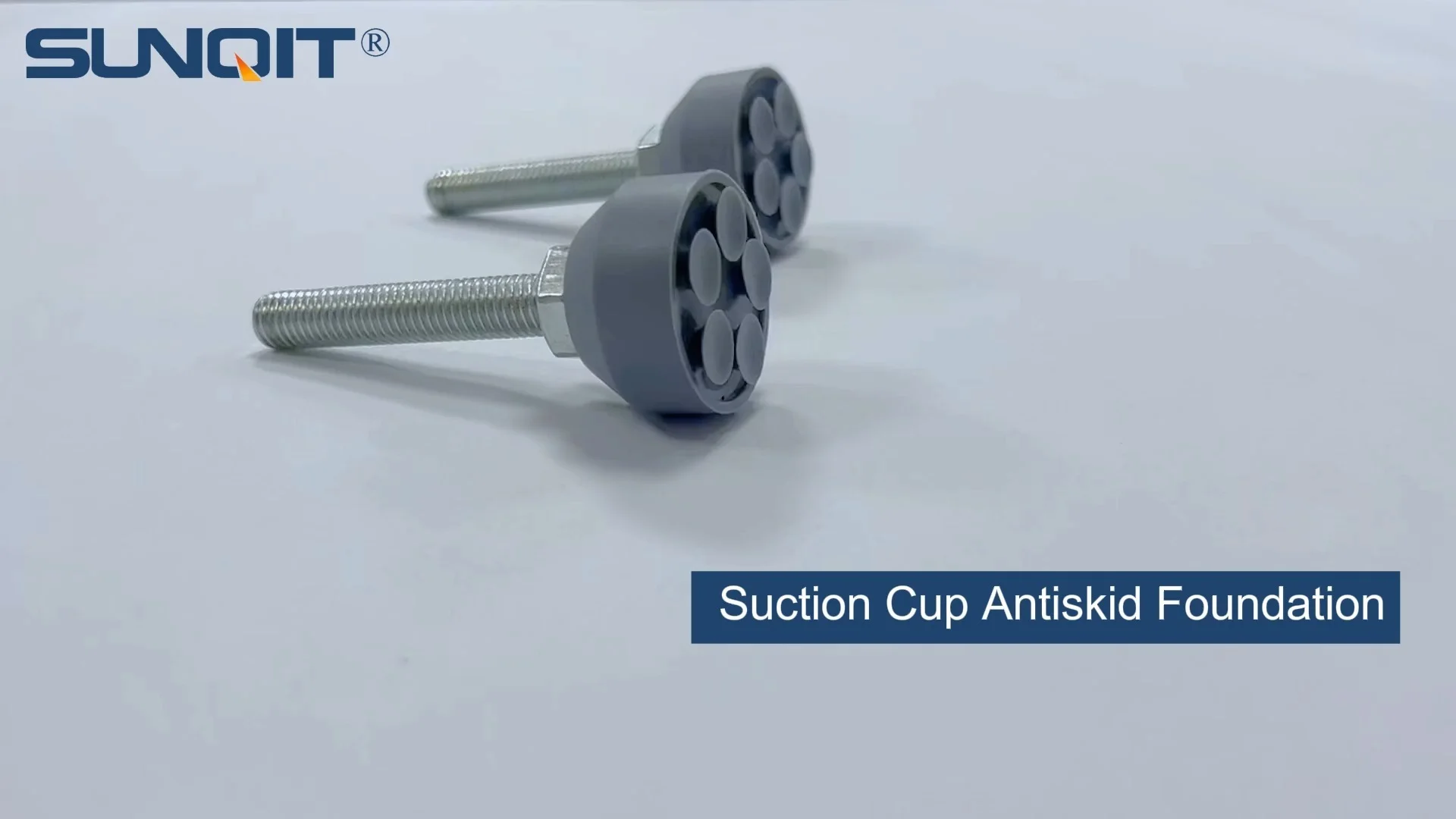
Suction Cup Anti-slip Foot Adjuster
D=35mm suction cup anti-slip foot adjusterï¼screw M10*55ï¼with a blot, used for workbench, flowrack pipe contact with groud.
1. What Are Suction Cup Anti-Slip Foot Adjusters, and How Do They Differ From Standard Adjustable Leveling Feet?
Let's start with the basics: Suction cup anti-slip foot adjusters are specialized components attached to the bottom of equipment (like workbenches, machines, or carts) to do two key things: level the equipment on uneven surfaces and prevent it from slipping. They combine the height-adjustment functionality of standard adjustable leveling feet with an added anti-slip feature: a suction cup base.
Standard adjustable leveling feet typically have a flat or rubberized base. While they help level equipment by screwing up or down to compensate for uneven floors, their anti-slip ability relies mostly on friction between the base and the floor. If the floor is smooth (like polished concrete or tile) or slightly wet, that friction can decrease, leading to slippage.
Suction cup anti-slip foot adjusters take this a step further. Their base is a flexible, rubber-like suction cup that creates a vacuum seal with the floor when pressure is applied (usually from the weight of the equipment itself). This seal (enhances) grip significantly, even on smooth surfaces. Think of it like a mini suction cup you'd use to hang a picture, but designed to hold hundreds of pounds of machinery steady.
Another key difference is versatility. While standard leveling feet work well on rough or textured floors, suction cup versions shine on smooth, non-porous surfaces where friction alone isn't enough. They're also often designed with a larger contact area, spreading the equipment's weight more evenly to reduce indentation on soft floors (like vinyl or wood) while maintaining that anti-slip seal.
2. How Do Suction Cup Anti-Slip Foot Adjusters Actually Work to Prevent Slippage?
The magic (or science, really) behind suction cup anti-slip foot adjusters lies in the combination of mechanical pressure and vacuum physics. Here's a breakdown of how they work:
First, the adjuster itself is a threaded component, similar to a standard leveling foot. You screw it into the bottom of your equipment (like a workbench leg) and twist it up or down to adjust the height—perfect for leveling on uneven floors. The real anti-slip power comes from the suction cup base at the bottom.
When you place the equipment on the floor, the weight of the equipment pushes down on the suction cup. This compresses the flexible material of the cup, squeezing out air between the cup and the floor. As the cup tries to return to its original shape (thanks to the elasticity of the material), it creates a partial vacuum. This vacuum pulls the cup tightly against the floor, creating a seal that resists horizontal movement.
But it's not just the vacuum. The suction cup material—usually a durable rubber or thermoplastic elastomer (TPE)—is also designed to have high friction. So even if the vacuum seal weakens slightly (say, from a small bump), the friction from the rubber keeps the foot from sliding easily. It's a one-two punch: vacuum for strong initial grip, and friction as a backup.
Experts note that the effectiveness of the seal depends on the floor surface. Porous floors (like concrete with cracks or wood with gaps) can't hold a vacuum as well because air leaks back in. That's why these adjusters work best on smooth, non-porous surfaces like polished concrete, tile, or sealed hardwood. On porous surfaces, they'll still provide more grip than a flat metal base, but the vacuum effect is reduced.

3. In Which Industries or Applications Are Suction Cup Anti-Slip Foot Adjusters Most Useful?
Suction cup anti-slip foot adjusters are surprisingly versatile, but they really shine in industries where stability is critical—especially on smooth, hard surfaces. Let's break down the top applications:
Manufacturing and Assembly Lines:
In factories, lean pipe workbenches are a staple. These workbenches (made from lightweight, modular lean pipes and joints) are used for assembling electronics, automotive parts, or small appliances. They're often placed on polished concrete floors, and with workers constantly leaning on them, moving parts, or using power tools, slippage is a real risk. Suction cup anti-slip foot adjusters keep these workbenches locked in place, ensuring precise assembly and reducing errors.
Lab and Medical Settings:
Labs often have sensitive equipment—microscopes, centrifuges, or testing stations—on smooth, easy-to-clean floors (like vinyl or epoxy). Even a tiny slip can ruin experiments or compromise samples. Suction cup adjusters provide the stability needed without scratching the floor (unlike metal feet).
Food and Beverage Processing:
Floors here are often wet or greasy (think commercial kitchens, breweries, or bottling plants). Standard rubber feet can lose grip when wet, but the suction cup's vacuum seal holds strong, preventing carts or worktables from sliding during cleaning or production.
Retail and Warehousing:
Display racks, checkout counters, or mobile shelving units in stores often sit on smooth tile or laminate floors. During busy hours, these setups get bumped by customers or employees. Suction cup adjusters keep them from shifting, maintaining neat displays and reducing trip hazards.
Home Workshops and Garages:
DIYers and hobbyists love them too! If you have a workbench in your garage on a smooth concrete floor, adding these adjusters means your miter saw or drill press won't creep mid-cut.
The common thread? Anywhere you have equipment on a smooth, hard surface that needs to stay put—whether for safety, precision, or efficiency—suction cup anti-slip foot adjusters are a game-changer.

4. Can Suction Cup Anti-Slip Foot Adjusters Be Used With Workbenches That Have Caster Wheels?
This is a question we hear a lot: "I have a workbench with caster wheels for mobility, but I want it to stay still when I'm using it. Can I add suction cup anti-slip foot adjusters?" The short answer is: Yes, often—but it depends on your setup.
Many workbenches with caster wheels are designed with "lockable" casters (casters with a brake that locks the wheel in place). But even with the brake engaged, if the floor is smooth, the caster might still slide a bit under heavy use. That's where suction cup adjusters come in as a supplement.
Here's how it works: Some workbenches have both caster wheels and adjustable feet. The idea is you lower the feet to lift the casters off the floor when you want stability, then raise the feet to let the casters roll when you need mobility. In this case, replacing the standard adjustable feet with suction cup anti-slip versions is a great upgrade. When you lower the suction cup feet, they bear the weight of the workbench, lift the casters, and create that vacuum seal—giving you rock-solid stability.
If your workbench doesn't have a separate foot system, you might still be able to add suction cup adjusters alongside the casters. For example, you could mount them on the corners of the workbench frame, positioning them so that when you tilt the bench slightly to lift the casters, the suction cups touch the floor and lock in place. Just be sure the adjusters are rated for the total weight of the bench plus any tools or materials you'll place on it.
Pro tip: If you're using casters and suction cup adjusters together, make sure the adjusters are easy to lower and raise. Some models have a quick-release lever or a large knob for tool-free adjustment, which saves time when switching between "mobile" and "stationary" modes. And always test the setup with the maximum weight you'll be using—you don't want the bench to shift if you pile on heavy tools!

5. What Load Capacities Do These Foot Adjusters Typically Support, and How Do I Choose the Right One?
Load capacity is a critical factor—choose a suction cup anti-slip foot adjuster that's too weak, and it might compress too much, losing the vacuum seal or even breaking. So what's the range, and how do you pick?
Most suction cup anti-slip foot adjusters on the market support between 50 to 500 pounds per foot. Smaller models (for lightweight equipment like lab scales or small workbenches) usually max out around 50–150 lbs per foot. Medium-duty versions (for standard workbenches, assembly carts, or small machines) handle 150–300 lbs. Heavy-duty models (for industrial machinery, large lean pipe workbenches, or metalworking stations) can go up to 500 lbs or more per foot.
To choose the right one, start by calculating the total weight of your equipment, including any tools, materials, or people who might lean on it. Let's say you have a lean pipe workbench that weighs 100 lbs, and you typically place 200 lbs of tools and parts on it. Total weight: 300 lbs. If the bench has four feet, you'd need each adjuster to support at least 75 lbs (300 lbs ÷ 4). But experts recommend adding a 20–30% safety margin to account for sudden impacts (like dropping a heavy tool). So 75 lbs + 30% = 97.5 lbs—so a 100+ lb capacity per foot would be safe.
Also, consider the floor surface. On soft floors (like rubber mats), the suction cup might sink slightly, reducing effective load capacity. In that case, opt for a larger suction cup (which spreads weight over a bigger area) or a higher-capacity model. Conversely, on hard, non-porous floors, you might get away with a lower capacity since the seal is stronger.
Finally, check the manufacturer's specs. Reputable brands will list both static load capacity (weight when the equipment is stationary) and dynamic load capacity (weight when there's movement or vibration). For most workbench setups, static load is the key number, but if your equipment is subject to vibrations (like near a loud machine), prioritize dynamic capacity.
6. Are There Different Materials Available for Suction Cup Anti-Slip Foot Adjusters, and Which Is Best for My Environment?
Yes, suction cup anti-slip foot adjusters come in various materials, each suited to specific environments. The two main parts to consider are the body (the threaded part that adjusts height) and the suction cup itself.
Body Materials:
-
Zinc-Plated Steel:
The most common and affordable option. Resistant to rust in dry environments, but not ideal for wet or corrosive settings (like food processing or marine workshops).
-
Stainless Steel:
More durable and corrosion-resistant. Great for humid, wet, or outdoor environments (e.g., breweries, outdoor workshops, or labs with frequent cleaning).
-
Aluminum:
Lightweight and rust-proof, but less strong than steel. Best for lightweight equipment (like small workbenches or display racks) where weight is a concern.
Suction Cup Materials:
-
Nitrile Rubber:
Excellent for oil, grease, and chemical resistance. Perfect for automotive shops, factories with lubricants, or food processing (it's often FDA-approved for incidental food contact).
-
Silicone Rubber:
Withstands extreme temperatures (both high and low) and is resistant to UV rays. Ideal for outdoor use, bakeries (near ovens), or cold storage facilities.
-
Thermoplastic Elastomer (TPE):
A blend of rubber and plastic, offering good flexibility and durability at a lower cost than pure rubber. Great for general-purpose use (home workshops, retail displays) on smooth floors.
-
Polyurethane:
Harder than rubber, with high abrasion resistance. Best for rough or semi-porous floors where the suction cup might rub against grit or debris.
So, which is best for you? If you're in a dry, indoor workshop with a lean pipe workbench, zinc-plated steel with TPE or nitrile suction cups will work. For a wet lab or brewery, stainless steel with silicone or nitrile cups is better. If you're dealing with oils or chemicals, nitrile is a must. And for outdoor or high-temperature settings, silicone cups with a stainless steel body are the way to go.
Pro tip: Check the shore hardness of the suction cup (a measure of flexibility). Softer cups (lower shore hardness, like 50–60 Shore A) conform better to slightly uneven floors, creating a tighter seal. Harder cups (70–80 Shore A) are more durable but work best on perfectly smooth surfaces.
7. How Do I Properly Install Suction Cup Anti-Slip Foot Adjusters on a Workbench or Equipment?
Installing suction cup anti-slip foot adjusters is usually straightforward, but doing it right ensures they work effectively. Here's a step-by-step guide:
Step 1: Gather Tools and Materials.
You'll need the adjusters, a wrench or pliers (to tighten if needed), a level (to check for evenness), and possibly a drill and tap if your equipment doesn't already have threaded holes for leveling feet. Most workbenches (including lean pipe workbenches) come with pre-drilled, threaded holes for feet, but if yours doesn't, you'll need to tap the legs to match the adjuster's thread size (common sizes are M8, M10, or 1/2-inch).
Step 2: Remove Old Feet (If Replacing).
If you're upgrading from standard leveling feet, unscrew them from the equipment legs. Clean the threads in the holes with a brush to remove dirt or debris—this ensures a tight fit for the new adjusters.
Step 3: Screw in the New Adjusters.
Hand-tighten each suction cup anti-slip foot adjuster into the leg holes. Don't overtighten yet—you'll need to adjust the height first.
Step 4: Level the Equipment.
Place the equipment in its final position. Use a spirit level on the top surface to check for wobble. If one corner is higher, screw the adjuster on that leg down (lowering it) or the opposite leg up (raising it) until the bubble is centered. Repeat for all corners.
Step 5: Engage the Suction Cup Seal.
Once level, apply downward pressure to the equipment (or have a helper stand on it briefly) to ensure the suction cups compress and form a tight seal with the floor. For extra security, you can gently twist each adjuster a quarter-turn clockwise after leveling—this helps "lock" the height in place and ensures the suction cup is fully engaged.
Step 6: Test for Stability.
Give the equipment a firm push from different directions. It should stay put with minimal movement. If it slides, check that the suction cups are clean (debris can break the seal) and that the floor is smooth enough for the vacuum to hold.
Common mistake to avoid: Over-tightening the adjusters during installation. This can warp the suction cup or strip the threads, weakening the seal and making future adjustments harder. Hand-tighten first, then use a wrench only if needed to prevent slipping.
8. What Maintenance Steps Are Required to Keep Suction Cup Anti-Slip Foot Adjusters Functioning Effectively?
Like any equipment component, suction cup anti-slip foot adjusters need a little maintenance to keep performing at their best. The good news is, it's minimal—just a few simple steps every few months (or more often in harsh environments).
1. Clean the Suction Cups Regularly.
Dirt, dust, oil, or debris on the suction cup can break the vacuum seal, reducing grip. Wipe the cups with a damp cloth (or a cloth dipped in mild soap and water for greasy residue) to remove buildup. Avoid harsh chemicals (like bleach) that can degrade the rubber. For stubborn grime, use a soft-bristled brush to gently scrub the cup's surface.
2. Inspect for Wear and Tear.
Check the suction cups for cracks, tears, or hardening (which happens over time with exposure to UV light or chemicals). If the cup is cracked or no longer flexible, it won't seal properly—replace it immediately. Also, check the threaded body for rust (if using steel) or corrosion. A little rust can be sanded off, but extensive corrosion means it's time for a new adjuster.
3. Re-Seal the Suction Cups Periodically.
Even with regular cleaning, the vacuum seal can weaken over time, especially if the equipment is moved or the floor shifts slightly. To re-seal, gently lift one corner of the equipment (just enough to break the suction), then lower it back down. The weight will re-compress the cup, squeezing out air and re-forming the seal.
4. Lubricate the Threads (If Needed).
If adjusting the height becomes difficult (the threads feel stiff), apply a small amount of silicone-based lubricant to the threads. Avoid oil-based lubricants, which can attract dirt and degrade rubber suction cups.
5. Check Leveling After Moving Equipment.
If you move the equipment (even a few inches), the floor may be slightly uneven in the new spot. Re-check the level with a spirit level and adjust the feet as needed to ensure the suction cups are fully engaged.
In high-maintenance environments (like food processing, where floors are cleaned daily), you might need to clean the suction cups weekly. In dry, low-debris settings (like a home workshop), monthly checks should suffice. The key is to catch small issues (like a dirty cup or a cracked seal) before they lead to slippage.
9. How Do These Foot Adjusters Perform on Uneven Floors Compared to Standard Adjustable Leveling Feet?
Uneven floors are a common headache, but suction cup anti-slip foot adjusters handle them surprisingly well—though they do have limitations compared to standard leveling feet.
How They Work on Uneven Floors:
Like standard adjustable feet, suction cup versions have a threaded design that lets you raise or lower each foot individually. This means you can compensate for small dips or bumps in the floor (up to about 1/2 inch per foot, depending on the adjuster's height range). The difference is in the base: while standard feet use a flat or rubber pad, the suction cup's flexibility allows it to conform slightly to minor irregularities in the floor surface. For example, if the floor has a tiny ridge, the suction cup can bend around it to maintain contact, whereas a rigid flat base might rock on the ridge.
Limitations:
Suction cup anti-slip foot adjusters aren't magic. If the floor is severely uneven (e.g., large cracks, deep dips, or slopes greater than 2–3 degrees), the suction cup may not make full contact with the floor, breaking the vacuum seal and reducing anti-slip effectiveness. In these cases, standard leveling feet with larger, rigid bases might be better, as they can span small gaps more easily.
When to Combine Both:
For moderately uneven floors, some users pair suction cup adjusters with shims (small pieces of metal or plastic) under the cups to fill larger gaps. Just be sure the shim is smooth and non-porous (like a piece of glass or metal) so the suction cup can still form a seal. Alternatively, use suction cup adjusters on the smoother parts of the floor and standard leveling feet on the more uneven sections—though this requires careful testing to ensure stability.
Expert takeaway: If your floor has minor unevenness (common in older factories or garages), suction cup anti-slip foot adjusters will level and stabilize your equipment effectively. For severe unevenness, consider a hybrid approach or prioritize standard leveling feet for stability, then add anti-slip pads to the base if needed.
10. Are There Any Common Mistakes to Avoid When Using Suction Cup Anti-Slip Foot Adjusters?
Even with the best equipment, mistakes can happen. Here are the most common pitfalls to avoid when using suction cup anti-slip foot adjusters:
Mistake 1: Overlooking Floor Surface Compatibility.
As we mentioned earlier, suction cup adjusters rely on a vacuum seal, which requires a smooth, non-porous surface. Using them on rough concrete, carpet, or porous stone will result in poor grip—save them for polished floors, tile, or sealed wood.
Mistake 2: Underestimating Weight Requirements.
Using a foot adjuster with a load capacity lower than your equipment's total weight is a recipe for failure. The suction cup may compress too much, losing the seal, or the body could bend/break. Always calculate the total weight (equipment + tools + materials) and add a safety margin.
Mistake 3: Skipping the Leveling Step.
If your equipment isn't level, the weight won't be evenly distributed across all four feet. Some suction cups may bear more weight than others, leading to premature wear, while others may barely touch the floor, offering no anti-slip benefit. Always use a spirit level to ensure even weight distribution.
Mistake 4: Using Damaged or Worn Suction Cups.
A cracked, hardened, or torn suction cup can't form a vacuum seal. It's tempting to keep using old adjusters, but they're a safety risk. replace suction cups at the first sign of wear—most manufacturers sell replacement cups separately, so you don't have to buy a whole new adjuster.
Mistake 5: Ignoring Environmental Factors.
Using a zinc-plated steel adjuster in a wet environment will lead to rust, which can seize the threads and make adjustment impossible. Similarly, using a nitrile rubber cup in a high-temperature setting (like near an oven) can cause it to degrade. Always match the material to the environment.
Mistake 6: Over-Tightening During Installation.
Twisting the adjuster too hard can strip the threads, warp the suction cup, or even crack the equipment leg. Hand-tighten until the cup makes contact, then give it a gentle quarter-turn to lock it in place—no need for excessive force.
By avoiding these mistakes, you'll ensure your suction cup anti-slip foot adjusters provide reliable stability for years to come.
Suction Cup Anti-Slip Foot Adjusters vs. Other Leveling Solutions: A Quick Comparison
| Feature | Suction Cup Anti-Slip Foot Adjusters | Standard Adjustable Leveling Feet | Caster Wheels (with Brakes) |
|---|---|---|---|
| Primary Function | Leveling + anti-slip via vacuum seal | Leveling via height adjustment; minimal anti-slip | Mobility + locking via brake; some anti-slip when locked |
| Best For | Smooth, non-porous floors; stability-critical setups (lean pipe workbenches, labs) | Rough/textured floors; general leveling needs | Frequently moved equipment (carts, mobile workbenches) |
| Anti-Slip Effectiveness | High (vacuum seal + friction) | Medium (friction only) | Low to medium (brake relies on friction; can slip on smooth floors) |
| Load Capacity | 50–500 lbs per foot | 100–1000+ lbs per foot (steel models) | 50–300 lbs per caster (varies by size/type) |
| Installation Difficulty | Easy (thread-on, tool-free adjustment) | Easy (thread-on) | Moderate (requires mounting plates, may need tools) |
| Maintenance Needs | Low (clean cups, check for wear) | Very low (occasional cleaning) | Medium (clean wheels, lubricate bearings, replace brakes) |