- Company Articles
- FAQ
- FAQ
- Flat Adjustable Swivel Castor Wheels: Key Parameters for Lean Workbench Selection

Flat Adjustable Swivel Castor Wheels: Key Parameters for Lean Workbench Selection
Related Product
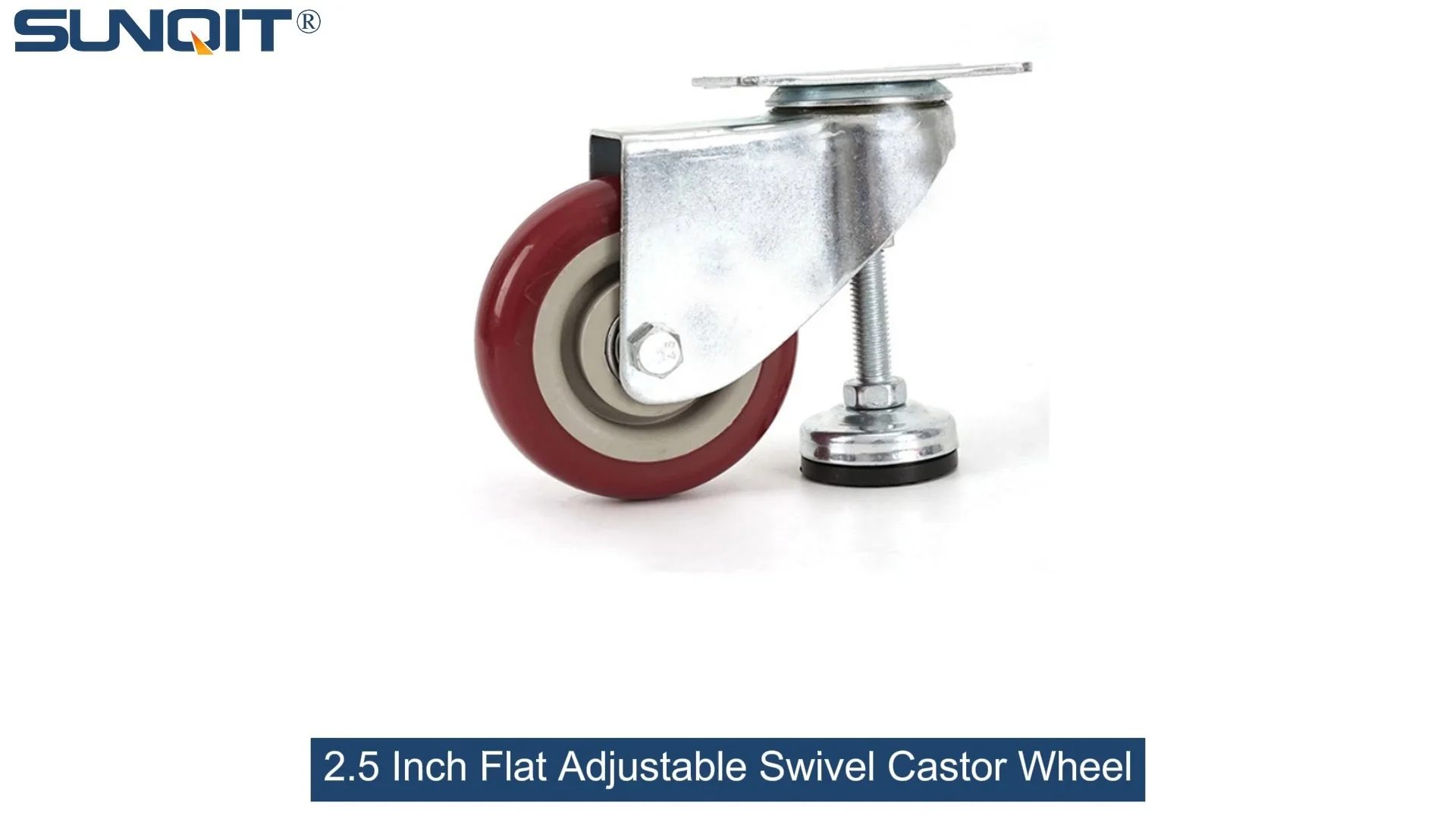
Flat Adjustable Swivel Castor Wheel
Swivel Chair Casters Ball Bearing Wheels Rubber Base with adjustable height function. Resistant to abrasion, impact and corrosion. Heavy payload can hold 80Kgs per pcs,which can make it works at a stable and smooth status.
The Heart of Lean Manufacturing – Lean Workbenches and Their Rolling Foundations
In the fast-paced world of production assembly, where every second counts and efficiency is the name of the game, lean systems have become more than just a buzzword—they're the backbone of successful manufacturing. At the center of these systems lies the humble workbench: a hub where ideas take shape, components come together, and products are born. But what transforms a static table into a dynamic tool that adapts to your team's needs? Often, it's the unsung heroes beneath it: castor wheels. Specifically, flat adjustable swivel castor wheels. These small but mighty components turn rigid workspaces into flexible, mobile stations that align perfectly with lean principles—reducing waste, improving ergonomics, and keeping your workflow as smooth as a well-oiled machine.
Think about it: a lean pipe workbench without the right casters is like a race car without tires. It might look the part, but it can't move, adapt, or keep up with the demands of a dynamic production floor. Whether you're reconfiguring your assembly line for a new product, shifting workstations to accommodate a larger team, or simply moving materials from point A to B without breaking a sweat, the casters under your workbench make it all possible. And not just any casters—flat adjustable swivel castor wheels are designed to balance mobility with stability, adjustability with durability, and precision with ease of use. In this article, we'll dive deep into the key parameters that matter when selecting these critical components, ensuring your lean pipe workbench becomes a true asset to your operation.
Understanding Flat Adjustable Swivel Castor Wheels: What Sets Them Apart?
Before we jump into the nitty-gritty of parameters, let's clarify what makes flat adjustable swivel castor wheels unique. Unlike fixed casters that lock movement in one direction or rigid wheels that don't swivel, these casters offer two key benefits: 360-degree swivel capability and height adjustability . The "flat" in their name often refers to their low-profile design, which keeps the workbench stable and close to the ground while still allowing for easy rolling. This combination makes them ideal for lean pipe workbenches, where space is often at a premium and precision is non-negotiable.
Imagine trying to maneuver a heavy workbench through a tight aisle with fixed casters—you'd be stuck zigzagging, wasting time and risking damage to both the bench and the floor. Swivel casters eliminate that hassle by letting you glide smoothly in any direction, even in confined spaces. Then there's the adjustability: if your factory floor isn't perfectly level (and let's be real, few are), adjustable casters let you tweak the height of each wheel individually, ensuring your workbench stays stable and your materials don't slide off. This isn't just about convenience—it's about safety, ergonomics, and maintaining the accuracy of your assembly tasks. For example, a workbench used for intricate electronics assembly needs to stay steady, while one used for moving heavy parts might need extra height to align with a conveyor. Flat adjustable swivel casters bridge these needs seamlessly.

Key Parameter 1: Load Capacity – The Backbone of Reliability
If there's one parameter you can't afford to overlook, it's load capacity. This is the maximum weight a caster can support without failing, and it's the difference between a workbench that lasts for years and one that collapses under pressure. Load capacity is typically measured in two ways: dynamic load (the weight the caster can handle while moving) and static load (the weight when stationary). For lean pipe workbenches, both matter—you need casters that can handle the weight of tools, materials, and even workers leaning on the bench, whether it's parked or on the move.
So, how do you determine the right load capacity? Start by calculating the total weight your workbench will carry. Let's break it down: the workbench itself (say, an aluminum profile frame with a steel top might weigh 50-100 lbs), plus tools (drills, screwdrivers, meters—another 20-50 lbs), plus materials (components, boxes, inventory—could be 100-300 lbs or more), and even the occasional worker resting an arm or leaning in to reach something (add another 150-200 lbs for safety). If you have a team of four rotating at the bench, that's a lot of variable weight. As a rule of thumb, aim for casters with a dynamic load capacity that's 20-30% higher than your maximum expected total weight. This buffer accounts for uneven weight distribution (e.g., if all materials are stacked on one side) and ensures longevity.
Wheel size plays a big role here, too. Larger wheels (e.g., 5-inch diameter) generally support more weight than smaller ones (3-inch), but they also raise the workbench higher, which might affect ergonomics. Material matters as well: steel wheels can handle heavier loads than rubber or nylon, but they're noisier and harder on floors. Most lean pipe workbench suppliers offer casters with load capacities ranging from 100 lbs per wheel for light-duty use up to 1,000 lbs or more for heavy industrial applications. For a standard production assemble workbench, 200-300 lbs per caster is a safe bet—just make sure to multiply by the number of casters (most workbenches use 4-6 casters) to get the total capacity.

Key Parameter 2: Wheel Material – Balancing Traction, Durability, and Floor Protection
The material of your caster wheel might seem like a minor detail, but it has a huge impact on performance. From how smoothly the bench rolls to how long the wheels last, and even how quiet your workspace stays, wheel material is a make-or-break factor. Let's break down the most common options and when to choose each:
- Polyurethane (PU): The all-rounder of caster materials. Polyurethane wheels offer a great balance of traction, durability, and floor protection. They're quiet (no squeaking on concrete!), grip well on smooth floors, and resist wear from oils, chemicals, and daily use. They're also shock-absorbent, which reduces vibration—perfect for delicate tasks like electronics assembly on an ESD workbench. The downside? They're not ideal for extremely high temperatures (over 180°F) or heavy loads beyond 500 lbs per wheel.
- Nylon: The workhorse for heavy loads. Nylon wheels are tough, chemical-resistant, and can handle higher temperatures than polyurethane (up to 250°F). They're also more affordable, making them a popular choice for industrial settings where cost and durability are priorities. However, they're harder than PU, so they can be noisy and may scratch soft floors like vinyl or wood. If your factory has concrete floors and you need to move heavy material racks, nylon is a solid pick.
- Rubber: The gentle giant. Rubber wheels are the best for protecting sensitive floors (think warehouse offices with polished concrete or retail backrooms with tile). They're ultra-quiet and provide excellent traction, even on wet or slippery surfaces. But they're not as durable as PU or nylon—they can wear down faster under heavy loads or exposure to oils. Save rubber wheels for light-duty workbenches or areas where floor protection is critical.
- Steel: The heavyweight champion. Steel wheels are for extreme loads—think 1,000+ lbs per wheel. They're virtually indestructible and work well in high-temperature environments (ovens, foundries). But they're loud, hard on floors, and offer little traction on smooth surfaces. Unless you're moving industrial machinery, steel is probably overkill for a standard lean pipe workbench.
The key is to match the wheel material to your environment. If you're in a cleanroom or lab, rubber or PU might be necessary to avoid contamination. If you're in an automotive plant with rough concrete, nylon or steel could be better. And don't forget about caster accessories here—wheel brakes, for example, are often made of the same material as the wheel, so compatibility matters. A good lean pipe supplier will help you pair the right wheel material with your specific needs.

Key Parameter 3: Swivel Mechanism – Smooth Maneuverability in Tight Spaces
A swivel caster is only as good as its swivel mechanism. This is the part that allows the wheel to rotate 360 degrees, and it's what makes your workbench feel "light on its feet" even when fully loaded. The swivel mechanism typically consists of a raceway (a ring of ball bearings) and a swivel head that connects the wheel to the workbench. The quality of these components directly affects how easily the caster turns, how much force is needed to maneuver, and how long the caster lasts.
When evaluating swivel mechanisms, look for precision ball bearings —they reduce friction and make swiveling smoother, even under heavy loads. Cheaper casters might use plastic bushings instead of bearings, which can wear out quickly and make turning a struggle. You should also check the swivel radius —the distance from the center of the swivel head to the edge of the wheel. A smaller radius means the caster can turn in tighter spaces, which is crucial for lean workbenches that need to navigate around machinery or other workstations.
Another factor is swivel lock —some casters come with a mechanism to lock the swivel head in place, turning it into a fixed caster temporarily. This is useful if you need to move the workbench in a straight line for long distances or want extra stability during use. However, swivel locks add complexity and cost, so only opt for them if you truly need the flexibility. For most lean systems, a smooth, unlocked swivel mechanism is more than enough to keep things moving efficiently.
Key Parameter 4: Adjustability – Fine-Tuning for Ergonomics and Stability
Remember when we mentioned "adjustable" in flat adjustable swivel castor wheels? This is where that feature shines. Adjustability refers to the ability to change the height of the caster, usually by turning a threaded stem or a cam lever. Why does this matter? For starters, factory floors are rarely perfectly level. A slight dip or bump can make a workbench wobble, which is annoying at best and dangerous at worst (think tools sliding off). Adjustable casters let you level the bench by raising or lowering individual wheels, ensuring stability even on uneven ground.
Ergonomics is another big reason. Workers come in different heights, and a workbench that's too low or too high can lead to back pain, fatigue, and reduced productivity. With adjustable casters, you can tweak the bench height to match the tallest or shortest team member, keeping everyone comfortable and focused. For example, if you're assembling small parts, raising the bench by 2-3 inches might reduce bending; if you're using a heavy drill, lowering it could give better leverage. This level of customization is a cornerstone of lean manufacturing—adapting the workspace to the worker, not the other way around.
Adjustability also helps with compatibility. Maybe you need your workbench to align with a conveyor belt or a flow rack for seamless material transfer. If the conveyor is 36 inches high, you can adjust the casters to raise the bench to match, eliminating the need for ramps or extra lifting. This not only saves time but also reduces the risk of injury from manual handling. When shopping for casters, look for an adjustability range of at least 1-2 inches—enough to handle most floor irregularities and ergonomic needs.
Key Parameter 5: Brake System – Safety and Stability When Needed
Mobility is great, but there are times when you need your workbench to stay put. That's where the brake system comes in. A good brake should be easy to engage, reliable, and strong enough to hold the bench in place even if someone bumps into it. There are two main types of brakes for swivel casters:
- Wheel lock: Engages a pad or lever that presses against the wheel, preventing it from rolling. This is simple and effective for keeping the bench stationary, but it doesn't lock the swivel head—so the wheel can still turn, which might cause the bench to shift slightly if pushed.
- Total lock (or dual lock): Locks both the wheel and the swivel head, immobilizing the caster completely. This is the gold standard for safety, especially in high-traffic areas or when using the bench for tasks that require precision (like soldering or measuring). Total locks are more expensive, but they're worth it for peace of mind.
Brake placement is also important. Foot-operated brakes are the most user-friendly—workers can engage or disengage them without bending down, which saves time and reduces strain. Look for brakes with large, easy-to-reach pedals, even if the worker is wearing heavy boots. Some casters also come with brake indicators (like a red flag when engaged) to quickly show if the bench is locked, which is helpful in busy environments.
Don't overlook the quality of the brake mechanism itself. A cheap brake might stick, slip, or wear out after a few months of use. Invest in casters with metal brake components (avoid plastic) and springs that maintain tension over time. Remember, a brake that fails isn't just an inconvenience—it's a safety hazard. When in doubt, ask your lean pipe workbench supplier about the brake's durability testing or warranty.
Comparing Caster Wheel Options: A Practical Guide
To help you put all these parameters together, here's a comparison table of common flat adjustable swivel castor wheel options, tailored to different lean workbench needs:
| Caster Type | Load Capacity (Dynamic/Static, lbs) | Wheel Material | Brake Type | Adjustability Range (inches) | Best For |
|---|---|---|---|---|---|
| Light-Duty PU | 200/400 | Polyurethane | Wheel lock | 0.5-1.0 | Small parts assembly, ESD workbenches, offices |
| Medium-Duty Nylon | 400/800 | Nylon | Total lock | 1.0-1.5 | Material handling, production lines, concrete floors |
| Heavy-Duty Steel | 1000/2000 | Steel | Total lock (heavy-duty) | 1.5-2.0 | Industrial machinery, heavy tool storage, high-temperature areas |
| Ergonomic Rubber | 150/300 | Rubber | Wheel lock | 0.5-1.0 | Retail backrooms, schools, soft floor protection |
Use this table as a starting point, but always calculate your specific needs before buying. And don't forget to factor in the number of casters—most workbenches use four casters, so a medium-duty nylon caster with 400 lbs capacity per wheel would support a total of 1600 lbs (4 x 400), which is more than enough for most applications.
Choosing a Reliable Lean Pipe Workbench Supplier
Even with all this knowledge, selecting the right casters is only half the battle—you also need a supplier you can trust. A good lean pipe workbench supplier should be more than just a vendor; they should be a partner who understands your lean system goals and can help you choose the right components. Here's what to look for:
- Expertise in lean manufacturing: They should understand terms like "5S," "continuous improvement," and "waste reduction" and be able to explain how their casters and workbenches support these principles.
- Quality certifications: Look for suppliers whose products meet ISO 9001 standards or have third-party testing for load capacity and durability. This ensures you're getting casters that live up to their specs.
- Customization options: Every factory is different, so your supplier should offer casters with different wheel materials, brake types, and adjustability ranges. If you need a caster with a specific stem size to fit your aluminum profile workbench, they should be able to accommodate.
- After-sales support: What happens if a caster breaks or a brake fails? A good supplier will offer replacement parts (like caster accessories), repair guidance, and a warranty of at least 1-2 years.
- Transparent pricing: Avoid suppliers who hide fees or inflate costs for "premium" features you don't need. Look for clear, itemized quotes that include shipping and any customization charges.
Don't be afraid to ask for references or case studies. A reputable supplier will be happy to share stories of how their casters helped other manufacturers improve efficiency. And if possible, request samples—test the casters in your own environment to see how they roll, brake, and adjust before committing to a bulk order.
Maintenance Tips: Keeping Your Casters Rolling Smoothly
Even the best casters need a little TLC to last. Here are some simple maintenance tips to extend their lifespan:
- Clean regularly: Dirt, debris, and hair can get trapped in the swivel mechanism or around the wheel, causing friction and wear. Wipe down casters weekly with a damp cloth, and use a brush to clean out hard-to-reach areas.
- Lubricate moving parts: The swivel head and wheel bearings need lubrication to stay smooth. Use a silicone-based lubricant (avoid oil, which attracts dirt) every 3-6 months, depending on usage.
- Inspect brakes: Check brake pads for wear and ensure they engage fully. replace worn pads immediately—don't wait for the brake to fail.
- Tighten loose hardware: The stem or mounting plate can loosen over time, causing the caster to wobble. Tighten bolts with a wrench quarterly to keep everything secure.
- replace damaged wheels: If a wheel is cracked, flat, or worn unevenly, replace it right away. A damaged wheel can throw off the entire workbench's balance and strain other casters.
By following these steps, you can keep your casters rolling smoothly for 5-10 years, saving you money on replacements and minimizing downtime.
Conclusion: Rolling Toward a Leaner, More Efficient Future
Flat adjustable swivel castor wheels might seem like small components, but they play a huge role in the success of your lean pipe workbench—and your entire lean system. By focusing on key parameters like load capacity, wheel material, swivel mechanism, adjustability, and brake type, you can select casters that keep your workbench mobile, stable, and ergonomic. Remember, the goal is to reduce waste, improve productivity, and create a workspace that works for your team—not against them.
Whether you're outfitting a new production line or upgrading old workbenches, take the time to evaluate your needs, test different options, and partner with a reliable lean pipe workbench supplier. With the right casters under your bench, you'll be well on your way to a leaner, more efficient, and more profitable manufacturing process. After all, in lean manufacturing, every detail counts—and that includes the wheels that keep your operation rolling forward.