- Company Articles
- FAQ
- FAQ
- How Small Iron Corner Codes Enable Quick Reconfigurations in Kaizen Practices

How Small Iron Corner Codes Enable Quick Reconfigurations in Kaizen Practices
Related Product
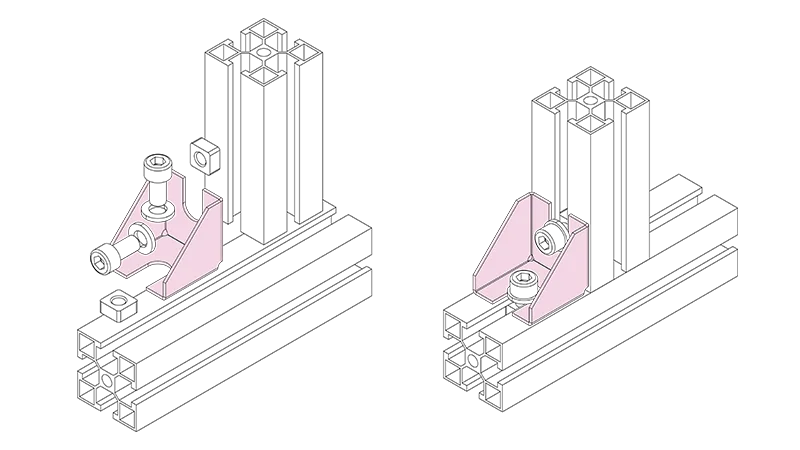
Small Iron Corner Code
Used for 30 series aluminum profile 90° plane connection
In the world of manufacturing, where change is the only constant, the ability to adapt quickly isn't just a luxury—it's a necessity. This is where Kaizen, the Japanese philosophy of continuous improvement, takes center stage. Kaizen thrives on small, incremental changes that boost efficiency, reduce waste, and enhance productivity. But here's the thing: those changes can't happen if your workspace is stuck in place. Enter the unsung hero of flexible manufacturing: the small iron corner code. These tiny metal brackets might not look like much, but they're the backbone of lean systems, quietly empowering teams to reconfigure workbenches, material racks, and production lines in minutes, not days. Let's dive into how these unassuming components are revolutionizing Kaizen practices across factories worldwide.
The Unsung Hero: What Are Small Iron Corner Codes?
Before we get into their role in Kaizen, let's start with the basics: What exactly is a small iron corner code? At first glance, it's a simple L-shaped or T-shaped piece of galvanized steel, usually no bigger than a few inches, with pre-drilled holes for screws. But don't let its simplicity fool you. This little bracket is engineered to solve a big problem: how to connect aluminum profiles—those modular metal rails that form the skeleton of workbenches, racks, and trolleys—in a way that's strong, secure, and temporary . Unlike welding, which fuses metal permanently, or glue, which weakens over time, small iron corner codes create a tight, (detachable) bond between aluminum profiles, making them perfect for environments where change is routine.
"We used to think of workspaces as fixed," says Maria Gonzalez, a lean coordinator at a automotive parts plant in Michigan. "A workbench was built once, and that was it. But with Kaizen, we realized that the best processes evolve. Small iron corner codes changed everything. Now, we can tweak a workbench's height, add a shelf, or even move an entire assembly line section without calling in a welder or waiting for days."
So why iron? Iron is durable, affordable, and resistant to the wear and tear of factory floors—think oil spills, heavy loads, and constant movement. The galvanized coating adds an extra layer of protection against rust, ensuring these corner codes hold up in even the busiest workshops. And because they're mass-produced, they're cheap enough to stock in bulk, so teams never have to pause a Kaizen event waiting for parts.
Building Blocks of Lean Systems: Small Iron Corner Codes in Action
To understand the impact of small iron corner codes, let's zoom into a typical manufacturing floor. Imagine a production line assembling circuit boards. The heart of this line is a series of workbenches—specifically, the "workbench e (single deck-without caster)" model, a staple in electronics manufacturing. This workbench needs to be sturdy enough to hold tools, components, and the circuit boards themselves, but also flexible enough to adjust when the team identifies a bottleneck during a Kaizen workshop.
Here's where aluminum profiles and small iron corner codes shine. The workbench's frame is built from aluminum profiles—think 4040 or 3030 EU standard aluminum profiles, which are lightweight yet strong. These profiles slot together like giant Erector Set pieces, but without the permanent connections. Instead, at every joint—where a vertical leg meets a horizontal beam, or a shelf bracket attaches to the frame—small iron corner codes hold everything in place. A few screws through the corner code's pre-drilled holes, and the connection is secure. Need to raise the workbench by 6 inches? Loosen the screws, slide the profiles to the new height, re-tighten the corner codes, and you're done. No cutting, no welding, no waiting for a maintenance crew.
But it's not just workbenches. Small iron corner codes play a starring role in other lean system staples, too. Take "material rack b (3 row and 3 floor)," a common storage solution for parts and components. This rack uses aluminum profiles for its vertical posts and horizontal shelves, with small iron corner codes securing each shelf to the posts. During a Kaizen event, the team might realize that the top shelf is too high for operators to reach comfortably. With corner codes, they can lower that shelf in 10 minutes. Compare that to a traditional steel rack, which would require drilling new holes or even replacing the entire shelf—hours of work, not minutes.
A Day in the Life: Kaizen Reconfiguration with Small Iron Corner Codes
Let's walk through a real example. At a medical device factory in Ohio, the assembly team was struggling with a bottleneck: operators at the "workbench e" stations were spending too much time reaching for components stored on a nearby "material rack b." During their weekly Kaizen meeting, they proposed a simple fix: attach a small shelf to the side of each workbench to hold frequently used parts. The catch? They needed to make this change before the next shift started—in under two hours.
Here's how they did it: First, they grabbed a few 2020 aluminum profiles (smaller, lighter profiles ideal for shelves) and a handful of small iron corner codes. Using a cordless drill, they loosened the corner codes holding the workbench's side rails in place. They then attached the new shelf brackets to the side rails using additional corner codes, secured the aluminum profile shelf to the brackets, and re-tightened all the screws. Total time? 45 minutes per workbench. By the start of the next shift, every operator had easy access to their tools, cutting down reach time by 30% and boosting hourly output by 15%. All thanks to the flexibility of small iron corner codes.

Quick Reconfigurations: The Kaizen Advantage
Kaizen is all about speed—identifying a problem, testing a solution, and implementing it fast. But traditional manufacturing setups often slow this down. Welded steel frames, glued components, or custom-built workbenches are permanent by design, making even small changes feel like major overhauls. Small iron corner codes flip this script by making reconfigurations fast and low-risk .
Consider the time factor. Welding a steel frame joint takes skill, equipment, and time—often an hour or more per joint. If you need to reconfigure a workbench with four welded joints, that's half a day of work, plus downtime for the production line. With small iron corner codes, those same four joints can be disassembled and reassembled in 20 minutes. That's a 94% reduction in reconfiguration time. For a Kaizen team, this means they can test a change, see if it works, and adjust again the same day—not next week.
Cost is another big win. Welding requires specialized labor (a certified welder) and materials (welding rods, gas). Small iron corner codes, on the other hand, cost pennies on the dollar, and anyone with a screwdriver can install them. At the Ohio medical device factory, the team estimated that using corner codes instead of welding saved them $2,000 per reconfiguration—money that could be reinvested in other Kaizen initiatives.
Then there's reusability. Welded components are destroyed when you take them apart—you can't unweld steel. Small iron corner codes, though? They're reusable. When the medical device team later redesigned their production line, they (dismantled) the side shelves from the "workbench e" stations and repurposed the aluminum profiles and corner codes to build a new "turnover trolley and rack" for transporting finished products. Nothing went to waste—a core principle of lean systems.
Comparing Fastening Solutions: Why Small Iron Corner Codes Stand Out
Small iron corner codes aren't the only game in town when it comes to fastening aluminum profiles. There are aluminum joints, plastic clamps, and even magnetic connectors. But none offer the same mix of strength, affordability, and flexibility. Let's break it down with a comparison:
| Fastening Method | Installation Time (per joint) | Reusability | Cost per Unit | Strength (Max Load) | Tools Required |
|---|---|---|---|---|---|
| Small Iron Corner Code | 2-3 minutes | High (unlimited reuse) | $0.50-$1.20 | Up to 500 lbs | Screwdriver or drill |
| Aluminum Joint | 5-7 minutes | Medium (wear over time) | $3.00-$5.00 | Up to 800 lbs | Hex key + drill |
| Plastic Clamp | 1-2 minutes | Low (prone to cracking) | $0.30-$0.80 | Up to 150 lbs | Hand-tightened (no tools) |
| Welding | 30-60 minutes | None (permanent) | $5.00-$10.00 (labor + materials) | Up to 1,000 lbs | Welder, grinder, safety gear |
As the table shows, small iron corner codes strike the perfect balance: they're faster to install than aluminum joints, stronger than plastic clamps, and infinitely more flexible than welding. For Kaizen teams, this means they can prioritize testing over planning . Instead of spending days debating whether a shelf height adjustment will work, they can build it, test it, and tweak it—all with minimal cost and effort.
Beyond the Basics: Advanced Applications in Lean Systems
Small iron corner codes aren't limited to workbenches and material racks. Their versatility makes them a linchpin in more complex lean system setups, from flow racks to turnover trolleys. Let's explore a few advanced use cases:
Flow Racks and Roller Tracks
Flow racks—used to move components from one workstation to the next—rely on "roller track and accessories" like "plastic roller track guide rail yellow" or "aluminum guide rail a." These tracks need to be mounted at a slight angle to let gravity do the work, which means the rack's frame must be precisely aligned. Small iron corner codes make this alignment adjustable. If the team notices components are moving too slowly (or too fast), they can loosen the corner codes, tilt the frame by a few degrees, and re-tighten. No need to rebuild the entire rack.
Turnover Trolleys
"Turnover trolley and rack" systems are used to transport heavy loads across the factory floor. These trolleys often use aluminum profiles for their frames and "caster wheel" for mobility. Small iron corner codes secure the caster mounts to the trolley's base, ensuring the wheels stay in place even over rough concrete. If a caster breaks, replacing it is as simple as loosening the corner code, swapping the wheel, and re-tightening—no need to replace the entire trolley.
ESD Workstations
In electronics manufacturing, "esd workstation" setups require static control to protect sensitive components. These workstations use conductive materials and grounding straps, but their frames still need to be flexible. Small iron corner codes work here too—they're non-conductive (when paired with plastic screws) and won't interfere with ESD protection. This means teams can reconfigure ESD workstations just as easily as standard ones, without compromising safety.
Future Trends: Small Iron Corner Codes in Modern Lean Systems
As manufacturing shifts toward smart factories and Industry 4.0, the demand for flexible workspaces will only grow. Small iron corner codes are evolving to meet this demand. Manufacturers are now producing corner codes with built-in features like cable management clips (to organize wires on workbenches) or QR codes (to track components in digital inventory systems). Some are even experimenting with magnetic corner codes, which eliminate the need for screws altogether—simply snap them into place on aluminum profiles with embedded magnets.
Another trend is the integration of small iron corner codes with modular automation. For example, collaborative robots ("cobots") are increasingly common on factory floors, and they need workstations that can adapt to their movements. With corner codes, teams can reposition a cobot's workbench or tool rack in minutes, ensuring the robot and human operators work in harmony.
Conclusion: The Small Tool That Drives Big Change
Kaizen is about seeing the potential in small changes—and small iron corner codes embody that philosophy perfectly. They're not flashy, they're not high-tech, but they're powerful. By turning rigid workspaces into flexible, reconfigurable environments, they empower teams to act on their Kaizen ideas quickly, cheaply, and effectively. In a world where manufacturing success depends on adaptability, small iron corner codes aren't just tools—they're the foundation of continuous improvement.
So the next time you walk through a factory and see a workbench that looks like it was built yesterday (but wasn't), or a material rack that's taller than it was last week, take a closer look. Chances are, there's a small iron corner code holding it all together—quietly, reliably, and ready for whatever Kaizen change comes next.