- Company Articles
- FAQ
- FAQ
- Internal Straight Aluminum Joint FAQs: Answering Your Top Questions

Internal Straight Aluminum Joint FAQs: Answering Your Top Questions
Related Product
Internal straight aluminum joint
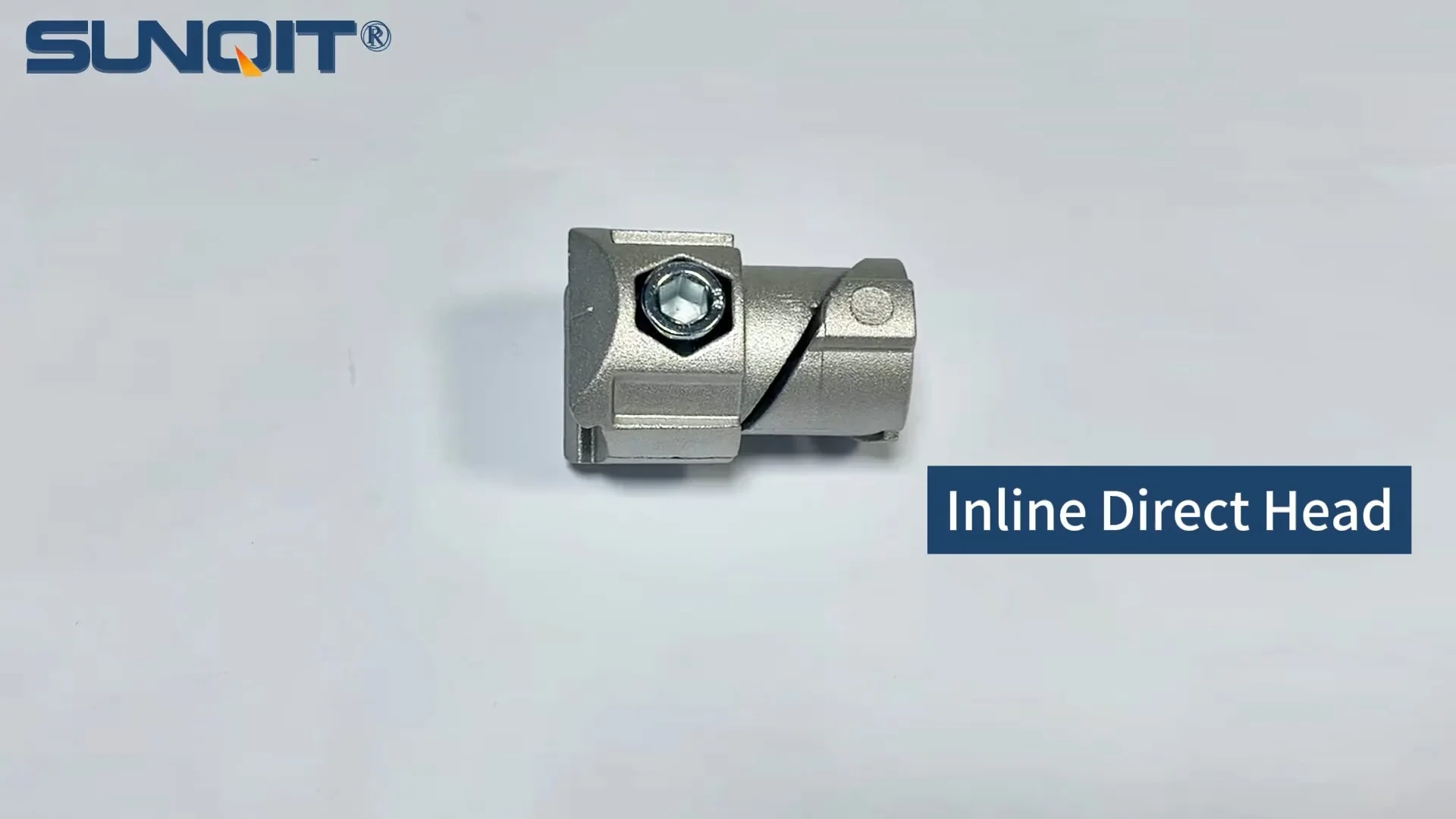
Aluminum pipe joint inside connection used for two pcs 28pcs aluminum pipe connection in straight angle,it connects two pcs pipe from inside.
If you've ever dabbled in building workbenches, material racks, or lean manufacturing setups, you know that the right components can make or break a project. Among the unsung heroes of these builds are joints—the small but mighty pieces that hold everything together. Today, we're zeroing in on one specific star: the internal straight aluminum joint. Whether you're a seasoned manufacturer, a small business owner setting up a workshop, or a DIY enthusiast tackling a home project, you've probably got questions about this essential part. How does it work? What makes it different from other joints? Which aluminum pipes does it pair with? We're diving into all that and more, with real-world insights to help you make informed decisions for your next build. Let's get started.
What Exactly Is an Internal Straight Aluminum Joint?
Let's start with the basics: an internal straight aluminum joint is a specialized connector designed to join two aluminum pipes in a straight line—hence the "straight" in its name. What sets it apart, though, is the "internal" part. Unlike external joints, which clamp around the outside of pipes, this joint fits inside the hollow ends of the aluminum pipes it connects. Think of it like a hidden bridge: once installed, the joint itself is mostly invisible, leaving only the smooth, continuous line of the pipes visible.
These joints are typically made from high-grade aluminum alloy, chosen for its lightweight strength, corrosion resistance, and compatibility with other aluminum components. They're engineered to create a tight, secure bond between pipes, ensuring stability in structures like workbenches, conveyor systems, or material racks. Whether you're building a simple shelving unit or a complex lean pipe system for a production line, the internal straight aluminum joint is the quiet workhorse that keeps everything aligned and sturdy.
How Does It Work with Aluminum Pipes? Do I Need Specific Sizes?
Great question—compatibility is key here. Internal straight aluminum joints are designed to work with hollow aluminum pipes, and yes, size matters. The joint's outer diameter must match the inner diameter of the aluminum pipe for a snug fit. Let's break it down: most aluminum pipes used in industrial or workshop settings come in standard outer diameters (OD), like 20mm, 25mm, 30mm, or 40mm. The internal straight joint, in turn, has an outer diameter (OD) that's just slightly smaller than the inner diameter (ID) of the pipe, allowing it to slide in smoothly while still creating friction for a tight hold.
For example, if you're using a 25mm OD aluminum pipe (which typically has an ID of around 22mm), you'd need an internal straight joint with an OD of approximately 21.8mm—close enough to grip the pipe's inner wall but not so tight that installation becomes a struggle. Many manufacturers list recommended pipe sizes on their joint packaging, so always check that first.
Installation is straightforward: you cut your aluminum pipes to the desired length, deburr the ends to remove sharp edges (this prevents damaging the joint or the pipe), then slide one end of the joint into the first pipe until it's flush with the pipe's end. Repeat with the second pipe on the other side of the joint, and you've got a straight, seamless connection. Some joints also include set screws—small screws that tighten against the inner wall of the pipe—to add extra security, especially for heavier loads.
What Makes This Joint Better Than External Straight Joints?
Ah, the age-old internal vs. external debate! Both types get the job done, but they shine in different scenarios. Let's compare them side by side to see why you might choose an internal straight aluminum joint:
| Feature | Internal Straight Aluminum Joint | External Straight Joint |
|---|---|---|
| Aesthetics | Sleek, clean look—joint is hidden inside pipes, leaving only a continuous line of aluminum visible. | Visible clamp around pipe ends, which may interrupt the visual flow of the structure. |
| Installation | Requires precise pipe cutting and deburring (since the joint fits inside), but once in place, it's permanent and secure. | Easier to adjust (just loosen the clamp), but may require more time to align pipes perfectly. |
| Space Efficiency | No extra bulk—ideal for tight spaces or structures where clearance is limited (e.g., under shelves or in narrow conveyor systems). | Adds width to the connection point, which can be a problem in cramped areas. |
| Corrosion Resistance | Since the joint is inside the pipe, it's less exposed to moisture, dust, or chemicals—extending its lifespan in harsh environments. | External surface is more exposed, so it may require more frequent maintenance in wet or dusty settings. |
| Best For | Permanent structures, clean-room environments, or projects where appearance matters (e.g., customer-facing workbenches). | Temporary setups, frequent reconfigurations, or projects where quick adjustments are needed. |
So, if you want a polished, space-saving, and long-lasting connection, the internal straight aluminum joint is the way to go. It's especially popular in lean manufacturing setups, where organization and visual clarity are priorities—no one wants clunky external clamps cluttering up a streamlined production line!
Can I Install It Myself, or Do I Need Special Tools?
Good news: you don't need to be a professional to install an internal straight aluminum joint—DIYers, rejoice! While it does require a bit of precision, the process is straightforward, and you'll only need a few basic tools. Here's a step-by-step breakdown to walk you through it:
Tools You'll Need:
- A pipe cutter or hacksaw (to cut aluminum pipes to length—pipe cutters are cleaner, but a hacksaw works too).
- A deburring tool or sandpaper (to smooth the inside and outside edges of the cut pipes—sharp edges can damage the joint or cause snags).
- A measuring tape and pencil (to mark pipe lengths accurately).
- An Allen wrench (if your joint has set screws—most do, for extra security).
- Optional: A rubber mallet (to gently tap the joint into place if it's a tight fit).
Installation Steps:
- Measure and cut your pipes: Use the measuring tape to mark where you need to cut, then use the pipe cutter or hacksaw to make a straight, clean cut. Pro tip: If using a hacksaw, clamp the pipe to a workbench first to keep it steady—wobbly cuts lead to misaligned joints!
- Deburr the ends: After cutting, the inside and outside edges of the pipe will be sharp. Run the deburring tool (or a piece of sandpaper) around both edges to smooth them out. This ensures the joint slides in easily and prevents scratches on the joint's surface.
- insert the joint: Slide one end of the internal straight aluminum joint into the first pipe until it's flush with the pipe's end. If it's a tight fit, gently tap it with a rubber mallet—don't force it, as that could bend the pipe or damage the joint.
- Add the second pipe: Slide the second pipe onto the other end of the joint, again pushing until it's flush. Now you've got a straight, connected section!
- Tighten set screws (if included): Many joints have small set screws (usually 1-2 per end) that you tighten with an Allen wrench. These screws dig into the inner wall of the pipe, adding extra grip. Tighten them until they're snug, but don't overdo it—stripping the screws is a common mistake!
That's it! The whole process takes about 10-15 minutes per joint, even for beginners. Just remember: measure twice, cut once, and always deburr—those small steps make a big difference in how well the joint performs.
Which Aluminum Profile Accessories Pair Well with It?
An internal straight aluminum joint is rarely used alone—it's part of a larger ecosystem of aluminum profile accessories that turn pipes into functional structures. Let's break down the most common (and useful) accessories to pair with it:
1. Aluminum Pipe Clamps: These are essential for adding extra components to your pipe structure. Aluminum pipe clamps attach to the outside of the pipe (without interfering with the internal joint) and let you mount things like shelves, tool hooks, or conveyor guides. For example, if you're building a workbench with internal straight joints, you'd use pipe clamps to secure the wooden or aluminum top to the pipe frame.
2. End Caps: Since your aluminum pipes are hollow, the exposed ends (the ones not connected by joints) can be sharp or collect dust. End caps snap or press into the pipe ends, covering them for safety and cleanliness. They come in plastic or aluminum, so you can match your joint's material for a cohesive look.
3. T-Slot Aluminum Profiles: If you're building a more complex structure (like a production line workbench with built-in tool holders), you might mix straight pipes with T-slot aluminum profiles. The internal straight joint can connect the pipes, while T-slot accessories (like brackets or sliding shelves) attach to the profiles. It's a hybrid approach that combines the strength of pipes with the versatility of T-slots.
4. Casters: Want your structure to be mobile? Add casters (wheels) to the bottom using caster mounting plates, which attach to the aluminum pipes via—you guessed it—pipe clamps. Just make sure the internal straight joints are secure enough to handle the movement; for heavy loads, opt for joints with set screws to prevent shifting.
5. Roller Tracks: If you're building a material rack or conveyor, roller tracks (like plastic or aluminum roller track guide rails) can be mounted to the pipes using clamps. The internal straight joints ensure the pipes stay aligned, so the rollers glide smoothly—no jams or uneven movement.
The key here is compatibility: always check that your accessories (clamps, end caps, etc.) are designed for the same pipe diameter as your internal straight joint. Mixing sizes is a recipe for wobbly structures and frustration! Most suppliers list compatible pipe sizes on their accessory packaging, so keep that in mind when shopping.
What Are the Most Common Applications for This Joint?
Internal straight aluminum joints are surprisingly versatile—they pop up in more places than you might think! Here are some of the most common applications, from industrial settings to small workshops:
1. Lean Pipe Systems: Lean manufacturing is all about efficiency, and internal straight aluminum joints are a staple here. They're used to build flow racks (for organizing parts), workstations, and assembly lines, where a clean, uncluttered look helps workers focus. Since the joints are hidden, the system looks streamlined, and there's no risk of snagging tools or materials on external clamps.
2. Workbenches: Whether it's a lab bench, a workshop workbench, or a packing station, internal straight joints create sturdy, flat surfaces. Pair them with aluminum pipes and a wooden or aluminum top, and you've got a durable workspace that can handle heavy tools or equipment. The hidden joints also make the workbench look more professional—important if clients or inspectors visit your facility.
3. Material Racks and Shelving: Need to store boxes, parts, or inventory? Internal straight joints connect vertical and horizontal pipes to build strong, customizable racks. Since the joints are inside the pipes, the shelves have more usable space (no external clamps taking up room), and the structure is less likely to collect dust—great for clean environments like food processing or pharmaceutical labs.
4. Conveyor Systems: Small conveyor belts or roller tracks (like the plastic roller track guide rails mentioned earlier) often use aluminum pipes as their frame. Internal straight joints keep the pipes aligned, ensuring that products move smoothly from one station to the next. They're especially useful in gravity-fed conveyors, where even a slight misalignment can cause jams.
5. Turnover Trolleys: These wheeled carts are used to transport materials around factories or warehouses. Internal straight joints connect the trolley's frame pipes, creating a lightweight but strong structure that can handle heavy loads without bending. Add casters, and you've got a mobile solution that's easy to push and built to last.
6. Retail Displays: Even in non-industrial settings, internal straight aluminum joints shine! Retailers use them to build custom display racks for clothing, electronics, or cosmetics. The sleek, hidden joints give displays a modern, minimalist look that lets the products stand out—no clunky hardware distracting customers.
Basically, if you need to connect two aluminum pipes in a straight line and want the connection to be strong, clean, and long-lasting, this joint is your go-to. It's the quiet backbone of countless structures that keep businesses running smoothly.
How Strong Is It? Can It Handle Heavy Loads?
Strength is a top concern for anyone building with pipes, and internal straight aluminum joints don't disappoint—when used correctly, they're remarkably sturdy. But "how strong" depends on a few factors: the thickness of the aluminum pipe, the quality of the joint, and the number of joints used in the structure.
Let's start with pipe thickness. Aluminum pipes come in different wall thicknesses, usually measured in millimeters (e.g., 1.2mm, 1.5mm, 2.0mm). Thicker walls mean stronger pipes, which can support more weight. For example, a 20mm OD pipe with a 1.5mm wall can typically support around 50-75kg per linear meter when paired with an internal straight joint. Bump that up to a 2.0mm wall, and you're looking at 75-100kg per meter. Heavier-duty pipes (like 30mm OD with 2.0mm walls) can handle 100-150kg per meter—more than enough for most workshop or warehouse needs.
Next, the joint itself. High-quality internal straight aluminum joints are made from heat-treated aluminum alloy (like 6061-T6), which is known for its strength and durability. Cheaper joints may use lower-grade aluminum or have thinner walls, which can bend or break under stress. Always check the manufacturer's load ratings—reputable suppliers will list how much weight their joints can handle when paired with specific pipe sizes.
Then there's the structure's design. A single joint connecting two pipes can handle more weight if the pipes are supported at both ends (like a shelf between two vertical posts). If the pipes are cantilevered (sticking out from a wall with only one support), the load capacity drops—gravity is a tough opponent! For heavy loads, add extra supports (like cross-braces) or use more joints to distribute weight evenly.
Real-world example: A workbench built with 30mm OD aluminum pipes (2.0mm wall), connected by internal straight joints, and supported by four vertical legs can easily hold 200-300kg—enough for power tools, metal sheets, or batches of production parts. A material rack with 25mm pipes and internal joints can store 10-15 boxes of inventory without bending or sagging.
Pro tip: If you're unsure about load capacity for your specific project, reach out to your aluminum pipe supplier. They can help you calculate the right pipe thickness and joint spacing based on your needs—better safe than sorry!
What Maintenance Does It Require Over Time?
One of the best things about aluminum (and internal straight aluminum joints) is that they're low-maintenance—no need for constant upkeep. But a little care goes a long way in extending their lifespan. Here's what you need to know:
1. Cleaning: Aluminum is naturally resistant to rust, but it can collect dust, grease, or grime over time—especially in industrial settings. To clean the joints (and pipes), wipe them down with a soft cloth dampened with mild soap and water. Avoid harsh chemicals (like bleach or abrasive cleaners), as they can damage the aluminum's finish. For tough grease, a bit of isopropyl alcohol on a cloth works wonders—just rinse with water afterward.
2. Checking Set Screws: If your joint has set screws (those small screws that tighten against the pipe), check them every few months—especially if the structure is moved or vibrated regularly (like a conveyor or trolley). Over time, screws can loosen from vibration, which can make the joint feel wobbly. Tighten them gently with an Allen wrench—don't overtighten, as this can strip the threads or damage the pipe.
3. Inspecting for Damage: Every now and then, take a close look at the joints and pipes. Look for signs of bending, cracks, or corrosion (though aluminum rarely corrodes, it can in very acidic or salty environments). If you spot damage, replace the joint immediately—compromised joints can lead to structural failure, which is a safety hazard.
4. Lubrication (If Needed): Most internal straight joints don't require lubrication, since they're a friction fit. However, if you're using a joint with moving parts (though rare for straight joints), a drop of silicone lubricant can keep things smooth. Avoid oil-based lubricants, as they attract dust and grime.
5. Protecting in Harsh Environments: If your structure is outdoors or in a wet/dusty area (like a construction site), consider adding a clear coat of aluminum sealant to the pipes and joints. This adds an extra layer of protection against moisture and corrosion, though it's usually unnecessary for indoor use.
That's it! With just a little cleaning and occasional checks, your internal straight aluminum joints will last for years—decades, even, in low-stress environments. They're built to be reliable, so you can focus on your work instead of maintaining your tools.
Where Can I Buy High-Quality Internal Straight Aluminum Joints?
Now that you're sold on the benefits of internal straight aluminum joints, you're probably wondering where to get them. The good news is there are plenty of suppliers, both online and offline, but not all joints are created equal. Here's how to find quality products:
1. Industrial Suppliers: Companies that specialize in lean manufacturing equipment, aluminum profiles, or industrial hardware are your best bet. They carry a wide range of joint sizes and often stock compatible aluminum pipes and accessories (like the aluminum pipe clamps and roller tracks we discussed earlier). Examples include global suppliers like Misumi or RS Components, or regional suppliers like McMaster-Carr in North America or Festo in Europe.
2. Online Marketplaces: Platforms like Amazon, eBay, or Alibaba have plenty of options, but buyer beware—quality can vary. Look for sellers with high ratings and positive reviews specifically mentioning "internal straight aluminum joint" or "aluminum pipe connectors." Check if they provide load ratings or material specs (e.g., "made from 6061-T6 aluminum")—reputable sellers will be transparent about these details.
3. Local Hardware Stores (For Small Projects): If you're tackling a small DIY project (like a home shelving unit), some local hardware stores carry basic aluminum pipes and joints. Call ahead to check if they have internal straight joints—many only stock external clamps, so it's worth confirming first.
4. Direct from Manufacturers: For large orders (e.g., setting up a whole production line), buying directly from the manufacturer can save money. Many aluminum extrusion companies make their own joints, so you can get pipes and joints from the same source—ensuring perfect compatibility. Search for "aluminum profile manufacturer" or "lean pipe supplier" online, and reach out for a quote.
What to Look For in a Supplier:
- Material Certifications: Ensure the joints are made from high-grade aluminum (like 6061 or 6063 alloy) and meet industry standards (e.g., ISO certifications for manufacturing).
- Size Options: They should carry a range of sizes to match common aluminum pipe diameters (20mm, 25mm, 30mm, etc.).
- Technical Support: Good suppliers will help you choose the right joint for your project and answer questions about load capacity or installation.
- Warranty: A warranty (even 6 months to a year) shows the supplier stands behind their product.
Pro tip: Order a small sample pack first if you're unsure. Test the joints with your pipes to check fit and quality before placing a large order. It's a small investment that can save you from headaches later!
Final Thoughts: Is the Internal Straight Aluminum Joint Right for You?
After diving into all these FAQs, you should have a clear picture of what internal straight aluminum joints are, how they work, and whether they're a fit for your project. To recap, they're ideal if you want:
- A clean, professional look with hidden connections.
- Strong, permanent joints for structures that won't need frequent reconfiguration.
- Space-saving design (no bulky external clamps).
- Low maintenance and long-lasting durability.
Whether you're building a workbench, a material rack, a conveyor system, or something else entirely, these joints are a reliable choice that won't let you down. They're the kind of component that, once installed, you forget about—because they just work. And in a busy workshop or factory, that's the highest praise you can give a part.
So, grab your aluminum pipes, your deburring tool, and a handful of internal straight aluminum joints—and start building something great. Your future self (and your streamlined, sturdy structure) will thank you.