- Company Articles
- FAQ
- FAQ
- M10*56 Rubber Leveling Feet: FAQs by Manufacturing Professionals

M10*56 Rubber Leveling Feet: FAQs by Manufacturing Professionals
Related Product
M10*56 Rubber Leveling Feet
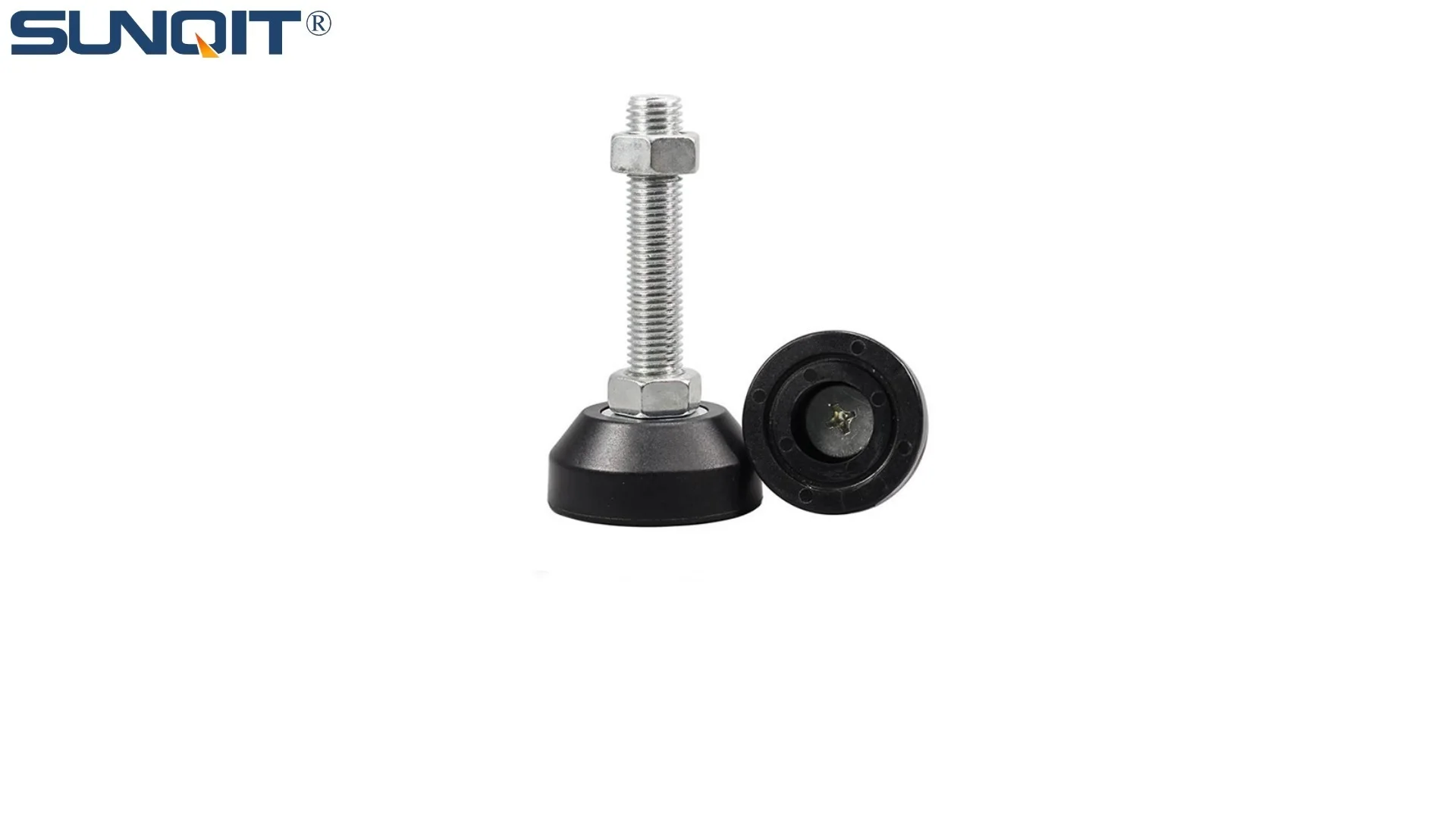
Adjustable leveling feet are designed to keep machines level when placed on uneven or sloped ground. Otherwise known as adjustable equipment feet, they are available to order in a wide variety of size and load capacity combinations.
In the world of manufacturing, where precision, safety, and efficiency are non-negotiable, even the smallest components play a critical role. One such unsung hero? The M10*56 rubber leveling foot. If you've ever stood at a wobbly workbench, watched a conveyor belt misalign due to uneven flooring, or struggled to keep delicate assembly tasks steady, you know how vital stable surfaces are. These unassuming devices—often overlooked amid flashier machinery—are the backbone of consistent, reliable workflows. Below, we've compiled the most pressing questions manufacturing professionals ask about M10*56 rubber leveling feet, drawing on real-world experience and industry insights to demystify their use, benefits, and best practices.
1. What Exactly Are M10*56 Rubber Leveling Feet, and Why Should I Care?
Let's start with the basics. M10*56 rubber leveling feet are adjustable support components designed to stabilize equipment, workbenches, racks, and machinery on uneven surfaces. The "M10" refers to the metric thread size (10mm diameter), while "56" indicates the length of the threaded rod (56mm). The base is typically made of rubber, with a metal (often steel or zinc-plated) threaded stem that screws into a mounting hole on your equipment. Why does this matter? In manufacturing, even a 1mm wobble can throw off precision assembly, damage sensitive parts, or create safety hazards. Imagine assembling circuit boards on a workbench that shifts slightly with every tool movement—suddenly, solder joints are misaligned, and components are at risk of damage. Or consider a flow rack in a warehouse where boxes slide unevenly due to a tilted base, leading to jams and delays. Leveling feet eliminate these issues by letting you fine-tune each corner of a structure, ensuring it sits flat and stable, regardless of floor imperfections. They're not just "feet"—they're precision tools for maintaining operational consistency.
2. Rubber, Metal, or Plastic? Why Rubber for the Base Material?
You might wonder: with so many materials available, why rubber? The answer lies in rubber's unique properties, which make it ideal for manufacturing environments. First, rubber excels at vibration dampening. In factories with nearby machinery, constant vibrations can travel through floors and disrupt sensitive tasks (think: measuring tiny components or calibrating tools). Rubber absorbs these vibrations, acting as a buffer between the equipment and the floor. Second, rubber is non-slip. Metal feet might slide on smooth concrete or epoxy floors, especially if the equipment is heavy or subjected to lateral forces (like pushing a loaded turnover trolley). Rubber's high friction coefficient keeps your workbench or rack firmly planted, reducing the risk of accidental movement. Third, rubber protects floors. Hard metal feet can scratch or dent concrete, tile, or even polished warehouse floors—costly to repair. Rubber's soft, flexible base distributes weight evenly and prevents surface damage. This is especially critical in cleanrooms or pharmaceutical facilities where floor integrity is part of compliance standards. Finally, rubber is resistant to oils, greases, and mild chemicals common in manufacturing. Unlike plastic, which can degrade when exposed to solvents, or bare metal, which might corrode, rubber holds up in harsh environments, ensuring longevity. For most industrial applications, rubber strikes the perfect balance of durability, grip, and protection.

3. The "M10*56" Label: What Do the Numbers Mean, and How Do I Choose the Right Size?
The M10*56 designation isn't just random—it's a key to ensuring compatibility. Let's break it down: "M" stands for metric, "10" is the thread diameter (10mm), and "56" is the length of the threaded stem (56mm). This tells you two critical things: the size of the hole you'll need to drill or tap into your equipment, and how much adjustment range you have. The thread diameter (M10) must match the mounting hole in your workbench, aluminum profile, or machinery. If your equipment has pre-drilled holes for M8 threads, an M10 foot won't fit—you'll need an adapter or a different size. Always check the manufacturer specs for your workbench or rack; many industrial-grade setups (like lean pipe workbenches or aluminum extrusion profiles) use standard metric threads, with M10 being a common choice for medium-weight applications. The stem length (56mm) determines how much you can adjust the height. A longer stem means more flexibility to compensate for uneven floors—useful in older facilities with cracked or sloped concrete. For example, if your floor has a 20mm height difference across a workbench, a 56mm stem gives you plenty of room to extend the shorter legs to level the surface. Shorter stems (e.g., M10*30) work well on relatively flat floors but offer less wiggle room for adjustments. Pro tip: When in doubt, measure twice. Use a caliper to check existing mounting hole diameters, and assess your floor's unevenness with a level tool. If your facility has significant floor variations, opt for longer stems (like 56mm) to future-proof your setup.

4. Are These Leveling Feet Compatible with My Existing Equipment? (Workbenches, Aluminum Profiles, and More)
Compatibility is a top concern for manufacturers—no one wants to buy parts that don't fit their current setup. The good news? M10*56 rubber leveling feet are surprisingly versatile, thanks to their standard threading and universal design. Let's break down common compatibility scenarios: Workbenches: Most industrial workbenches, whether made of wood, steel, or aluminum, come with pre-drilled holes for leveling feet. If you're using a lean pipe workbench (a staple in lean manufacturing setups), the metal joints and mounting plates often include M10-compatible holes. Even custom-built workbenches using aluminum extrusion profiles (like 4040 or 3030 series) can be outfitted with these feet—simply tap an M10 thread into the profile's T-slot or use a threaded insert for a secure fit. Flow Racks and Material Racks: Flow racks, which rely on gravity to move products smoothly, are notoriously sensitive to tilting. M10*56 feet are a perfect match here: their adjustable stems let you angle the rack slightly (for optimal product flow) while keeping the base stable. Material racks, whether 3-row-3-floor designs or custom configurations, also benefit—no more worrying about boxes sliding off due to uneven shelving. Conveyors and Automated Systems: Conveyor belts, roller tracks, and assembly line stations demand precision alignment. Even a minor tilt can cause products to jam or misfeed. M10*56 leveling feet work here too, especially on smaller conveyors or auxiliary equipment like inspection stations. Just ensure the conveyor's frame has thick enough material to support the threaded stem—you don't want the mounting hole stripping under the weight of the belt and products. Specialty Equipment: From ESD workstations (used in electronics manufacturing) to heavy-duty tool cabinets, these feet adapt. For ESD-sensitive environments, look for rubber feet labeled "ESD-safe" (carbon-infused rubber that dissipates static). For tool cabinets, pair them with caster wheels—use casters for mobility when repositioning, then lock the leveling feet for stability during use. The only exception? Equipment with non-standard thread sizes (e.g., imperial threads like 3/8") or extremely thin mounting surfaces (which can't support the stem's length). In those cases, adapters or custom mounting plates can bridge the gap.

5. How Do I Install M10*56 Rubber Leveling Feet Properly? A Step-by-Step Guide
Installing leveling feet might seem straightforward, but improper installation can lead to instability, stripped threads, or even equipment damage. Follow these steps for a secure, effective setup: Step 1: Prepare the Equipment Start by emptying the equipment—remove tools, materials, or products from the workbench or rack to reduce weight. If possible, lift the equipment slightly using a jack or blocks to access the mounting points (wear gloves for safety). Step 2: Clean the Mounting Holes Over time, dust, debris, or rust can accumulate in threaded holes, making it hard to screw in the leveling feet. Use a wire brush or compressed air to clean each hole thoroughly. For aluminum profiles, check for burrs around the T-slot and file them down if needed. Step 3: Hand-Tighten First Screw the leveling foot into the mounting hole by hand. This prevents cross-threading (a common mistake that ruins threads). If you feel resistance, stop—back out and realign the stem. Never force it with tools at this stage. Step 4: Adjust Height Evenly Once all feet are hand-tightened, place a spirit level on the equipment's surface. Start with the lowest corner (where the bubble leans) and slowly turn the leveling foot clockwise to extend the stem, raising that corner. Move to the opposite corner and repeat until the bubble is centered. For larger setups (like a 6-foot workbench), check both lengthwise and crosswise to ensure full stability. Step 5: Secure with a Wrench (If Needed) For heavy equipment or high-vibration environments, use a wrench to snug the leveling foot (avoid over-tightening—this can strip threads or crack the equipment's base). A good rule: hand-tighten until resistance, then add a 1/4 turn with a wrench. Step Final: Test Stability Give the equipment a gentle shake or apply light pressure to each corner. It should feel solid, with no rocking. If it wobbles, double-check the level and adjust as needed.
6. What Load Capacity Do M10*56 Rubber Leveling Feet Offer? Can They Handle Heavy Machinery?
Load capacity is non-negotiable—overloading a leveling foot can lead to stem bending, rubber tearing, or catastrophic failure. So, how much weight can an M10*56 rubber leveling foot handle? It depends on the materials and design, but most standard models support between 200–500 kg per foot. Premium versions (with reinforced steel stems and thick rubber bases) can handle up to 800 kg or more. To calculate if they're right for your setup, start by determining the total weight of your equipment, then divide by the number of leveling feet. For example, a workbench weighing 300 kg with 4 feet would require each foot to support 75 kg—well within the 200 kg minimum. But if you're adding tools, materials, and a worker (say, another 200 kg total), the per-foot load jumps to 125 kg—still safe. Always add a 50% safety margin: if your calculation shows 125 kg per foot, choose feet rated for at least 187.5 kg to account for sudden weight shifts (e.g., dropping a heavy tool). What about heavy machinery? A small conveyor or packaging machine might weigh 1,000 kg—with 4 feet, that's 250 kg per foot. Look for heavy-duty M10*56 feet with steel stems (not zinc-plated) and thick, industrial-grade rubber ( Shore A hardness of 60–70 for durability). Avoid using these feet for equipment over 2,000 kg total (500 kg per foot) unless specified by the manufacturer—for those, consider larger threads (M12 or M16) or specialized heavy-load feet. Pro tip: Check the product specs for "static load capacity" (weight under stationary conditions) and "dynamic load capacity" (weight during movement, though leveling feet are rarely used for mobile setups). For most manufacturing uses, static load is the key metric.
7. How Do M10*56 Rubber Leveling Feet Compare to Caster Wheels? When Should I Choose One Over the Other?
Manufacturers often debate: leveling feet or caster wheels? The answer depends on your priorities—stability vs. mobility. Let's break down the tradeoffs with a side-by-side comparison:
| Feature | M10*56 Rubber Leveling Feet | Caster Wheels |
|---|---|---|
| Stability | Excellent—firmly planted, no movement during use. | Limited—casters can roll or swivel, even with brakes engaged. |
| Mobility | None—permanent positioning once installed. | High—easily move equipment for reconfiguration or cleaning. |
| Floor Protection | Superior—rubber base prevents scratches and dents. | Good with soft rubber wheels, but hard plastic/metal wheels can damage floors. |
| Vibration Dampening | Excellent—rubber absorbs shocks and vibrations. | Poor—wheels transmit vibrations from the floor to the equipment. |
| Cost | Lower—simple design, fewer parts. | Higher—includes bearings, swivel mechanisms, and brakes. |
So, when to choose which? Use leveling feet when: - Precision is critical (e.g., assembly work, quality inspection stations). - Vibration control is needed (e.g., near CNC machines or pumps). - Equipment stays in one place long-term (e.g., dedicated workbenches). Use caster wheels when: - You need to reconfigure workflows frequently (e.g., lean manufacturing cells). - Cleaning or maintenance requires moving equipment (e.g., under-machine access). - Mobility is prioritized over absolute stability (e.g., tool carts, temporary storage racks). Pro hack: For the best of both worlds, use a hybrid setup. Install casters with locking brakes and leveling feet on the same equipment. When you need to move it, retract the leveling feet and unlock the casters. When stationary, lower the leveling feet to lift the casters off the floor, ensuring stability. Many modern workbenches and racks come with this dual system—perfect for dynamic manufacturing environments.
8. How Do I Maintain M10*56 Rubber Leveling Feet to Ensure Longevity?
Like any equipment, leveling feet require basic maintenance to perform their best. Fortunately, they're low-effort—just a few simple steps every 3–6 months (or more often in harsh environments) will extend their lifespan: Clean the Rubber Base Rubber can trap dust, grease, and debris, which hardens over time and reduces grip. Wipe the base with a damp cloth and mild detergent (avoid harsh solvents like acetone, which can degrade rubber). For caked-on grime, use a soft-bristle brush to scrub gently. This keeps the rubber supple and ensures maximum friction with the floor. Inspect Threads for Corrosion The metal stem is prone to rust, especially in humid or chemical-exposed areas. Check for red or white corrosion and treat it immediately: sand off light rust with fine-grit sandpaper, then apply a thin coat of anti-corrosion spray (like WD-40 Specialist Long-Term Corrosion Inhibitor). For severe rust (pitting or flaking), replace the foot—corroded threads can seize or strip during adjustment. Check Rubber Wear Over time, the rubber base may crack, compress, or lose its non-slip properties. Inspect for signs of wear: cracks, flattened spots, or a shiny, smooth surface (indicates loss of friction). If more than 20% of the base is worn, replace the foot—worn rubber reduces stability and vibration dampening. Tighten Loose Stems Vibration can cause leveling feet to back out slightly over time. Periodically check each foot with a wrench to ensure it's snug (but not over-tightened). A loose stem can lead to wobbling, even if the foot itself is undamaged. Lubricate Threads (Sparingly) If adjusting the foot becomes difficult (stiff turning), apply a small amount of thread lubricant (like graphite powder or silicone grease) to the stem. Avoid oil-based lubricants, which can attract dust and gunk up the threads long-term. By adding these steps to your regular equipment maintenance checklist, you'll keep your leveling feet working reliably for 5–10 years—far longer than the "set it and forget it" approach.
9. Troubleshooting Common Issues: Wobbling, Stripped Threads, and More
Even with proper installation and maintenance, problems can arise. Here's how to diagnose and fix the most common issues with M10*56 rubber leveling feet: Issue: Wobbling, Even After Adjustment Possible causes: - The floor is more uneven than the stem length can compensate for (e.g., a 30mm slope with a 56mm stem—you might need to extend one foot fully, leaving others with no adjustment room). - One or more leveling feet are damaged (e.g., a cracked rubber base or bent stem). - The equipment itself is warped (e.g., a steel workbench with a twisted frame). Fixes: - Use shims (thin metal or plastic sheets) under the shortest foot to reduce the adjustment range needed. - replace damaged feet—inspect each one for cracks, bends, or wear. - Check the equipment frame with a straightedge; if warped, reinforce or replace the frame. Issue: Stripped Threads on the Stem or Mounting Hole Possible causes: - Cross-threading during installation (forcing the stem into misaligned threads). - Over-tightening with a wrench, which strips the metal threads. - Corrosion weakening the threads over time. Fixes: - For minor stripping on the stem: Use a thread chaser (a tool that cleans and reforms threads) to repair the damage. - For stripped mounting holes: Install a threaded insert (e.g., a helicoil) to restore M10 threads. - For severe damage: replace the leveling foot and/or the equipment's mounting plate. Issue: Rubber Base Cracking or Hardening Possible causes: - Exposure to extreme temperatures (rubber hardens in cold, softens in heat). - Chemical exposure (oils, solvents, or cleaning agents degrading the rubber). - Age-related wear (rubber loses elasticity over time). Fixes: - replace the foot with a chemical-resistant or temperature-rated model (e.g., EPDM rubber for oils, silicone rubber for high heat). - Avoid using harsh cleaners on the rubber base—stick to mild soap and water. Issue: Foot Sinking Into Soft Floors (e.g., Vinyl or Carpet) Possible causes: - The rubber base has a small surface area, concentrating weight on soft flooring. Fixes: - Add a larger base plate (metal or plastic) under the leveling foot to distribute weight. - Switch to leveling feet with a wider rubber base (e.g., 60mm diameter instead of 40mm). By addressing these issues promptly, you'll avoid costly downtime and keep your manufacturing line running smoothly.
10. Are There ESD-Safe Options? What About Cleanroom Compatibility?
For manufacturers in electronics, aerospace, or pharmaceuticals, standard leveling feet might not cut it—static control and contamination prevention are critical. The good news is that M10*56 rubber leveling feet are available in specialized variants to meet these needs: ESD-Safe Leveling Feet: In electronics manufacturing, electrostatic discharge (ESD) can fry sensitive components like microchips or circuit boards. Standard rubber is an insulator, which can trap static charge. ESD-safe leveling feet use conductive rubber (infused with carbon or metal particles) that dissipates static electricity to the ground, preventing sudden discharges. Look for feet rated to <10^9 ohms (the industry standard for ESD protection). These are a must for ESD workstations, PCB assembly lines, or anywhere static-sensitive parts are handled. Cleanroom Compatibility: Cleanrooms (common in pharmaceuticals, medical devices, and semiconductors) require equipment that doesn't shed particles or harbor bacteria. Standard rubber leveling feet may have porous surfaces or adhesives that trap dust. Cleanroom-rated feet use smooth, non-porous rubber (often silicone or PTFE-coated) that's easy to sanitize and resists particle shedding. They may also feature stainless steel stems (instead of zinc-plated) to avoid corrosion in humid, chemically cleaned environments. Always check for ISO 14644-1 certification (class 5–8) to ensure compliance with cleanroom standards. Food-Grade Options: For food and beverage manufacturing, leveling feet must be non-toxic and resistant to acids, alkalis, and frequent washdowns. Look for feet made with FDA-approved rubber (like nitrile or silicone) and stainless steel stems that won't rust when exposed to water or cleaning agents. These are designed to withstand high-pressure hosing and chemical sanitizers without degrading. The key takeaway: Don't assume "one size fits all." If your industry has specific regulations (ESD, cleanroom, food safety), invest in specialized M10*56 leveling feet—they'll prevent costly compliance violations and product defects.
11. How Do I Source Quality M10*56 Rubber Leveling Feet? What Should I Look for in a Supplier?
Not all leveling feet are created equal. A cheap, poorly made foot can fail prematurely, costing you time and money. When sourcing M10*56 rubber leveling feet, prioritize these factors to ensure quality: Material Quality: - Stem: Look for steel stems (preferably carbon steel or stainless steel) with a corrosion-resistant finish (zinc plating, nickel plating, or powder coating). Avoid aluminum stems—they're weaker and prone to bending under heavy loads. - Rubber: Opt for industrial-grade rubber (natural rubber, nitrile, or EPDM) with a Shore A hardness of 50–70 (firm enough for stability, flexible enough for vibration dampening). Ask for material certificates to verify it meets industry standards (e.g., RoHS for electronics, FDA for food contact). Manufacturing Tolerances: - Threads should be precise—no burrs or uneven spacing, which can cause cross-threading. - The stem should be straight (no bending) to ensure the foot sits flush. - The rubber base should be securely bonded to the stem (no gaps or loose edges, which can trap debris). Testing and Certifications: - Reputable suppliers test their feet for load capacity, thread strength, and rubber durability. Ask for test reports (e.g., compression testing, corrosion resistance) to verify claims. - Certifications like ISO 9001 (quality management) or CE (safety compliance) are good indicators of consistent quality. Supplier Reliability: - Choose a supplier with a track record in industrial components—ideally one that specializes in lean manufacturing parts (like lean pipe systems, aluminum profiles, or workbench accessories). They'll understand your needs better than a general hardware store. - Check lead times and inventory—avoid suppliers with long delays, as downtime waiting for parts is costly. - Look for responsive customer service—you want a supplier who can answer technical questions and help you troubleshoot if issues arise. Price vs. Value: - Don't automatically choose the cheapest option. A $5 foot might fail in a year, while a $10 foot lasts 5 years—better long-term value. Compare total cost of ownership (purchase price + replacement frequency + downtime) rather than upfront cost. By vetting suppliers on these criteria, you'll ensure you're getting leveling feet that perform reliably, even in the toughest manufacturing environments.
12. Final Thoughts: Why M10*56 Rubber Leveling Feet Deserve a Spot in Your Manufacturing Toolkit
At first glance, M10*56 rubber leveling feet might seem like components—after all, they're just "feet." But in the high-stakes world of manufacturing, where every detail impacts quality, safety, and efficiency, they're indispensable. They turn wobbly workbenches into precision stations, transform uneven floors into stable foundations, and protect both equipment and products from the chaos of daily operations. Whether you're setting up a new lean manufacturing cell, upgrading an existing assembly line, or troubleshooting stability issues, these leveling feet offer a simple, cost-effective solution. By understanding their design, compatibility, and maintenance needs, you can unlock their full potential—reducing errors, improving safety, and keeping your workflow running like clockwork. So, the next time you walk through your facility, take a moment to look down. Chances are, those small rubber feet are hard at work, quietly supporting the success of your operation. And when it's time to replace or upgrade them, you'll know exactly what to look for: M10*56 rubber leveling feet—built tough, designed to last, and ready to keep your manufacturing line steady.