- Company Articles
- FAQ
- FAQ
- Multi-Angle Fixed Aluminum Joint FAQs: Answering Your Top Questions

Multi-Angle Fixed Aluminum Joint FAQs: Answering Your Top Questions
Related Product
Multi-angle Fixed Aluminum Joint
Aluminum joint pipe connection for two pipe connection and work in mutiple angle.
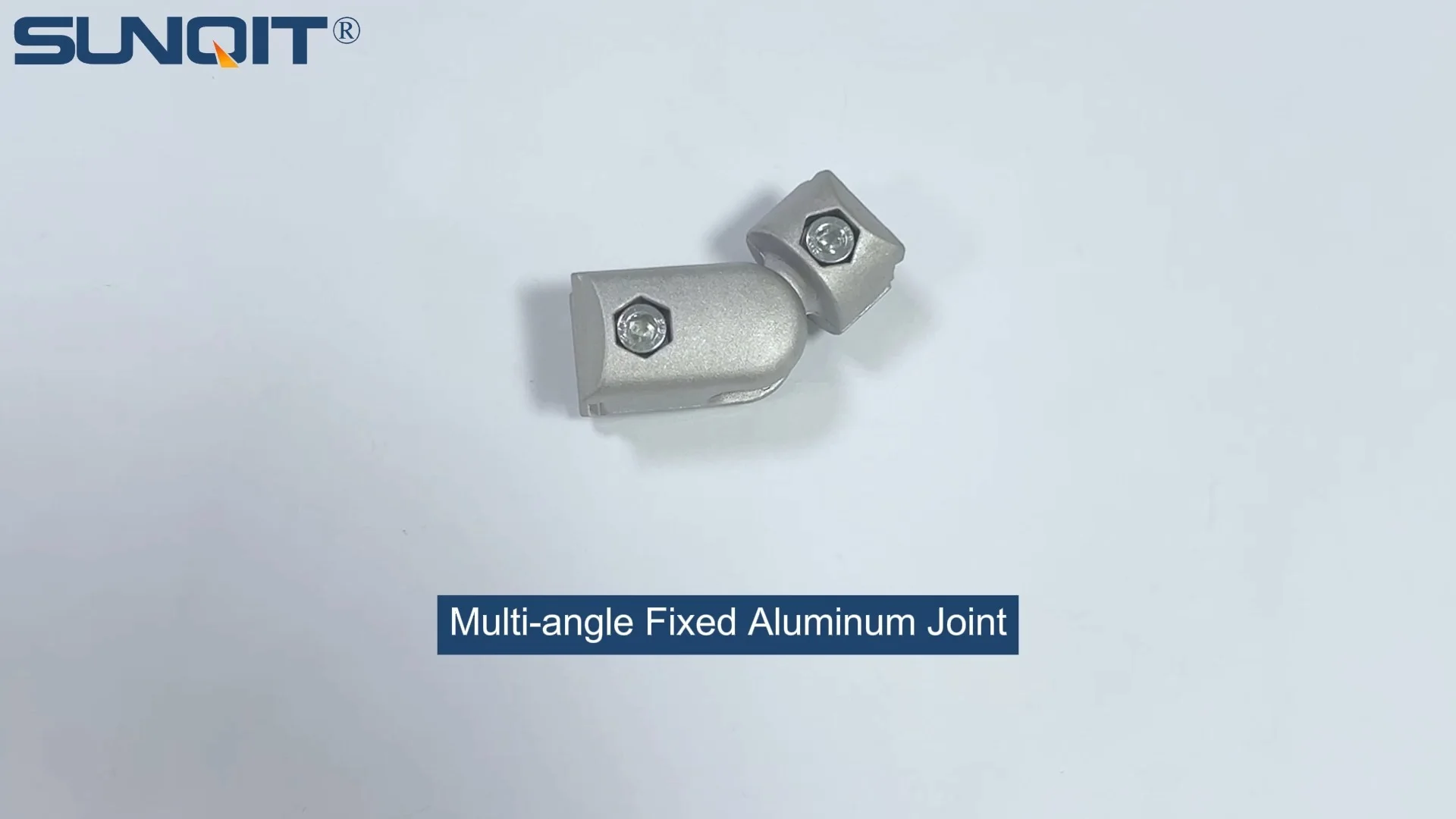
If you've ever walked through a manufacturing plant, a warehouse, or even a small workshop, you've probably seen them—sturdy workbenches, sleek flow racks, and flexible conveyor systems that seem to fit together like puzzle pieces. Behind that seamless integration often lies a humble but crucial component: the multi-angle fixed aluminum joint. These unassuming connectors are the unsung heroes of modular industrial design, allowing teams to build, adapt, and reconfigure structures with ease. In this guide, we're diving deep into everything you need to know about multi-angle fixed aluminum joints—from their design and applications to installation tips and troubleshooting. Whether you're a seasoned operations manager or just starting to explore lean system setups, let's demystify these essential tools.
What Are Multi-Angle Fixed Aluminum Joints, Anyway?
Let's start with the basics. A multi-angle fixed aluminum joint is a specialized connector designed to join aluminum pipes, profiles, or tubes at various angles—think 30°, 45°, 90°, or even custom angles—while keeping that connection rigid once locked in place. Unlike fully rotating joints (which allow movement) or single-angle fixed joints (which only connect at one pre-set angle), these joints offer the best of both worlds: flexibility in design and stability in function.
Picture this: You need a workbench that has a side shelf angled at 45° to hold tools, and a top shelf at 90° for equipment. Instead of welding pieces together (which is permanent and time-consuming) or using multiple single-angle joints (which clutter the structure), a multi-angle fixed joint lets you set those angles precisely and lock them down. The result? A clean, sturdy setup that took hours instead of days to build.
Most multi-angle fixed aluminum joints are made from high-grade aluminum alloys, like 6061 or 6063, known for their strength-to-weight ratio and resistance to corrosion. They typically feature internal clamping mechanisms, threaded inserts, or bolt-on designs that grip the aluminum profile or pipe securely. Some even have marked angle indicators, making it easy to replicate setups across multiple structures—critical for consistency in large-scale operations.
Why Do They Matter in Modern Manufacturing?
In a world where manufacturing lines need to pivot quickly—whether to accommodate a new product, scale production, or adapt to space constraints—rigid, permanent structures just don't cut it. That's where multi-angle fixed aluminum joints shine. Here's why they've become a staple in lean system and modular design:
- Flexibility Without Compromise: Need to reconfigure a workbench next month? Loosen the joints, adjust the angles, and lock them back in. No cutting, welding, or replacing entire sections.
- Cost Savings Over Time: Welding requires skilled labor and expensive equipment; permanent joints mean starting from scratch if you need to change a design. Multi-angle joints reduce labor costs, minimize material waste, and extend the lifespan of your structures.
- Speed to Setup: A team can assemble a basic flow rack using multi-angle joints in an afternoon, compared to days with traditional construction. This agility is a game-changer for meeting tight production deadlines.
- Consistency and Safety: Precisely engineered joints ensure that every workbench or rack meets the same load-bearing standards, reducing the risk of structural failures. Many are also designed to work with standard aluminum profile sizes, so you don't have to guess if components will fit.
Take, for example, a small electronics manufacturer that suddenly lands a big order. Their existing assembly line is maxed out, so they need to add two more workbenches—fast. With multi-angle fixed aluminum joints, they can use leftover aluminum profiles from a previous project, adjust the height and angle of the shelves to fit new equipment, and have the workbenches operational by the end of the day. No downtime, no costly custom fabrication—just quick, practical problem-solving.

Where Are These Joints Actually Used? Common Applications
Multi-angle fixed aluminum joints aren't just for industrial giants—they're versatile enough to pop up in everything from small workshops to large-scale distribution centers. Here are some of the most common places you'll find them hard at work:
1. Workbenches and Assembly Stations
Walk into any manufacturing or repair shop, and you'll likely see workbenches with adjustable shelves, tool holders, or overhead racks—all connected by multi-angle joints. For example, a mechanic's workbench might have a 30° angled shelf to keep tools within arm's reach, while a lab bench could use 90° joints to support heavy equipment. The joints ensure the bench stays stable even when tools are dropped or parts are clamped down.
2. Lean System Setups
Lean manufacturing is all about eliminating waste and streamlining workflows, and multi-angle fixed aluminum joints are a cornerstone of this philosophy. They're used to build flow racks that guide materials from one station to the next, kanban boards that track inventory, and trolleys that transport goods efficiently. Since lean systems often require frequent adjustments (e.g., changing the height of a flow rack to match a new conveyor), the joints' ability to reconfigure quickly is invaluable.
3. Material Handling and Storage
Warehouses and distribution centers rely on sturdy, space-efficient storage. Multi-angle joints help build custom racks—think multi-tiered shelving with angled dividers to prevent items from sliding—or mobile carts that navigate tight aisles. For instance, a food distribution center might use these joints to build a rack with 15° angled shelves for easy access to perishable goods, ensuring nothing gets stuck in the back.
4. Conveyor and Production Lines
Conveyor systems rarely move in straight lines—they twist, turn, and rise to connect different parts of a factory. Multi-angle fixed aluminum joints help support the frames of these conveyors, ensuring they stay aligned even when carrying heavy loads. They're also used in roller tracks (another key component in lean systems) to guide products smoothly around corners.

Breaking Down the Design: What Makes These Joints Tick?
At first glance, a multi-angle fixed aluminum joint might look like a simple hunk of metal, but there's clever engineering under the surface. Let's break down its key components and how they work together:
The Body: Aluminum Alloys for Strength and Lightness
Most joints are made from aluminum alloys like 6061-T6 or 6063-T5. Why aluminum? It's lightweight (so structures are easier to move and reconfigure), resistant to rust and corrosion (important in damp or dusty environments), and strong enough to handle typical industrial loads. The "T6" or "T5" refers to the heat treatment process, which strengthens the metal without making it brittle.
Angle Adjustment Mechanism: How They Lock In Place
The "multi-angle" magic comes from the joint's internal design. Many models have a series of notches or grooves that correspond to common angles (30°, 45°, 90°, etc.). To set an angle, you align the joint's components with the desired notch, then tighten a bolt or lever to lock it. Some advanced joints even let you set custom angles by loosening a set screw, rotating to the exact degree, and retightening—great for one-of-a-kind structures.
Connection Points: Gripping Pipes and Profiles Securely
Joints connect to aluminum pipes or profiles via clamping mechanisms. For round pipes, this might be a circular collar with a set screw that tightens against the pipe. For square or rectangular aluminum profiles (like the popular 4040 or 3030 profiles), the joint might have flat clamping surfaces that grip the profile's edges. The key here is even pressure—too loose, and the joint wobbles; too tight, and you risk damaging the pipe or stripping threads.
Load Capacity: How Much Weight Can They Handle?
Load capacity varies by size, material thickness, and design, but most standard multi-angle fixed aluminum joints can handle 50–200 kg per connection point. Heavy-duty models (used in industrial shelving or large conveyor frames) might support 300 kg or more. Always check the manufacturer's specs—overloading a joint is a safety hazard and can lead to structural failure.

Compatibility: What Works with Multi-Angle Fixed Aluminum Joints?
One of the biggest advantages of these joints is their compatibility with standard aluminum components. But with so many profiles, pipes, and accessories on the market, it's important to know what pairs well. Below is a quick reference table to help you match joints with common components:
| Component Type | Common Sizes/Types | Compatibility Notes |
|---|---|---|
| Aluminum Profiles | 2020, 3030, 4040, 4080 EU standard profiles | Most joints work with "T-slot" profiles (profiles with grooves for bolts). Check joint clamping width to match profile size. |
| Aluminum Pipes | 28mm, 30mm, 40mm diameter (round) | Joints with circular collars are designed for round pipes. Ensure pipe diameter matches collar size (e.g., 28mm joint for 28mm pipe). |
| Aluminum Pipe Accessories | End caps, pipe clamps, bracket mounts | Most accessories attach to pipes/profiles first, then connect to joints. Ensure accessory bolt size matches joint threads (common: M6, M8). |
| Workbench Tops | Wood, plywood, aluminum honeycomb panels | Joints can support tops via brackets or direct mounting. Use reinforced joints for heavy tops (e.g., metal or thick wood). |
Pro tip: When in doubt, stick to components from the same supplier. Many manufacturers design joints, profiles, and accessories to work together seamlessly, reducing the risk of mismatched sizes or weak connections.
Installation Tips: How to Get It Right the First Time
Installing multi-angle fixed aluminum joints is straightforward, but a few missteps can lead to wobbly structures or stripped parts. Follow these tips to ensure a secure, long-lasting setup:
1. Gather Your Tools First
You'll need: a hex key set (most joints use metric sizes like 4mm, 5mm), a torque wrench (to avoid over-tightening), a level (to ensure angles are straight), and a rubber mallet (for gently tapping components into alignment). Avoid using power tools—they're easy to overdo and can damage the aluminum.
2. Prep the Surfaces
Aluminum pipes and profiles can collect dust, oil, or debris, which can prevent joints from gripping properly. Wipe them down with a clean cloth before assembly. If the pipes have burrs (from cutting), file them smooth—sharp edges can tear gaskets or weaken the joint over time.
3. Align Before Tightening
This is the most common mistake! Always set the angle and align the pipes/profiles before fully tightening the joint. Once the joint is locked, adjusting it requires loosening everything, which wastes time. Use a level to check that vertical pipes are straight and horizontal pipes are level—even a small misalignment can throw off the entire structure.
4. Torque to Spec (But Don't Overdo It)
Most manufacturers provide torque recommendations (e.g., 8–10 Nm for M8 bolts). Use a torque wrench to hit this range—too loose, and the joint will shift; too tight, and you'll strip threads or warp the aluminum. If you don't have a torque wrench, tighten until the joint feels secure, then give it a tiny extra turn—stop if you feel resistance.
5. Test the Structure Before Use
Once assembled, give the structure a gentle shake. Does it wobble? Check for loose joints or misaligned angles. For workbenches or racks, place a test load (e.g., a heavy box) on it and leave it for a few hours—this helps settle the joints. Retighten any bolts that loosen during this "break-in" period.
Troubleshooting: Common Issues and How to Fix Them
Even with careful installation, issues can pop up. Here's how to diagnose and fix the most common problems:
Problem: The Joint Feels Loose After Assembly
Why it happens: Either the bolts weren't tightened enough, the pipe/profile is slightly undersized, or the joint's clamping surfaces are worn. Fix: First, retighten the bolts to the recommended torque. If it still wobbles, wrap a thin strip of aluminum foil around the pipe/profile (this adds thickness) before reinserting into the joint. For worn joints, replace the joint—aluminum can wear over time, especially with frequent reconfigurations.
Problem: The Angle Won't Lock In Place
Why it happens: Dirt or debris is blocking the angle notches, or the locking mechanism is damaged. Fix: Disassemble the joint and clean the notches with a small brush (an old toothbrush works!). If the locking bolt is bent or stripped, replace it—most suppliers sell replacement bolts. Avoid forcing the angle; this can bend the joint's internal components.
Problem: The Pipe/Profile Slips Out of the Joint
Why it happens: The joint's clamping surface isn't gripping properly (common with smooth pipes) or the load is too heavy. Fix: For smooth pipes, add a rubber O-ring inside the joint's collar—this increases friction. For heavy loads, use two joints per connection point (e.g., one at the top and one at the bottom of a vertical pipe) to distribute weight.
Problem: Rust or Corrosion on the Joint
Why it happens: Exposure to moisture, chemicals, or salt (e.g., in coastal areas or food processing plants). Fix: Clean the joint with a mild detergent and water, then dry thoroughly. For ongoing protection, apply a thin coat of clear aluminum wax (available at hardware stores). If corrosion is severe (pitting or holes), replace the joint—corroded metal weakens the structure.
FAQs: Your Most Pressing Questions, Answered
Q: Can I use multi-angle fixed aluminum joints outdoors?
A: Yes, but with caveats. Aluminum is naturally resistant to rust, but prolonged exposure to rain, snow, or saltwater can cause surface oxidation (a white, powdery film). To protect outdoor joints, look for anodized models (the surface is treated to resist corrosion) or apply a UV-resistant clear coat. Avoid leaving joints in standing water, as this can speed up corrosion.
Q: How many times can I reconfigure a joint before it wears out?
A: It depends on usage, but most high-quality joints can handle 50–100 reconfigurations before showing signs of wear (e.g., stripped threads, loose clamping). To extend lifespan, avoid over-tightening, clean joints regularly, and replace bolts/set screws if they become worn. If a joint starts to wobble even after tightening, it's time to replace it.
Q: Are these joints compatible with steel pipes or profiles?
A: In most cases, no. Steel is heavier and has different dimensional tolerances than aluminum, so aluminum joints may not grip steel securely. Additionally, mixing aluminum and steel can cause galvanic corrosion (a chemical reaction that eats away at metal) when exposed to moisture. Stick to aluminum components unless the joint is specifically labeled for steel.
Q: Can I paint multi-angle fixed aluminum joints to match my workspace?
A: Absolutely! Clean the joint first with isopropyl alcohol to remove oils, then lightly sand the surface with 220-grit sandpaper (this helps paint adhere). Use a spray paint designed for metal (look for "aluminum primer" and "enamel" or "acrylic" topcoat). Avoid painting the clamping surfaces or threads—paint can interfere with grip and make tightening difficult.
Q: What's the difference between a "multi-angle fixed" joint and a "multi-angle swivel" joint?
A: A fixed joint locks at a specific angle and stays rigid. A swivel joint allows continuous rotation (e.g., 360°) after setup. Use fixed joints for structures that need stability (workbenches, racks) and swivel joints for parts that need movement (e.g., a tool arm that rotates over a workbench). Some joints combine both: lock at a fixed angle for stability, or unlock to swivel temporarily.
Choosing the Right Supplier: What to Look For
Not all multi-angle fixed aluminum joints are created equal. A cheap, poorly made joint can derail your project, lead to safety issues, or cost more in replacements long-term. Here's what to look for when choosing a supplier:
1. Quality Certifications
Reputable suppliers will have certifications like ISO 9001 (quality management) or RoHS (restriction of hazardous substances). These certifications mean the manufacturer follows strict standards for materials, production, and safety. Ask to see test reports—good suppliers will happily share load capacity, corrosion resistance, and durability data.
2. Range of Sizes and Angles
Your project might need 28mm pipe joints for a small workbench and 40mm joints for a heavy-duty rack. A good supplier will offer a variety of sizes, angles, and designs (e.g., 3-way joints, 4-way joints) to cover different needs. Avoid suppliers with limited options—you'll end up cobbling together mismatched components.
3. Customer Support
Even pros have questions. Look for suppliers with responsive customer support—preferably phone, email, and live chat options. They should be able to help with technical specs (e.g., "What joint works with 3030 aluminum profile?") or troubleshooting. Some suppliers even offer free design consultations for large projects—take advantage of this!
4. Bulk Pricing and Lead Times
If you're buying for a large project, ask about bulk discounts. Many suppliers offer lower per-unit prices for orders over 50–100 joints. Also, check lead times—you don't want to wait 6 weeks for joints when your project starts next month. Most domestic suppliers can ship in 1–5 business days; international orders may take 2–4 weeks.
Wrapping Up: The Small Component That Makes a Big Difference
Multi-angle fixed aluminum joints may not be the flashiest part of your industrial setup, but they're undeniably essential. They turn rigid, permanent structures into flexible, adaptable systems that can grow and change with your business. Whether you're building a simple workbench in a garage or overhauling an entire production line, these joints empower you to design smarter, work faster, and save money.
Remember: the key to success is choosing quality joints, installing them carefully, and maintaining them regularly. With the right tools and knowledge, you'll be able to create structures that not only meet today's needs but can evolve with tomorrow's challenges. So the next time you walk through that workshop or factory, take a second look at those unassuming connectors—they're the quiet architects of efficiency.