- Company Articles
- FAQ
- FAQ
- 4040B EU Standard Aluminum Profile FAQs: MOQ, Lead Time & Certification

4040B EU Standard Aluminum Profile FAQs: MOQ, Lead Time & Certification
Related Product
4040B EU Standard Aluminum Profile
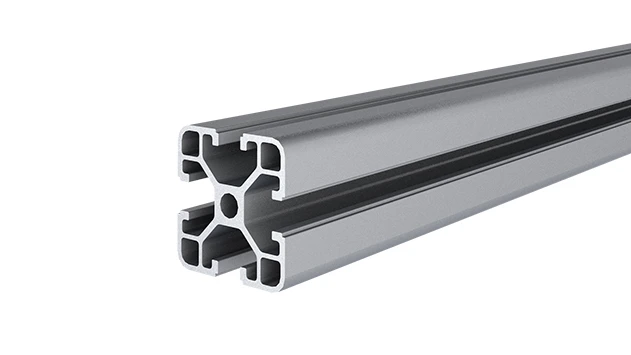
4040B is a 4.00x4.00 CM fractional 40 series square extrusion T-slot profile with four open T-slots, each side with 4.00cm face. The profile has align-a-grooves to assist in aligning connecting profiles.
If you've ever dabbled in building workbenches, assembly lines, or modular structures, you've probably heard of aluminum extrusion profiles. Among the most popular options is the 4040B EU Standard Aluminum Profile—a versatile, durable choice for everything from small workshop setups to large-scale industrial systems. But if you're new to sourcing these profiles, questions about minimum orders, lead times, and certifications can feel overwhelming. In this guide, we'll break down the essentials, so you can make informed decisions when selecting 4040B profiles for your project. Whether you're a small business owner, a DIY enthusiast, or a procurement manager at a manufacturing firm, read on to get clarity on the details that matter most.
1. What Exactly Is a 4040B EU Standard Aluminum Profile?
Let's start with the basics: a 4040B EU Standard Aluminum Profile is a type of aluminum extrusion—meaning it's shaped by forcing heated aluminum alloy through a die to create a specific cross-sectional design. The "4040" refers to its dimensions: 40mm in width and 40mm in height, making it a square profile. The "B" denotes a specific variation within the 4040 series, often differing from 4040A or 4040C in slot configuration, wall thickness, or groove design (more on that later).
What sets the 4040B apart is its adherence to EU standards, which we'll dive into shortly, and its versatility. Thanks to its T-slot design—longitudinal grooves running along its length—it's compatible with a wide range of aluminum profile accessories, from brackets and connectors to end caps and fasteners. This makes it easy to assemble, disassemble, and reconfigure structures without welding. Common uses include building workbenches, material racks, machine frames, conveyor systems, and even custom furniture. Think of it as the "building block" of modular design—strong enough for medium-duty applications (like supporting tools or parts) but lightweight enough to maneuver.
2. What Does "EU Standard" Mean for 4040B Profiles?
When a profile is labeled "EU Standard," it's not just a marketing term—it's a promise of compliance with strict European regulations governing safety, quality, and environmental impact. For 4040B profiles, this typically covers three key areas: material composition, manufacturing processes, and performance.
First, EU standards dictate the aluminum alloy used. Most 4040B profiles are made from EN AW-6063 (or equivalent), a heat-treatable alloy known for its excellent extrudability, corrosion resistance, and strength-to-weight ratio. This alloy ensures the profile can handle typical loads without bending or warping, even in industrial settings.
Second, manufacturing processes must meet EU guidelines for precision and consistency. This means tight tolerances on dimensions (so 40mm truly measures 40mm, not 39.5 or 40.5), smooth surface finishes (to avoid burrs or sharp edges), and uniform wall thickness (critical for structural integrity). For example, the T-slots—those all-important grooves for accessories—must be precisely sized to fit standard T-slot nuts and connectors, ensuring compatibility across brands.
Finally, EU standards often include environmental and safety requirements. This might mean the profile is free from hazardous substances (hello, RoHS compliance), or that its production process minimizes waste and energy use. For businesses selling into the EU market, this compliance isn't optional—it's legally required to avoid delays at customs or fines for non-compliance.

3. What's the Minimum Order Quantity (MOQ) for 4040B Aluminum Profiles?
The Minimum Order Quantity (MOQ) for 4040B profiles can feel like a moving target, as it varies widely by supplier. To understand why, let's peek behind the scenes: aluminum extrusion is a high-volume process. Extruding a single profile requires heating a billet (a large cylinder of aluminum), loading it into an extrusion press, and pushing it through a die—all of which takes time and energy. For suppliers, running small batches often isn't cost-effective, so they set MOQs to ensure profitability.
That said, MOQs aren't set in stone. Here's what you need to know:
Stock vs. Custom Orders:
Many suppliers keep standard-length 4040B profiles in stock (common lengths are 2.5m, 3m, or 6m). For these "off-the-shelf" items, MOQs are often lower—sometimes as little as 1-5 pieces. This is great if you need a handful of profiles for a small project, like building a single workbench.
Custom orders (e.g., profiles cut to specific lengths, anodized in non-standard colors, or with special holes drilled) usually have higher MOQs. For example, a supplier might require 50+ pieces for custom-cut profiles, as it involves retooling their cutting machines or adjusting their anodizing line.
Supplier Size Matters:
Large manufacturers, who produce profiles in bulk, may have MOQs of 100+ pieces for standard orders. Smaller distributors or regional suppliers, however, might be more flexible—especially if they source from larger factories and can split orders with other customers.
Bulk Discounts:
If you can meet higher MOQs (say, 500+ pieces), you'll likely unlock bulk pricing. For example, a single 3m 4040B profile might cost €15–€20 when buying 10 pieces, but drop to €8–€12 per piece when ordering 500. This is why many businesses choose to stock up on standard profiles to save long-term.
To avoid surprises, always ask suppliers upfront: "What's your MOQ for stock 4040B profiles, and how does it change for customizations?" If your project needs fall below their MOQ, some suppliers may still accommodate you—for a premium. It never hurts to negotiate!
4. How Long Is the Lead Time for 4040B Profile Orders?
Lead time—the time between placing an order and receiving your profiles—depends on several factors, but it's helpful to break it into two parts: production time and shipping time.
Production Time:
For stock profiles (standard length, no customizations), production time is often "same day" or 1–3 business days. Suppliers simply pull the profiles from their warehouse, package them, and send them out. If you need minor customizations, like cutting to length or adding end caps, this might add 1–2 days (e.g., 3–5 business days total).
For fully custom orders—think special anodizing, unique hole patterns, or non-standard alloys—production time can stretch to 2–4 weeks. Why? Anodizing, for example, involves multiple steps (cleaning, etching, coloring, sealing) that require dedicated processing lines. Similarly, creating custom dies for unique profiles (though rare for 4040B, which is a standard design) could add weeks to the timeline.
Shipping Time:
Once production is done, shipping depends on your location and chosen method. If you're ordering from a local supplier (e.g., within the EU), ground shipping might take 2–5 business days. If you're sourcing from an international supplier (common for bulk orders from regions like China), sea freight is the most cost-effective but slowest option (4–6 weeks from China to EU ports). Air freight is faster (3–5 days) but significantly more expensive—often reserved for urgent orders.
Pro Tips for Faster Lead Times:
- Plan ahead: Avoid last-minute orders, especially during peak seasons (e.g., end-of-year manufacturing rushes).
- Ask about "express production" options: Some suppliers offer expedited processing for a fee (e.g., 48-hour turnaround for small custom orders).
- Consolidate shipments: If you need accessories (like connectors or brackets) with your profiles, order them together to avoid separate shipping delays.
As a general rule, budget 1–2 weeks for standard stock orders (production + EU shipping) and 4–8 weeks for large custom orders with international shipping. Always confirm lead times in writing before placing an order!
5. What Certifications Should I Prioritize When Sourcing 4040B Profiles?
Certifications aren't just paperwork—they're proof that your 4040B profiles meet industry standards for safety, quality, and sustainability. Here are the key ones to look for:
CE Marking:
Non-negotiable for EU markets. The CE mark indicates the profile complies with all relevant EU directives, including the Construction Products Regulation (CPR). This ensures the profile is safe for use in structural applications (like supporting machinery) and meets environmental requirements. Without CE marking, your shipment could be held at customs or rejected entirely.
RoHS Compliance:
If your profiles will be used in electronics, medical devices, or consumer goods, RoHS compliance is critical. This certification restricts the use of hazardous substances (e.g., lead, mercury, cadmium) in the profile and its coatings. Most reputable suppliers will provide a RoHS certificate upon request, confirming their anodizing or powder-coating processes don't include banned chemicals.
ISO 9001:
While not specific to the profile itself, ISO 9001 certification for the supplier's quality management system is a good sign. It means the supplier has processes in place to consistently deliver quality products—from raw material testing to final inspection. Look for suppliers who can share their ISO 9001 certificate, as it reduces the risk of receiving defective or inconsistent profiles.
Material Certifications:
Ask for a material test report (MTR) or mill certificate. This document confirms the aluminum alloy used (e.g., EN AW-6063) and includes details like chemical composition, tensile strength, and hardness. For critical applications (e.g., aerospace or automotive), you may also need certifications like EN 755 (European standard for aluminum extrusions) or ASTM B221 (American standard, often accepted in EU markets).
Sustainability Certifications:
Increasingly, businesses are prioritizing eco-friendly sourcing. Look for suppliers with certifications like ISO 14001 (environmental management) or EPD (Environmental Product Declaration), which verifies the profile's carbon footprint and resource usage.
When evaluating a supplier, don't hesitate to ask: "Can you provide CE, RoHS, and material certificates for your 4040B profiles?" A reliable lean system supplier will have these documents readily available.
6. What Aluminum Profile Accessories Work with 4040B?
One of the 4040B's biggest strengths is its compatibility with a wide range of aluminum profile accessories, which turn basic extrusions into functional structures. Here's a breakdown of the most common ones:
Connectors & Brackets:
These are the "glue" that holds your structure together. For 4040B profiles, popular options include 90° aluminum profile connectors (to join profiles at right angles), 45° aluminum profile connectors (for angled joints), and three-way connectors (to branch profiles in multiple directions). Many connectors use T-slot nuts, which slide into the profile's grooves and tighten with bolts—no welding required.
End Caps:
These small, often plastic or aluminum pieces snap or screw into the ends of profiles to cover sharp edges, prevent dust buildup, and give a clean finish. Look for 4040 aluminum profile end caps specifically designed for the 4040B's dimensions.
Fasteners:
T-slot nuts, hex bolts, and washers are essential for securing accessories to the profile. T-slot nuts come in various sizes (e.g., M5, M6) to match the slot width of 4040B profiles, ensuring a snug fit.
Panels & Work Surfaces:
To turn 4040B profiles into a workbench, you'll need panels. Options include aluminum honeycomb panels (lightweight and strong), plywood, or even steel sheets. Look for accessories like "aluminum pipe with board holder" to attach panels securely to the profiles.
Rubber Strips & Seals:
Aluminum profile rubber strips fit into the T-slots to seal out dust, reduce noise, or protect wires/cables run through the profile. They're especially useful for outdoor or industrial applications where debris might clog the slots.
Casters & Feet:
For mobile structures like carts or workbenches, casters (wheels) are a must. Look for casters with mounting plates that attach to 4040B profiles via T-slot fasteners. For stationary setups, adjustable feet (like "anti-slip adjustable leveling feet") keep the structure stable on uneven floors.
Guides & Tracks:
If you're building a conveyor or sliding mechanism, accessories like aluminum guide rail A or plastic roller track guide rail (yellow or grey) can be mounted to 4040B profiles to create smooth-moving paths for parts or tools.
The key here is to check that accessories are labeled as compatible with 4040-series profiles. Most reputable suppliers will list compatibility on their product pages, but when in doubt, measure the T-slot width of your 4040B profile (typically 8mm or 10mm) and confirm the accessory's nut size matches.
7. How Does 4040B Compare to Other Aluminum Extrusion Profiles?
With so many aluminum extrusion profiles on the market—4040A, 4080, 3030, to name a few—how do you know if 4040B is right for you? Let's compare it to common alternatives:
4040A vs. 4040B:
These two are often confused, but they differ in slot design. 4040A may have fewer T-slots (e.g., 2 slots per side vs. 4 on 4040B) or slots with different dimensions. 4040B is generally more versatile, as its extra slots allow for more accessory mounting points. However, 4040A may be cheaper or more readily available from some suppliers, so check slot compatibility if mixing series.
4080 vs. 4040B:
4080 profiles are wider (80mm vs. 40mm), making them better for heavy-duty applications like supporting large machinery or storing heavy materials. They're also more expensive and heavier. 4040B, by contrast, is ideal for medium-duty uses (e.g., workbenches, light shelving) where weight and cost need to be balanced with strength.
3030 vs. 4040B:
3030 profiles are smaller (30x30mm), lighter, and cheaper, but they can't handle as much weight. They're great for small projects like 3D printer frames or display shelves, but 4040B is better for anything requiring sturdier support.
Stainless Steel vs. 4040B Aluminum:
Stainless steel profiles are stronger and more corrosion-resistant but much heavier and harder to work with. 4040B aluminum is lighter, easier to cut/assemble, and more affordable—making it the better choice for most modular applications.
Key Takeaway:
4040B strikes a sweet spot between size, strength, and versatility. Unless you need extreme load capacity (go 4080) or minimal weight (go 3030), 4040B is likely the most practical choice.
7. How Do I Choose a Reliable 4040B Supplier?
Not all 4040B suppliers are created equal. To avoid delays, poor quality, or unexpected costs, look for these signs of a reliable partner:
Clear Communication:
A good supplier responds promptly to questions, provides detailed quotes, and explains terms (MOQ, lead time, payment) upfront. If they're vague about certifications or dodge questions about material quality, proceed with caution.
Sample Availability:
Reputable suppliers will send samples of 4040B profiles (often for a small fee or refundable deposit) so you can check dimensions, finish, and quality before placing a large order.
Experience with EU Markets:
If you're based in the EU, choose a supplier familiar with EU standards (CE, RoHS) and customs procedures. This reduces the risk of shipments being held up due to missing documentation.
Range of Offerings:
A supplier that stocks both 4040B profiles and compatible accessories (connectors, end caps, etc.) saves you time and money by allowing one-stop shopping. Bonus points if they offer design support—many lean system suppliers can help you plan your structure to maximize efficiency.
Positive Reviews:
Check online reviews or ask for references. Look for feedback on lead time accuracy, product quality, and after-sales support. A supplier with mostly 5-star reviews for "on-time delivery" or "consistent profile quality" is a good bet.
Flexibility:
Can they accommodate small MOQs for prototype projects? Do they offer rush shipping for urgent orders? A supplier willing to work with your unique needs is worth their weight in aluminum.
8. MOQ vs. Lead Time: A Quick Reference Table
| Order Type | Typical MOQ | Estimated Lead Time (Production + EU Shipping) | Approx. Price per 3m Profile* |
|---|---|---|---|
| Stock 4040B (standard length, no customization) | 1–10 pieces | 3–7 business days | €15–€20 |
| Custom-Cut Stock Profiles (e.g., 1.2m lengths) | 10–50 pieces | 5–10 business days | €18–€25 |
| Bulk Standard Order (500+ pieces) | 500+ pieces | 10–14 business days | €8–€12 |
| Custom Anodized Profiles (non-standard color) | 100+ pieces | 14–21 business days | €25–€35 |
*Prices are approximate and vary by supplier, alloy, and market conditions. Always request a quote for your specific order.
Final Thoughts
The 4040B EU Standard Aluminum Profile is more than just a piece of metal—it's a foundation for innovation. Whether you're building a workbench for your garage, a modular assembly line for your factory, or anything in between, understanding MOQs, lead times, and certifications ensures you get the right profiles at the right time and price. By choosing a reliable supplier, prioritizing compliance with EU standards, and leveraging compatible accessories, you'll unlock the full potential of this versatile material. So go ahead—start designing, and let your 4040B profiles bring your project to life.