- Company Articles
- FAQ
- FAQ
- 85 Staggered Roller Track FAQs: All Your Questions Answered

85 Staggered Roller Track FAQs: All Your Questions Answered
Related Product
85 Staggered Roller Track
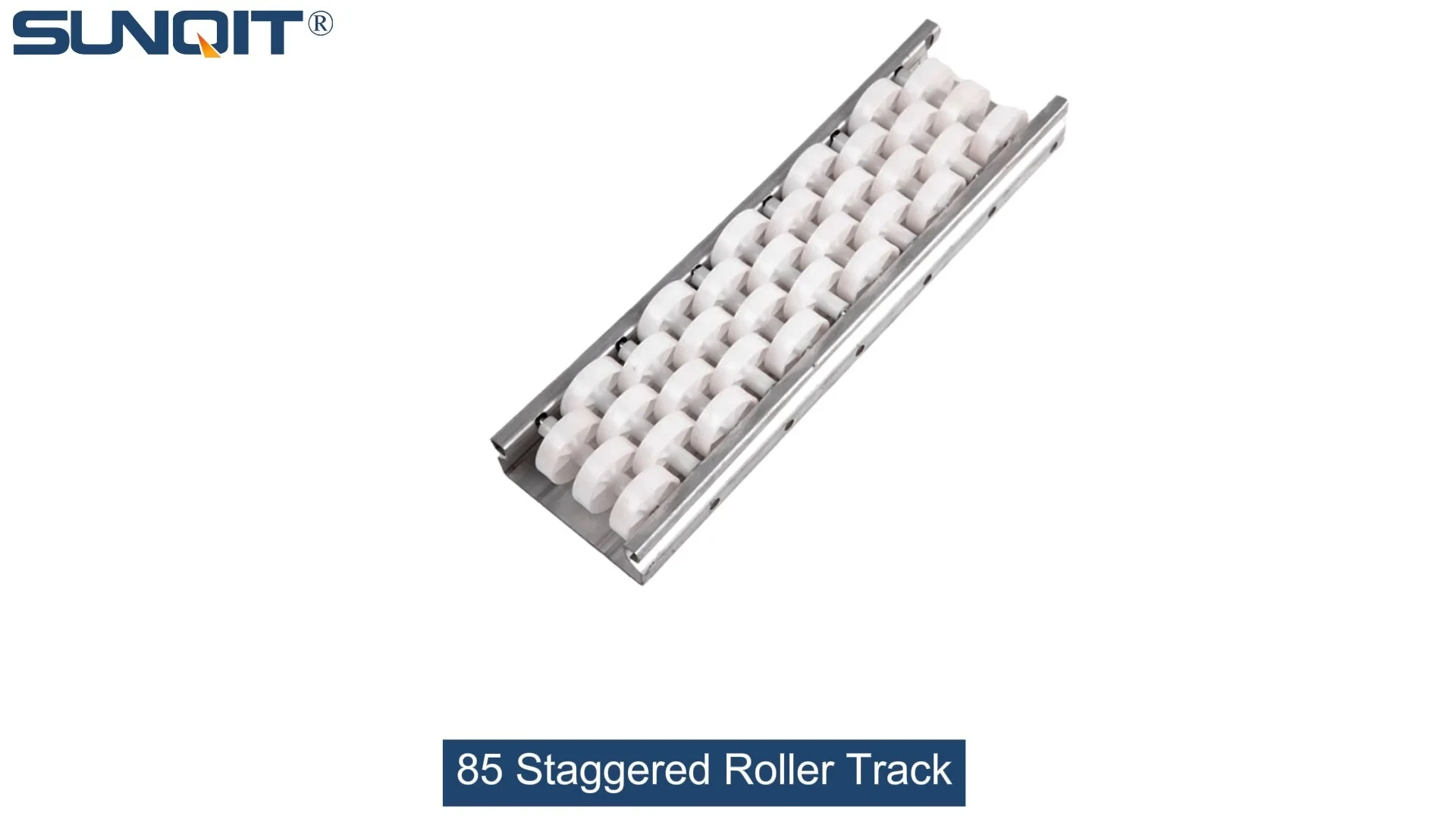
Triple staggered roller track is designed to enhance carton flow in various applications, such as flow racks and carton flow systems. This triple-staggered roller track is ideal for bins, boxes, or products that require smoother, more efficient rolling.
If you've ever walked through a busy manufacturing plant or warehouse, you've probably seen materials gliding smoothly from one station to another—chances are, roller tracks made that magic happen. But not all roller tracks are built the same. The 85 Staggered Roller Track has become a game-changer for teams looking to cut waste, speed up workflows, and keep production lines running like well-oiled machines. We've gathered the questions we hear most from folks like you—production managers, warehouse supervisors, and lean manufacturing enthusiasts—to give you the straight talk on whether this track is right for your operation.
What exactly is an 85 Staggered Roller Track, and how does it differ from standard roller tracks?
Let's start with the basics. An 85 Staggered Roller Track is a specialized material handling tool designed to move goods along a path with minimal effort—but its "staggered" design is where it gets clever. Unlike standard roller tracks, where rollers line up perfectly straight, these rollers are offset in a zig-zag pattern (imagine two rows of rollers, each slightly shifted from the one above). This might sound like a small detail, but it solves a big problem: unevenly weighted or irregularly shaped items getting stuck.
Picture this: You're moving a plastic bin filled with metal brackets. On a straight roller track, if the bin tilts even a little, one side might lose contact with the rollers, slowing it down or jamming. With the staggered design? There's always a roller touching the bin, keeping it steady and moving forward. The "85" refers to the track width (85mm), making it ideal for medium-to-large loads—think automotive parts, electronics assemblies, or bulk packaging—unlike narrower 40mm tracks better suited for small components.
So, in short: It's the reliable, hardworking cousin of the standard track, built to handle real-world messiness without breaking a sweat.
What materials are used to make 85 Staggered Roller Tracks, and why does that impact durability?
Durability starts with materials, and we don't cut corners here. Most 85 Staggered Roller Tracks are built with high-grade aluminum profiles for the frame—lightweight but surprisingly tough. Aluminum resists rust and corrosion, which is a big win if your facility deals with moisture, oils, or cleaning chemicals (looking at you, food packaging and medical device plants!). The rollers themselves? They're usually steel or reinforced plastic, depending on the load. Steel rollers handle heavier weights (we're talking 150kg+ per meter), while plastic options work great for lighter, scratch-sensitive items like electronics.
Why does this matter? Let's say you're in automotive manufacturing, where tracks are bombarded with metal parts all day. A flimsy track might warp or crack within months, leading to downtime and replacement costs. Our aluminum profile frames stand up to constant use, and the staggered roller arrangement means less stress on individual components—so your track lasts years, not just months. One client in heavy machinery told us their 85 Staggered Track outlasted their old steel track by 3+ years, even with daily use.

Which industries benefit most from using 85 Staggered Roller Tracks? Any real-world examples?
These tracks shine wherever materials need to flow smoothly and reliably—no exceptions. We see them thrive in industries like automotive (moving engine parts between assembly stations), 3C manufacturing (smartphones, laptops, and their components), and medical device production (where precision and cleanliness are non-negotiable). But the biggest fans? Warehouses and distribution centers that deal with mixed loads.
Take a recent project with a consumer electronics client: They were struggling with plastic bins of circuit boards getting stuck on their old straight track, causing delays in their assembly line. We swapped in 85 Staggered Tracks, and suddenly, those bins glided right through—even when workers overstuffed them (we won't tell the boss!). Their line speed increased by 22% in the first month. Another example: A medical supply company uses them to move sterilized equipment between packaging stations; the aluminum frame won't rust, and the smooth roll keeps delicate instruments safe from jostling.
Bottom line: If your team spends too much time pushing, pulling, or unjamming materials, this track could be your new best friend.

Can these tracks work with other lean system tools like flow racks or conveyors?
Absolutely—that's the beauty of lean manufacturing! 85 Staggered Roller Tracks are team players, designed to plug into your existing setup or build a custom lean system from scratch. Let's say you have a flow rack loaded with components at the start of your line. Connect the track to the rack, and gravity does the work: parts slide down to the assembly station, no lifting required. Then, once a sub-assembly is done, another track can feed it into a conveyor that carries it to testing—seamless, no manual handling.
One of our favorite setups was for a furniture manufacturer. They combined 85 Staggered Tracks with a roller conveyor: the tracks handled the bulky, unevenly shaped wooden frames (thanks to that staggered grip), then passed them to the conveyor for motorized transport across the warehouse. The result? Workers stopped wasting time carrying frames, and the line stayed 100% on schedule for weeks. Whether you're adding to an existing lean system or starting fresh, these tracks play well with others.

What weight can they handle, and how do I pick the right one for my needs?
Weight capacity depends on the model, but most 85 Staggered Roller Tracks handle 50kg to 200kg per linear meter. To choose the right one, start with two questions: What's the heaviest item I'll move? and How often will it move? For example, if you're moving 10kg plastic bins of screws 10 times an hour, a standard model works. If you're pushing 180kg metal dies 50 times a day, go for the heavy-duty steel roller version.
Here's a quick reference to help:
| Track Type | Weight Capacity (per linear meter) | Best For |
|---|---|---|
| Standard Aluminum + Plastic Rollers | 50-100kg | Light electronics, small parts, clean rooms |
| Heavy-Duty Aluminum + Steel Rollers | 100-150kg | Automotive parts, medium-sized bins, daily use |
| Industrial-Grade Steel Frame | 150-200kg | Heavy machinery parts, metal components, continuous operation |
When in doubt, ask! We once helped a client realize they were overbuying (they needed 100kg capacity but thought they needed 200kg) and saved them 15% on costs. No question is too small when it comes to keeping your line moving.
Are they customizable? Can I adjust length, width, or roller spacing?
Customization is where we really shine. No two production lines are identical, so why should your tracks be? We've built tracks as short as 50cm (for tight workbench setups) and as long as 15 meters (for warehouse cross-aisles). Need the rollers closer together to handle small parts? We can do that. Want wider spacing for bulkier items? No problem. We even offer curved tracks (yes, curves!) to navigate around workstations or machinery, keeping your layout compact.
A client in medical device manufacturing needed a track that could fit through a narrow doorway between clean rooms. We shortened the width to 75mm (still "85" in name, but adjusted for their space) and added soft-grip rollers to protect delicate instruments. The result? A track that fit perfectly and kept their sterile environment intact. If you've got a unique space or load, let's talk—chances are, we can build a track that fits like a glove.
How easy are they to install and maintain? Any tips for first-timers?
Installation is simpler than you might think—most teams set up a basic track in under an hour with just a drill and wrench. We include step-by-step guides, and our support team is always a call away if you hit a snag. Pro tip: Use a level during setup! Even a tiny slope can slow down materials or make them roll backward. For longer tracks, add support brackets every 1.5 meters to prevent sagging over time.
Maintenance? Minimal. Wipe down the rollers with a dry cloth weekly to remove dust (especially if you're in a woodworking or textile plant with lots of debris). Every few months, check the roller axles for tightness—they can loosen with heavy use. And if a roller does wear out? No need to replace the whole track—just swap the roller. One warehouse manager told us their maintenance crew fixes worn rollers in 10 minutes flat. Simple, fast, and no production downtime.
Why should I invest in this over a cheaper, standard roller track?
It comes down to total cost of ownership . A cheaper straight track might save you $100 upfront, but if it jams twice a day, causing 30-minute delays, that $100 saving disappears fast. We worked with a client who switched from a budget track to our 85 Staggered model and saw a 40% drop in "unplanned stops"—that's hours of lost production recovered each week.
Plus, durability matters. Our aluminum profile tracks last 3-5 times longer than flimsy steel or plastic alternatives. A food packaging plant once showed us their 7-year-old 85 Staggered Track—still rolling smoothly, while their old track (from another supplier) needed replacing after 2 years. When you factor in less downtime, fewer replacements, and faster workflows, the "investment" becomes a no-brainer.
At the end of the day, lean manufacturing is about making work easier, faster, and more reliable for your team. 85 Staggered Roller Tracks do exactly that—turning frustrating, slow material movement into something almost effortless. Whether you're in automotive, 3C, medical, or warehousing, these tracks adapt to your needs, play well with your existing tools, and stand up to the chaos of real-world production. Still have questions? We're here to help you build a line that works as hard as your team does. Let's make your workflow smoother—together.