- Company Articles
- FAQ
- FAQ
- Swivel Stem Caster Wheel with Brake: Common Problems & Troubleshooting

Swivel Stem Caster Wheel with Brake: Common Problems & Troubleshooting
Related Product
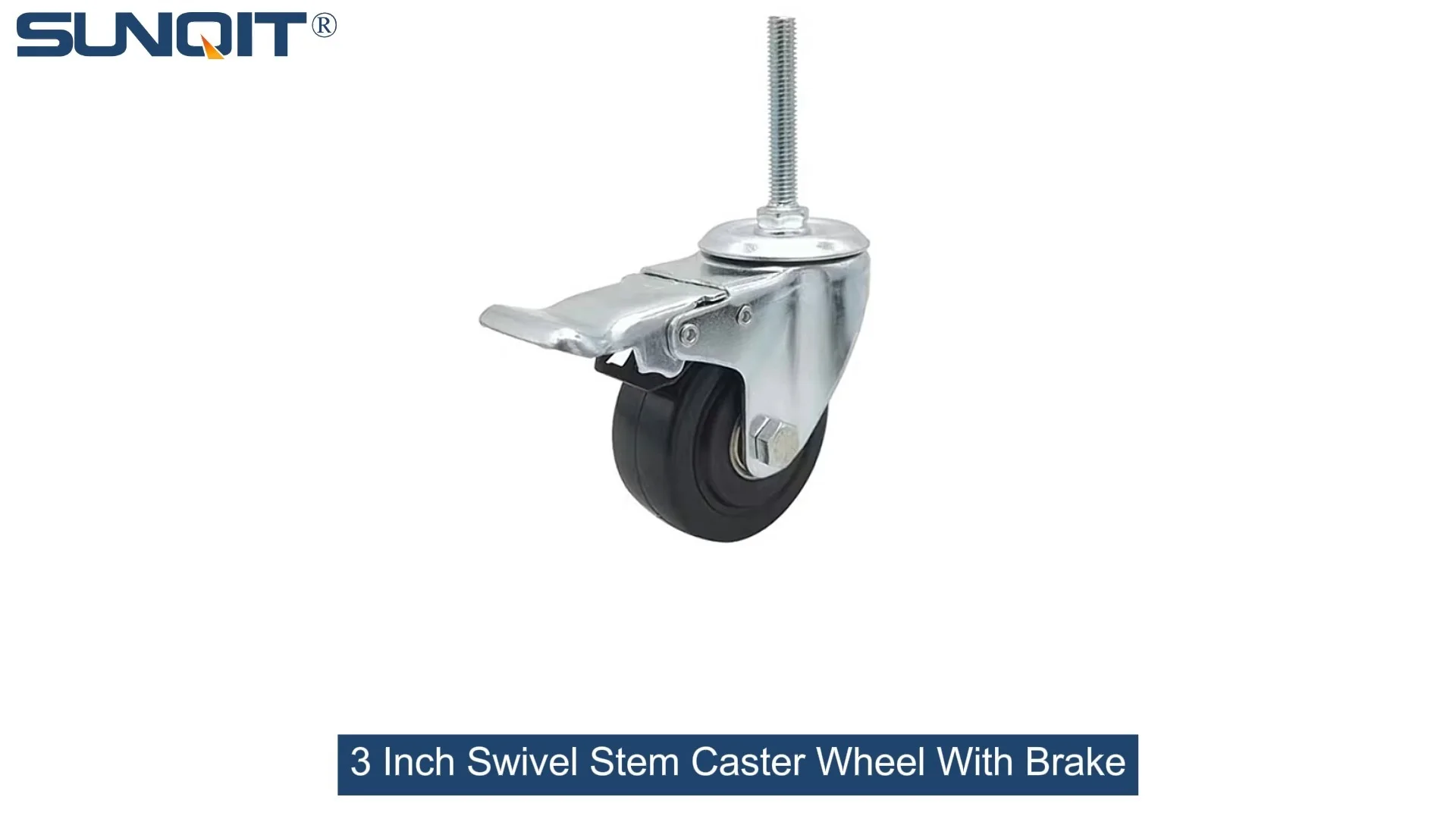
Swivel Stem Caster Wheel with Brake
360 Degree Swivel Stem Caster with brake. Threaded-post mount design, castors diameter 3 inch.Each swivel caster wheels loading 70KGS. Heavy enough and widely suit for carts, chairs, cabinet, flow rack, workbench, turnover rolley.
In the hustle and bustle of industrial workshops, warehouses, and production lines, there's a silent workhorse that keeps operations moving smoothly: the swivel stem caster wheel with brake. These small but mighty components are the unsung heroes behind the mobility of workbenches, turnover trolleys, and material racks. Imagine trying to maneuver a heavy workbench across a factory floor without casters, or struggling to keep a turnover trolley steady while loading parts—these scenarios highlight just how critical reliable casters are to daily productivity.
But like any hardworking tool, swivel stem caster wheels with brakes aren't immune to wear and tear. From sticky brakes that refuse to lock to noisy wheels that disrupt the workflow, even minor issues can throw a wrench into your operations. In this guide, we'll walk through the most common problems you might encounter with these casters, why they happen, and how to fix them—so you can keep your equipment rolling (and stopping) when you need it most.
Understanding Swivel Stem Caster Wheels with Brakes
Before diving into troubleshooting, let's break down what makes these casters tick. A typical swivel stem caster wheel with brake has a few key parts: the stem (which attaches to the equipment, like a workbench or turnover trolley), a swivel head that allows 360-degree rotation, the wheel itself, and a brake mechanism—usually a pedal or lever that locks the wheel in place. Add in caster accessories like bearings, washers, and axles, and you've got a system designed for both mobility and stability.
The "swivel" feature is what lets you pivot the wheel smoothly, making tight turns in crowded spaces a breeze. The "stem" is the metal rod that screws or bolts into the equipment, ensuring a secure connection. And the "brake"? That's your safety net. When engaged, it presses a pad or clamp against the wheel, preventing movement and keeping your equipment stationary—vital when you're working on precision tasks or loading/unloading heavy items.
Common Problems & How to Fix Them
Let's get to the heart of the matter: the issues that plague swivel stem caster wheels with brakes. We'll start with the most frustrating one first.
1. Brake Failure: When the Wheel Just Won't Lock
There's nothing more aggravating than stepping on the brake pedal and feeling it sink with no resistance—or worse, hearing a "click" but watching the caster roll anyway. Brake failure is one of the most common complaints, and it can happen for a few reasons:
- Worn Brake Pads: Over time, the rubber or metal pads that press against the wheel wear down, reducing friction and making it harder to lock the wheel.
- Debris Buildup: Dust, dirt, or small metal shavings (common in manufacturing settings) can get stuck in the brake mechanism, jamming the pedal or preventing the pad from making full contact.
- Misalignment: If the brake pedal or linkage gets bent (maybe from accidentally hitting it with a pallet jack), the pad might not align properly with the wheel, rendering the brake useless.
- Broken Springs: Many brakes use small springs to return the pedal to its "unlocked" position. If a spring snaps or stretches, the pedal might stay stuck in one position, or the brake won't engage fully.
Troubleshooting Steps:
- Clean the Mechanism: Start simple. Grab a can of compressed air or a stiff brush and clear out any debris around the brake pedal and wheel. Sometimes a little dust is all that's blocking the action.
- Inspect the Brake Pads: Flip the equipment (or lift the caster off the ground) and check the pads. If they're thin, cracked, or unevenly worn, they need to be replaced. Most caster manufacturers sell replacement pads as caster accessories, so you won't have to buy a whole new caster.
- Check for Misalignment: Look at the brake pedal and linkage. If it's bent, gently straighten it with pliers (be careful not to snap it!). If the pad isn't hitting the wheel dead center, loosen the mounting screws, adjust the position, and retighten.
- Test the Springs: If the pedal feels "loose" or doesn't pop back up after pressing, the spring might be faulty. Remove the old spring and replace it with a new one—make sure to get the right size (check the caster's specs or your supplier's catalog).
Prevention Tip: ,.,().
2. Swivel Resistance: When the Caster Won't Turn
A swivel caster that won't pivot smoothly is like a door with a rusty hinge—it makes every movement feel like a chore. If you're struggling to turn your workbench or trolley, the problem is likely in the swivel head.
Common Causes:
- Dry Bearings: The swivel head relies on bearings to rotate freely. Without lubrication, these bearings can grind together, causing resistance.
- Debris in the Raceway: The "raceway" is the circular track inside the swivel head where the bearings sit. Dirt, grit, or metal shavings here can block movement.
- Bent Stem: If the stem (the part that attaches to the equipment) is bent, it can put uneven pressure on the swivel head, making rotation difficult.
- Overloading: Casters have weight limits. If you're pushing more than the rated capacity, the swivel head can seize up under the strain.
Troubleshooting Steps:
- Lubricate the Bearings: This is often the quick fix. Use a lithium-based grease or silicone spray (avoid WD-40, which is a cleaner, not a long-term lubricant) and apply it to the swivel head's seams. Work the caster back and forth a few times to distribute the lubricant.
- Clean the Raceway: If lubrication alone doesn't work, you'll need to clean the raceway. Remove the caster from the equipment, pop off the dust cap (if there is one), and use a small pick or cotton swab to dislodge debris. Wipe it out with a rag, then relubricate and reassemble.
- Check the Stem: Roll the caster on a flat surface. If it wobbles or veers to one side, the stem might be bent. For minor bends, use a pipe wrench to straighten it (slowly and carefully). If it's severely bent, replace the caster—bending weakens the metal, and it could snap under load.
- Verify Load Capacity: Check the caster's label for its weight rating. If you're regularly exceeding it, upgrade to a heavier-duty model. Remember: if a workbench has four casters, the total capacity is four times the per-caster rating (but always leave a buffer for safety).
Prevention Tip: ,.,.
3. Uneven Wheel Wear: When One Side Wears Faster Than the Other
Take a close look at your caster wheels—are they wearing evenly, or is one side looking more "bald" than the other? Uneven wear is a red flag that can lead to wobbly equipment, increased noise, and even damage to your floors.
Common Causes:
- Overloading: Again, exceeding the weight limit puts extra stress on the wheels, causing them to wear unevenly.
- Misaligned Wheels: If the caster stem isn't perpendicular to the ground (i.e., the wheel leans inward or outward), it will drag and wear on one side.
- Rough Floors: Cracks, bumps, or debris on the floor can cause the wheel to bounce, leading to uneven contact and wear.
- Low-Quality Wheel Material: Cheap plastic or rubber wheels wear faster than high-quality, industrial-grade options—especially in high-friction environments.
Troubleshooting Steps:
- replace Worn Wheels: If the wear is severe (e.g., the wheel is misshapen or has deep grooves), swap it out for a new one. Match the size and material to the original—for example, if you're using the caster on concrete, a polyurethane wheel is more durable than rubber.
- Adjust Wheel Alignment: Loosen the stem's mounting nut, straighten the caster so the wheel is vertical, then retighten. Use a level to check if the equipment is sitting evenly—if not, adjustable leveling feet can help balance it (yes, those are often sold alongside casters as part of a complete mobility solution).
- Smooth Out the Floor: Fill in cracks, sweep regularly to remove debris, and consider using floor mats in high-traffic areas to protect both the wheels and the floor.
- Upgrade Wheel Material: If you're constantly replacing wheels, invest in higher-quality options. For example, aluminum or steel-core wheels are better for heavy loads, while non-marking polyurethane is ideal for finished floors (like in labs or cleanrooms).
Prevention Tip: ,.(),—!
4. Stem Looseness: When the Caster Wobbles on Its Base
A wobbly caster isn't just annoying—it's dangerous. If the stem (the part that connects the caster to the equipment) comes loose, the entire caster could detach, leading to spills, falls, or damaged machinery.
Common Causes:
- Loose Mounting Hardware: The nuts or bolts holding the stem in place can vibrate loose over time, especially on equipment that's moved frequently.
- Stripped Threads: If the stem or mounting hole has stripped threads, the nut won't stay tight, no matter how much you twist it.
- Worn Stem: Constant stress can cause the stem to bend or weaken, leading to wobbling even if the hardware is tight.
Troubleshooting Steps:
- Tighten the Hardware: Grab a wrench and give the mounting nut a firm twist. If it spins freely, check if the threads are stripped. If they're not, add a drop of thread locker (like Loctite) to keep the nut from vibrating loose again.
- Repair Stripped Threads: If the threads on the stem are stripped, you might be able to use a thread tap to clean them up (this works for minor damage). For severe stripping, replace the stem—most casters let you swap out the stem without buying a whole new unit (check for replacement stems in caster accessories catalogs).
- Inspect for Stem Damage: Look for bends, cracks, or rust on the stem. If you see any, replace the caster immediately—damaged stems are a safety hazard.
Prevention Tip: .,—,!
5. Excessive Noise: When the Caster Sounds Like a Squeaky Wheel
A squeaky caster isn't just a nuisance—it's a sign that something's off. That high-pitched noise is usually a cry for help from dry bearings or misaligned parts.
Common Causes:
- Dry Wheel Bearings: The bearings inside the wheel hub need lubrication to spin quietly. Without it, metal rubs against metal, creating that familiar squeak.
- Misaligned Wheels: If the wheel isn't centered on the axle, it can rub against the caster frame, causing a grinding or squealing sound.
- Debris in the Axle: Small rocks, metal shavings, or even bits of tape can get stuck between the wheel and axle, leading to noise as the wheel turns.
Troubleshooting Steps:
- Lubricate the Wheel Bearings: Remove the wheel from the axle (you might need a wrench to take off the axle nut), clean out any debris, and apply a generous amount of wheel bearing grease. Reassemble the wheel and test it—most squeaks disappear after lubrication.
- Realign the Wheel: If the wheel is rubbing against the frame, loosen the axle nut, adjust the wheel's position so there's a small gap (about 1/16 of an inch) between the wheel and frame, then retighten the nut.
- Clean the Axle: Use a rag or toothbrush to wipe down the axle, removing any stuck debris. If the axle is bent, replace it—bent axles cause uneven wear and noise.
Prevention Tip: ,.,.

Troubleshooting Cheat Sheet: Quick Reference Table
| Problem | Common Causes | Troubleshooting Steps | Prevention Tips |
|---|---|---|---|
| Brake won't lock | Worn pads, debris, misalignment, broken springs | Clean mechanism, replace pads/springs, realign brake | , |
| Swivel resistance | Dry bearings, debris in raceway, bent stem, overloading | Lubricate bearings, clean raceway, straighten stem, check load rating | , |
| Uneven wheel wear | Overloading, misalignment, rough floors, low-quality wheels | replace wheels, adjust alignment, smooth floors, upgrade wheel material | , |
| Stem wobble | Loose hardware, stripped threads, stem damage | Tighten nuts, repair/replace stem, use thread locker | , |
| Excessive noise | Dry bearings, misaligned wheels, debris in axle | Lubricate bearings, realign wheels, clean axle | , |

Maintenance Tips for Long-Lasting Casters
The best way to avoid caster problems? Regular maintenance. A little care goes a long way toward extending the life of your swivel stem caster wheels with brakes. Here's a simple schedule to follow:
- Daily: (,),.
- Weekly: ,.().
- Monthly: .,.
- Quarterly: ,...
- Annually: ,,().,—.

When to replace vs. Repair
At some point, even the best-maintained casters will need to be replaced. Here are signs it's time to retire your old casters:
- Cracked or misshapen wheels: Wheels with cracks can shatter under load, posing a safety risk.
- Bent or rusted stems: Damaged stems can't be repaired—they need to be replaced.
- Irreparable brake mechanism: If the brake linkage is broken or the pads are worn beyond replacement, a new caster is the way to go.
- Persistent noise or wobbling: If you've tried cleaning, lubricating, and adjusting, but the problem keeps coming back, the caster is likely worn out.
When shopping for replacements, don't skimp on quality. Investing in a reputable brand with durable materials (like steel stems and polyurethane wheels) will save you from frequent repairs. And don't forget to check for compatible caster accessories—having spare pads, springs, and bearings on hand means you can fix minor issues quickly, without waiting for parts to ship.
Final Thoughts: Keep Rolling (and Stopping) Strong
Swivel stem caster wheels with brakes might seem like small components, but they play a huge role in keeping your operations efficient and safe. By understanding common problems, troubleshooting them quickly, and sticking to a maintenance routine, you can ensure these workhorses keep up with your busy schedule.
Remember: a little proactive care today can prevent big headaches tomorrow. Whether you're dealing with a sticky brake on a workbench or a wobbly caster on a turnover trolley, the steps in this guide will help you get back on track. And when it's time to replace your casters, choose quality—your team, your equipment, and your bottom line will thank you.