- Company Articles
- FAQ
- FAQ
- Turning Angle Code 4040 FAQ: Expert Answers to Top Manufacturer Questions

Turning Angle Code 4040 FAQ: Expert Answers to Top Manufacturer Questions
Related Product
Turning Angle Code 4040
The turning angle aluminum profile connector provides a 90 degree hidden corner connection. 4040 it is means this size is used for 40 series aluminum profile.The corner code comes with set screws that allow for quick, easy connections.
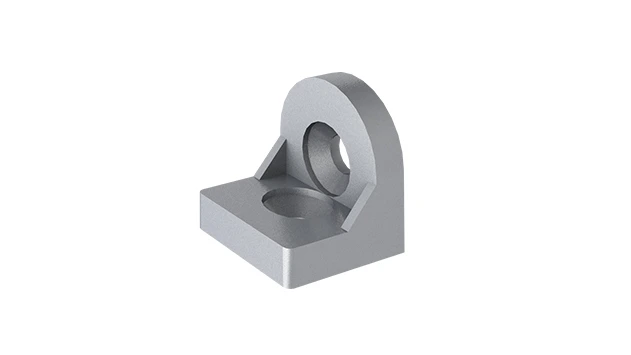
In manufacturing, where every component must work in harmony to keep production lines moving, even the smallest parts can have an outsized impact. Take the Turning Angle Code 4040—a compact, unassuming piece of hardware that's quietly become a cornerstone of modular aluminum profile assemblies. As a lean system supplier with decades of experience supporting factories, workshops, and production facilities, we've fielded more questions about this component than almost any other. From small-scale fabricators to automotive giants, the curiosity (and occasional confusion) around Turning Angle Code 4040 is universal. That's why we've created this in-depth FAQ, drawing on our team's hands-on expertise to address the questions manufacturers ask most often. Whether you're designing a workbench, building a material rack, or troubleshooting assembly bottlenecks, consider this your definitive guide to everything Turning Angle Code 4040.
1. What exactly is a Turning Angle Code 4040, and how does it differ from standard angle brackets?
Let's start with the basics: A Turning Angle Code 4040 is a precision-engineered joining component designed specifically for 4040 aluminum extrusion profiles—the workhorses of modular manufacturing systems. Unlike generic angle brackets, which are often flat, one-size-fits-all pieces of metal, the Turning Angle Code 4040 is tailored to the unique T-slot design of aluminum profiles. This isn't just a "bracket"—it's a functional extension of the profile itself, enabling secure, adjustable connections without welding, drilling, or permanent modifications.
So, what makes it stand out? For starters, material: Most Turning Angle Code 4040 components are crafted from high-grade aluminum alloy (typically 6063-T5), the same material as the profiles they join. This ensures thermal compatibility (no warping due to temperature changes) and consistent durability. Standard steel brackets, by contrast, can corrode, add unnecessary weight, or create galvanic reactions when paired with aluminum profiles.
Then there's flexibility. The T-slot compatibility means the angle code can be positioned anywhere along the profile's length, not just at pre-drilled holes. This adjustability is a game-changer for manufacturers who need to tweak layouts on the fly—say, repositioning a shelf on a workbench or modifying a conveyor support frame. We once worked with a client who used Turning Angle Code 4040 to reconfigure their entire assembly line in a day; with standard brackets, that project would have taken a week of drilling and welding.
Load capacity is another key differentiator. A well-designed Turning Angle Code 4040 distributes weight evenly across the profile's T-slot, reducing stress points. For example, a 3mm-thick 4040 angle code can handle up to 800 lbs per joint, while a similarly sized standard bracket might max out at 400 lbs. When you're building a rack for heavy machinery parts, that difference isn't just a spec sheet detail—it's the line between a safe, reliable setup and a potential disaster.
2. What load capacities can Turning Angle Code 4040 handle, and how does that impact material selection?
Load capacity is the question we hear most frequently—and for good reason. A joint failure in a production setting can mean downtime, damaged materials, or even safety risks. So, let's cut to the chase: A standard Turning Angle Code 4040, when paired with a 4040 aluminum profile (wall thickness 1.5mm–3mm), typically supports static loads of 300–800 lbs per joint. But why such a wide range? It hinges on three factors: the angle code's material thickness, its design, and the fasteners used.
First, material thickness. Thicker angle codes (3mm vs. 2mm) naturally handle more weight, as there's more material to absorb stress. Reputable suppliers offer graded options: light-duty (2mm), medium-duty (2.5mm), and heavy-duty (3mm+). For example, a light-duty code works for a benchtop shelf holding small tools, while a heavy-duty version is critical for a floor-standing rack storing engine blocks. We once helped a client upgrade from a 2mm to a 3mm angle code on their material racks; overnight, they doubled their load capacity without changing the profiles.
Next, design. Not all 4040 angle codes are created equal. Premium models feature ribbed interiors or reinforced edges that reduce flex under load. Others have a larger contact area with the profile, spreading weight across more T-slot surface area. A client in the aerospace industry once shared a horror story: they'd used generic, unribbed angle codes for a wing component assembly rack. After switching to our ribbed heavy-duty code, their load tests showed a 50% increase in stability—all because the design distributed stress more effectively.
Then there are fasteners—often overlooked, but critical. The Turning Angle Code 4040 relies on T-slot bolts or screws to lock into the profile, and using the wrong hardware sabotages performance. A flimsy M5 bolt might snap under heavy load, while a properly sized M6 stainless steel bolt with a washer can handle twice the weight. Many aluminum profile accessories kits include compatible fasteners, but always check: bolt length should match the profile's T-slot depth, and thread pitch must align with the angle code's tapped holes.
So, how does this guide material selection? For static loads (e.g., storage racks), prioritize heavy-duty, thick-walled angle codes paired with 2mm+ profiles. For dynamic loads (e.g., conveyor systems with moving parts), factor in vibration—opt for ribbed designs and lock washers. And when in doubt, ask your supplier for load test data; a reputable lean system supplier will have no trouble sharing specs.

3. How do I properly install a Turning Angle Code 4040 on 4040 aluminum profiles? Are there common installation mistakes to avoid?
Installing a Turning Angle Code 4040 seems simple, but precision matters. A botched install can lead to wobbly frames, stripped T-slots, or weakened joints. Let's walk through the process step by step, then highlight the mistakes we see most often—and how to avoid them.
Step 1: Gather tools. You'll need a hex key (4mm or 5mm, depending on fasteners), a torque wrench (optional but recommended), and a rubber mallet (for gentle alignment). Skip power tools—over-tightening is too easy, and hand tools give better control.
Step 2: Prep profiles. Ensure T-slots are clean—dust, metal shavings, or debris can prevent the angle code from seating flush. A quick wipe with a dry cloth or blast of compressed air works wonders.
Step 3: Position the code. Slide the Turning Angle Code 4040 onto one profile's end, aligning its mounting holes with the second (perpendicular) profile's T-slot. Use the rubber mallet to tap it gently into place—no gaps between the code and profiles allowed.
Step 4: Fasten and tighten. drop T-slot bolts into both profiles' T-slots, threading them into the angle code's holes. Tighten gradually, alternating bolts if there are two or more, to ensure even pressure. For medium-duty use, 3–4 Nm of torque is ideal; check the supplier's specs for heavy loads.
Now, the mistakes: Over-tightening is the biggest culprit. Cranking bolts until they won't turn strips threads or deforms T-slots—we've seen this ruin $200 profiles over a $5 angle code. Misalignment is next: if the code isn't flush, load stress,.—30. :T,.—.

4. Can Turning Angle Code 4040 be used with non-4040 profiles, or is it strictly for 4040 aluminum extrusion profiles?
Manufacturers often ask this when repurposing old profiles or mixing sizes in a single project. The short answer: Turning Angle Code 4040 is designed for 4040 profiles, but cross-compatibility is possible—with caveats. Let's break down when it works, and when to skip it.
First, T-slot matching. The 4040 profile's name refers to its 40mm x 40mm size, but what matters is T-slot dimensions: most have 8mm or 10mm openings (the "groove" bolts slide into). If you have a non-4040 profile with the same T-slot—say, a 45mm x 45mm profile with an 8mm slot—the angle code might fit. We helped a client connect 40mm x 60mm rectangular profiles using 4040 angle codes; the T-slot matched, and the code's 40mm side aligned perfectly with the profile's width.
Adapter plates are another workaround. If you're joining 4040 to 3030 profiles (6mm T-slot), use a small adapter plate (common in aluminum profile accessories) that bolts to the 3030's slot, then attach the 4040 angle code to the plate. It adds a layer, but works for mixed assemblies—we used this trick for a client building a hybrid workbench with 4040 legs and 3030 shelves.
But proceed with caution. Profiles much smaller than 40mm (e.g., 2020) are a no-go: the angle code will overhang, creating instability. Similarly, profiles with non-standard T-slots (rounded edges, narrower openings) won't grip the bolts properly. A client once tried using 4040 angle codes on 3030 profiles without adapters; the bolts slipped, and their assembly collapsed during testing. Save yourself the hassle: if the T-slot size or profile width is more than 5mm off, use a dedicated angle code (3030, 2020) instead.
5. What quality standards should I look for when sourcing Turning Angle Code 4040 from a lean system supplier?
Not all Turning Angle Code 4040 components are created equal—and choosing the wrong supplier can cost you in downtime, repairs, or failed projects. Here's what to demand from a reputable lean system supplier:
Material certification. Insist on 6063-T5 aluminum alloy—a heat-treated grade with ideal strength-to-weight ratios. Suppliers should provide mill test reports confirming alloy composition and temper. Avoid "mystery metal" angle codes; we've seen cheap knockoffs made from recycled aluminum that bent under half their rated load.
Dimensional precision. In T-slot systems, 0.1mm errors break assemblies. The angle code's holes must align perfectly with 4040 profile T-slot spacing. Ask for CAD drawings or dimensional specs: hole diameter, distance between holes, and overall dimensions should match industry standards. Reputable suppliers use CMM (Coordinate Measuring Machines) to inspect every batch—no exceptions.
. —,—.,,.,.—, resistance 30%.
. .:,,.""—.404020,.
ISO. ISO 9001:2015—..ISO,20%—.
6. How does Turning Angle Code 4040 compare to other common angle codes? (Comparison Table)
To help you choose the right angle code for your project, we've compared Turning Angle Code 4040 with its smaller counterparts, 3030 and 2020:
| Feature | Turning Angle Code 4040 | Turning Angle Code 3030 | Turning Angle Code 2020 |
|---|---|---|---|
| Compatible Profile | 40mm x 40mm aluminum profiles | 30mm x 30mm aluminum profiles | 20mm x 20mm aluminum profiles |
| Material Thickness Options | 2mm (light), 2.5mm (medium), 3mm+ (heavy) | 1.5mm (light), 2mm (medium), 2.5mm (heavy) | 1mm (light), 1.5mm (medium) |
| Static Load Capacity (per joint) | 300 – 800 lbs | 150 – 400 lbs | 50 – 150 lbs |
| Common Applications | Workbenches, conveyor frames, heavy-duty racks | Shelving, machine guards, small assembly lines | Prototyping, display stands, electronics enclosures |
| Fastener Size | M5 – M6 T-slot bolts | M4 – M5 T-slot bolts | M3 – M4 T-slot bolts |
Final Thoughts: Why Turning Angle Code 4040 Matters for Lean Manufacturing
At its core, the Turning Angle Code 4040 embodies lean manufacturing principles: efficiency, flexibility, and continuous improvement. By enabling tool-free adjustments and reconfigurations, it lets manufacturers adapt to changing needs without rebuilding entire systems. A client in automotive parts once told us: "With these angle codes, we retooled our assembly line for a new part in 4 hours—down from 2 days with welded frames." That's the power of modularity.
As a lean system supplier, we've seen how investing in quality angle codes reduces downtime, cuts rework, and extends equipment life. The Turning Angle Code 4040 isn't just a part—it's a tool that empowers your team to build better, faster, and smarter. So, the next time you're planning a project with aluminum profiles, remember: the strength of your assembly lies in the connections. And when it comes to connections, Turning Angle Code 4040 is the gold standard.